


Author: Klevis Paloka
Gotulla could be a tourist destination. It got this name, because this is how it is described differently in the Albanian language, the perimeter of a bay near the mouth of a river. But this area, blessed by its close proximity to the coastline, is at the same time cursed by the floods of waste that are carried along the journey of the Ishêm River, otherwise known as the River of Tirana. Until it flows into the Adriatic, the river branches, taking forward but also leaving traces of inerts, garbage and waste that have turned into a horror and that day by day are a lost battle. Almost 40 kilometers from Tirana, Gotulla e Kurbini is located near the mouth of the Išem river. Garbage piles have become a constant feature of the area.
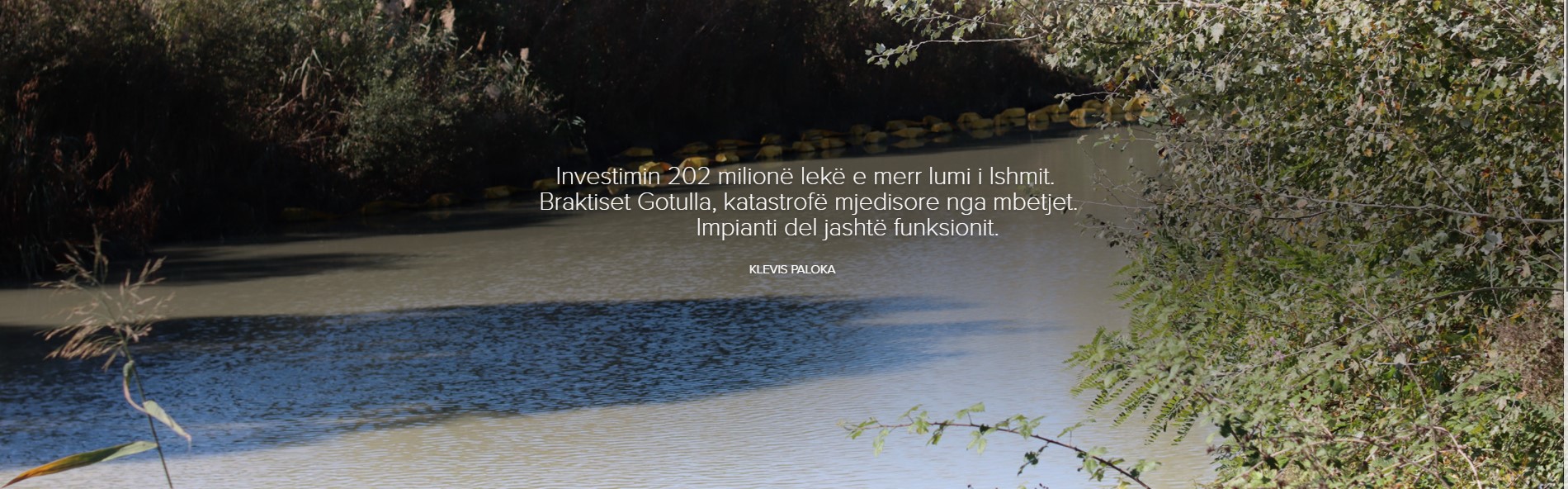
Only 1 kilometer from the estuary, the building of the Ishmi purification plant is erected, which through the barriers should stop the penetration of all kinds of waste. To get there, the road is difficult. Immediately after leaving the main axis and taking the side towards the village of Gotull, there it begins along with the cobbled road and the difficulty that in places turns into a "mission" of prayers not to get stuck between potholes. The same test continues until it reaches the implant that was built 4 years ago. The gate is closed, while the heavy smell of the polluted river does not allow you to stay there for long. The village of Gotulla looks deserted, many residents have either moved to the city or emigrated. As residents of the village, they are only the third age.
One of these is the 76-year-old Gjoni, who has a house near the mouth of the river Išem in the village of Gotulla. John, who is now only engaged in agriculture, but whose biggest income provides for the children he has in emigration, tells us how he remembers this river before the 90s, and the change he experienced, turning into one of the most polluted in place.
" Before the 90s, we used this river to drink water, to wash clothes, and even bathe ourselves, but now you can't even go near it, let alone go inside, because you can get a very serious infection from the pollution. Now we don't even send our livestock to drink water there. With the breakdown of the system, the first waste began to arrive, and now it serves as a garbage bin for all of Tirana, Kruja, and Kurbin ," recalls the old man.
" Since we are old, we cannot move to the city now because we are used to this lifestyle, but now, out of frustration, we have also adapted to the heavy wind and the floating waste that comes from Tirana. The situation becomes even worse during the winter, when due to the river overflowing, our lands are filled with various types of waste, and because of this waste and pollution that comes, it is impossible to cultivate anything there ," concludes Gjoni.
Even for the headman of the village of Adriatic, 61-year-old Pjetër Preni, the waste brought by the floods of Ishm is very harmful. Not to mention the Gotulla beach destruction part.

" The waste coming from the Ishmi River is a very big problem for the entire area along the river, the closer you are, the stronger the wind that drowns you. We find it impossible to go to the Gotulla forest, due to the strong wind, we can also no longer go to the beach, due to the large amount of waste floating in the sea, but also along the coast. We are now forced to go to another area to go to the beach, when we could very well have a beach there, the area could also serve for tourism and could also provide an economic benefit to our area. Before the 90s, we did not need to go to another beach, they even came from Tirana to go to the beach in this area because of the sand and the beautiful beach ", the 61-year-old recounts.
The plant that solved nothing
However, beyond the residents' confessions, negotiations to resolve the situation began five years ago. The plant was seen as the key that should open the wave of cleaning. In 2017, during its inauguration, the Minister of Tourism and Environment at that time, Blendi Klosi, described it as a great investment.
" I am very glad that the state reacted, the state put a stop to one of the biggest tourist gangrenes of our country, created by the people themselves. Even though we are in 2017, even though we claim to have a developed tourism, the former local government units continue to dump urban waste into the rivers of Albania. Therefore, the time has come for us to react all together, the time has come to do what people expect from us; to think about how we should solve, through investments like today's or through other mechanisms, such a big problem that is environmental pollution in our country ", said Blendi Klosi, convinced that apart from denouncing the local government, something was finally being solved.
From the data of the Ministry of Environment and Tourism, this project results that together with the requalification of the coastline of Gotulla cost 202 million ALL.
" The winning entity for the construction of the Ishëm River Estuary Cleaning Plant and the requalification of the Gotulla coastline is "Integrated Technology Services". The total value of the contract is 202,603,181 (two hundred and two million six hundred and three thousand one hundred and eighty-one) lekë excluding VAT. The start of works based on the minutes of the start of works is on April 6, 2017 and the completion date of works is on December 4, 2017 ", states the official response of the Ministry of Tourism and Environment.
ACQJ was also interested in the expenses incurred by the Ministry of Tourism and Environment for the maintenance of this plant, but since September 28 until now there has been no response to this issue.
According to an audit made by the High State Control, this investment has artificially increased by 8.2 million ALL.
" As a result of the artificial increase in the limit fund in the amount of 8,256,000 lek and the offer submitted by the company ITS sh.pk in the amount of 202,603,181 lek, economic damage and unfair benefit from the company in the amount of 3,153,288 lek including VAT ," the ALS audit states.
What happened after the construction of the plant?
The system of collection and capture of floating waste in the Ishmi estuary is composed of 3 barriers. The first barrier is composed of steel cages, which must catch heavy debris - tree trunks, any dead animals that may be brought by the river or various branches, while the second and third barriers - composed of pneumatic material, serve to catch the floating waste.

From the monitoring done on the scene by "Sinjalizo", after the denunciation of some residents near the platform, it turns out that this plant is almost out of order. Only the first two barriers are working, while the third barrier is out of order along with the conveyor, where bushes and thorns have started to sprout.
Such a thing found by the Ministry of Tourism and Environment, was accepted after the study of the master plan compiled in September 2020. That the plant was removed from the chances to save Gotulla is accepted only with a phrase, but after which there is no concrete plan that how will it be done in the future.
" The constructed point that is supposed to capture them is not functional ," states the strategic environmental assessment for the drafting of the detailed plan for the area of national importance of the Ishmi Estuary of the Ministry of Tourism and Environment.
While according to the expert for Waste Management and Circular Economy, Lulzim Baumann, who has dealt with the issue of the Ishmi river, this was not a proper and correct solution. All the problems highlighted by the expert are related to the inverse relationship between the large amounts of waste that are dumped into the sea and the capacities of the plant, which in short is considered by him as a "failure".
" No, it is not the only solution, but it is not included as a solution at all, but it cannot be included as an alternative either. Because firstly, it is impossible for it to function due to the very large amount that the Ishmi River sends to the Adriatic Sea, a weight of up to 500 thousand tons of waste is calculated, which is an extremely heavy weight for such barriers to withstand. Secondly, the level of the Ishmi River is not the same as with other rivers that such barriers can be used, because it increases extremely much and the river level goes up to 10 meters above ground level. At least in some areas, it is also impossible for the barrier to withstand such a level, especially during floods or extremely high amounts of waste. Let's not forget that there are many trees along the Ishmi River and large tree trunks that go for dozens of tons and are impossible to stop by such barriers. The government's investment was known to be a failure. The issue of barriers, I don't know who has "I was advised, but from the beginning there was a huge criticism of a useless investment, without any logic and certain that it would not work and never has worked ," says Baumann.
Also for the elder Preni, the relevant institutions must find another way to intervene and prevent such a massacre that has turned the area into a wasteland.
" I do not see the estuary cleaning plant as a proper solution, nor do I know why it was installed since it is impossible to cope with the flow of waste coming from Tirana. A better solution is needed, a waste and wastewater processing plant should be installed. Even the cleaning that was done to the beach was only a solution for a few months, since it is impossible to make a beach there, since the Gotulla coast is once again overflowing with waste ," says Mayor Preni.
According to the expert, the solution to the pollution of the Ishmi river should be where the river begins, not at its mouth, since it is impossible to fix it with only two barriers, while also emphasizing the waste water. According to the chief of Gotulla, the whole solution must first start with the identification of the polluted places and then the minimization of the flows along the river bed.
" The Ishmi problem is very big because there is also an extremely big problem with sewage, meaning that all the residents living along the Ishmi river do not have any kind of sewage treatment. As for solving the waste problem, the solution is very simple. At least for the Tirana region alone, where I have identified 100 hotspots and all state instances are sufficient to clean up these waste hotspots that have been dumped there for years, in which there are no waste bins or containers, and this can be done and can be a pretty sustainable solution to protect the Ishmi river. That is, stopping the dumping of waste into the river is not some great science. The problem of pollution of the Ishmi river does not start at its mouth, but starts in Tirana, so the solution must be from the beginning, because at the mouth it is impossible to prevent it due to the waste that this river collects along its entire bed ," concludes the waste management expert.
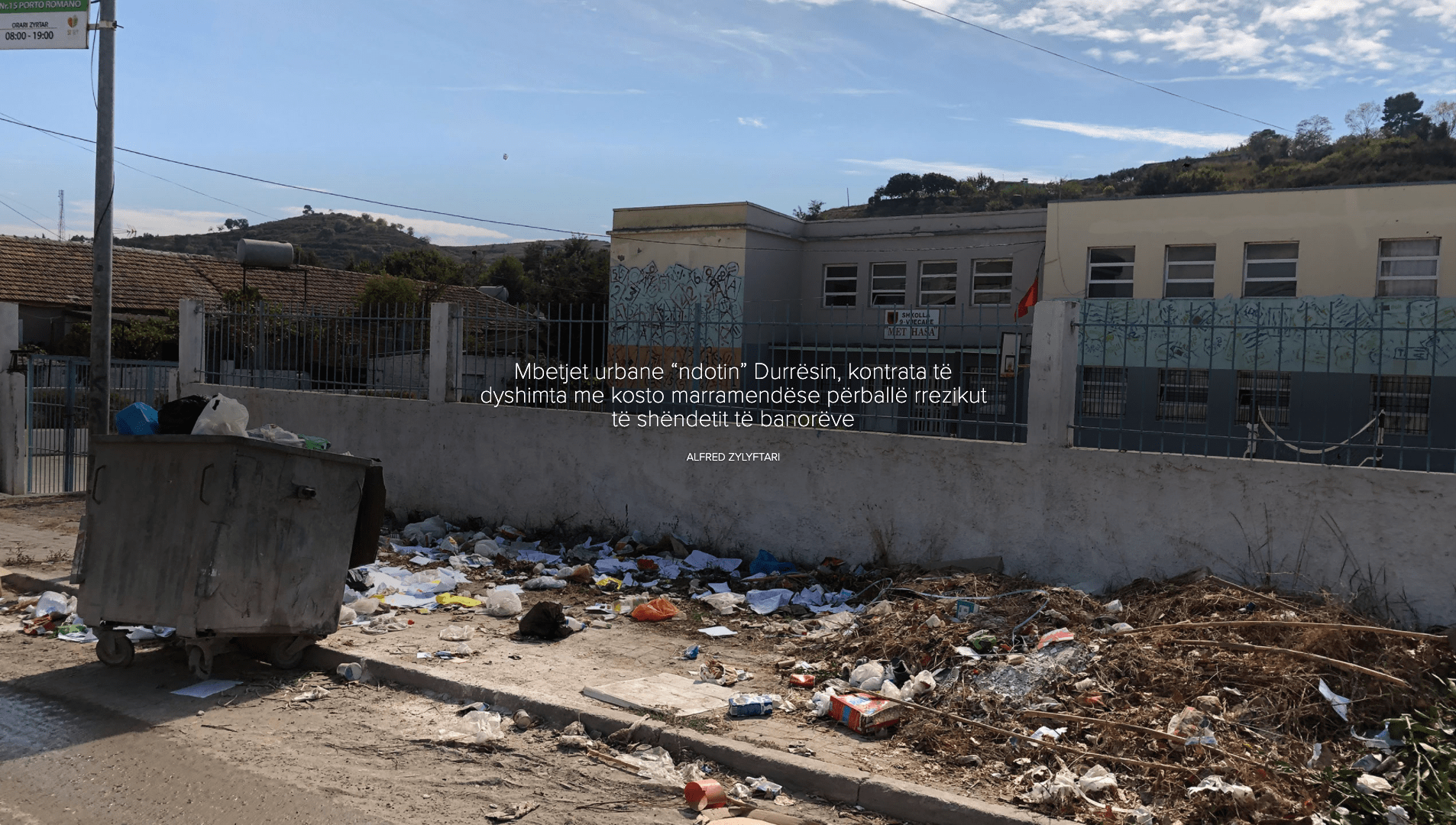
On the other hand, according to the Institute of Statistics (INSTAT), 370 thousand inhabitants or 13.1% of the population in Albania are not covered by community Services for urban waste management.
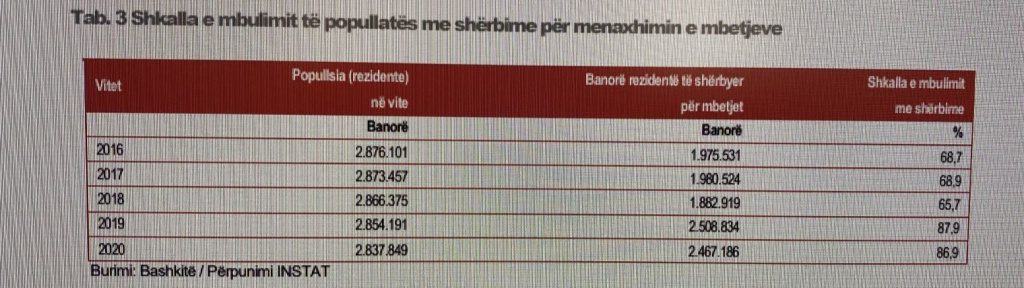
Even when these Services exist, waste is often deposited in unmanaged landfills near riverbeds.
The dysfunction of these barriers is also evidenced by the campaigns carried out by the organization "Enforce - Engineers for Climate and Environment", for the cleaning of the mouth of the river Ishmi, where only in the campaign carried out in May of this year, they managed to collect a quantity of large waste, not only at the mouth of the river, but also on the coastline of Gotulla.
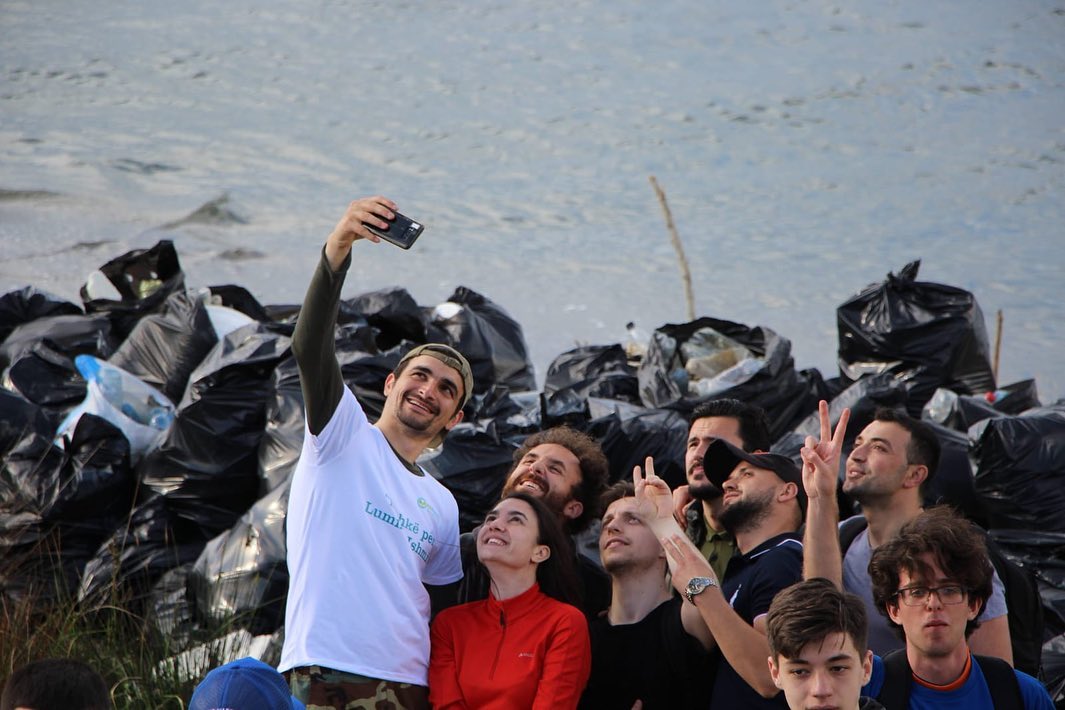
According to a survey conducted by “Sinjalizo”, an international organization called “ The Ocean Clean Up ”, which monitors river pollution worldwide, lists the Ishmi River as the third most polluted river in Europe. Only two rivers in Turkey rank ahead of this river, which are several times larger than the Ishmi in terms of size and length. According to this organization, the Ishmi River deposits 503.600 kg of waste into the Adriatic Sea per year.
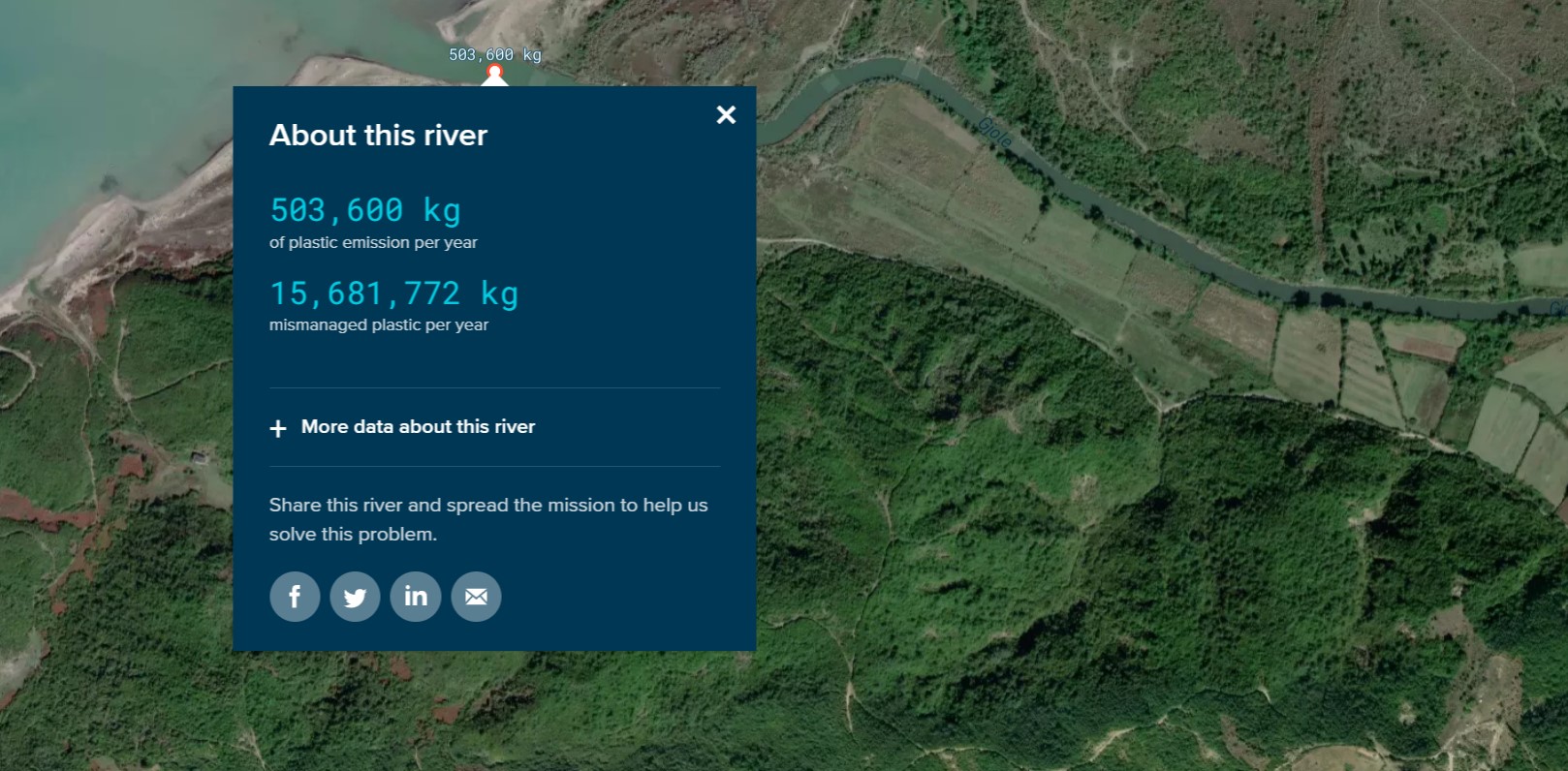
This monitoring, which measures in real time the discharge of waste into the seas from different rivers, shows once again that the barriers established in 2017 do not have the capacity to withstand such a large weight of waste.

ACQJ contacted the Ministry of Tourism and Environment to ask for a response to the malfunction of the plant, but until the publication of this article there was no comment.
"SINJALIZO" also contacted the National Environment Agency to ask about the establishment of administrative measures for pollution, but we did not receive any response.