


Author: Geri Emiri
The first house in the village of Melth, one of the villages of Zall-Gjoçaj, belongs to Sali Kolec. He had the river almost 20 meters away from his house and he never thought that one day the Melthi Stream, a branch of the Uraka River, would no longer flow. " I grew old there. I didn't wash my eyes inside, but I had the river so close. On hot days, we would quench our thirst there ," the 68-year-old recounts.
"They have put the river in pipes and the water goes there and produces energy, that's it ," adds Koleci. He and the residents of about 5 villages in the Zall-Gjoçaj area and the Derjan Administrative Unit, in the Municipality of Mat, have been protesting for about 3 years against the construction of 2 hydroelectric power plants, named "Sekë and Zais", one of which is "in the heart" of the Zall-Gjoçaj National Park.

But this is not the only area in Albania that has been affected by the construction of small hydropower plants, known as HPPs. Some of them sprouted there before these areas were declared protected and others HEC-ce appeared there after these areas gained protection status.
The National Agency of Natural Resources (AKBN), in an official response to the Albanian Center for Quality Journalism (ACQJ), explained that in 1 decade, 96 concession contracts were signed for the construction of HPPs in Albania. For the contracts signed in the period of 2010-2021, 39 HPPs have been completed and are already in production. 8 HPPs are being built, while 49 others are still completing the necessary documentation.


But the number is thought to be even higher, if we refer to HPPs with a production capacity below 2 Megawatts and that do not need a concessionary permit for their construction.
" HPPs under 2 Megawatts are the simplest permits to obtain from a documentation point of view because they do not require an in-depth study of the environmental impact, and public consultation is not required ," analyzed lawyer Dorina Ndreka-Asllani for the Albanian Center for Quality Journalism (ACQJ).
Environmental experts, on the other hand, estimate that the benefits for interest groups and the economic efficiency of these investments are low. "When we develop small hydropower plants, the local community, the natural environment, the government and the institutions are lost, except for one person who is making this investment for personal gain", Olsion Lama, an expert at the Conservation Association, summarizes after referring to several studies. and the Protection of the Natural Environment in Albania (PPNEA). But some of these HPPs have been built in Protected Areas, taking advantage of the time when they did not enjoy this status, while others are continuing construction within them. In an official response, the National Agency of Protected Areas (AKZM) announced that 61 HPPs are built or planned within protected areas.

Modern conquerors of the mountains
In Albania, nature has been categorized according to its importance since 2002. Law number 8906, "On Protected Areas", aimed at the announcement, preservation, administration, management and sustainable use of protected areas and their natural biological resources.
Protected Areas were declared land and water territories in order to protect the natural assets and the biological diversity they contain.
In 2017, a new and broader law was approved for Protected Areas, dividing them into 6 categories according to their importance. Since 2015, the National Agency for Protected Areas (AKZM) and regional directorates were established.
With the announcement of the new zones and the expansion of the areas of the existing ones, a part of the small hydropower plants built remained within the Protected Zones. According to AKZM, the 34 HPPs that are today within these areas were built before 2015.
Experts think that the number is higher, referring to several studies carried out. "105 HPPs are located in protected areas, bringing a series of negative effects, such as damaged biodiversity, increasing drought, reduced amount of water and then reduced access to water", analyzed for ACQJ Aida Ciro, researcher of tourism sector. AKZM for all HPPs built in Protected Areas has identified 4 cases where the law was violated and has taken measures. They belong to the territory of the Administration of Protected Areas (AdZM) Korça.
One of them was identified at the entrance of the Llënga Canyon in Pogradec, where today a dam is erected that has radically transformed the landscape of the area. Blocking the flow of water, diverting it and interfering with the slopes of the canyon also caused damage to a nearby ancient road, which is thought to be a branch of the ancient Egnatia road.
In September 2016, the AdZM inspectors had found interference by the company for the construction of the HPP in the protected area, but in a second document it appears that it was not clear about the boundaries of the canyon and had found interference within it, highlighting the shortcomings of the clear definition of the boundaries of the Protected Areas.

The experts say that with the new law, the Ministry of Tourism and Environment and AKZM had to re-evaluate all the projects that have been granted within the Protected Areas and verify their compliance with the law. But AKZM officially clarified that the changes in the law were not translated into the change in the internal zoning of the protected areas.
" All constructions must be looked at. They cannot be justified by the fact that the HPP was built before it was declared a Protected Area because it is causing damage now, the biggest damage is the use of water for the HPP ," analyzes lawyer Dorina Ndreka-Asllani.
The National Agency for Protected Areas (AKZM) evasively officially explained that in cooperation with other institutions it has evaluated the documentation for HPPs, including the concession contracts inherited from the former Directorates of the Forest Service, but without giving details about the results of assessment.

AKZM does not have the authority to grant any of the permits for HPPs, but it expresses its opinion if they affect the protected areas. For the years 2015-2021, this institution says that it has "given opinions" in 186 cases related to the construction of HPPs.

Determining the borders of the Protected Areas or "giving an opinion" from the ACZM has in some cases raised discussions and objections from experts. The construction of a small hydropower plant in the Kukës area has affected another canyon, that of Bicaj, which enjoys the status of Natural Monument and is located within the Korab-Koritnik Nature Park.

"It turns out that based on the Technical-Economic Report, the construction of this HPP is outside the protected areas of the Kukës Region," the AKZM officially responded. But the head of the Non-Governmental Organization with a focus on the environment, "Eco Albania", Olsi Nika, who has held meetings with the local community and conducted environmental observations, explains that on the ground the situation is different.

" The blockage is in the canyon, it's not even 100 meters, a concrete dam has been placed at the exit of the canyon and what makes it even more cynical is that there is an attempt to manipulate public opinion ," Nika confesses.

" They only count its building as a hydropower plant. It may be 200 meters away from the protected area, but its ecological footprint is not only the hydropower plant building, it is the access roads, the canals, the dams, so it is the entire area where the hydropower plant is built ," he concludes.
Contradictory opinions as to whether or not HPPs affect protected areas have also been evidenced by the Supreme State Control (SCSC). In the audit number 1086/1, dated September 17, 2018, it found that the AKZM for the two permits of the hydropower plant on the Osum canyon for the company "HP-Bigas & Veleshje Energy" sh.pk, had stated that it carried out activity outside the network of Protected Areas.
" But contrary to this above response, in another letter dated May 8, 2018, AKZM states that, 'The building of the 'Bigas I' HPP is located within the Osumi Canyons natural monument...' ", the SAI found the positions of AKZM to be contradictory.

" In this specific case, an opinion was requested from the AKZM regarding this HPP, based on the coordinates provided, which resulted in it being located outside the system of protected areas ," explained the AKZM for its contradictory position.
" In 2018, an opinion was requested again on this HPP, accompanied by the layout plan of the requested area and the technical project, where the boundary was clearly specified, and its review resulted in the HPP building being located within the natural monument (MN) 'Osum Canyons' and according to Law No. 81/2017 "On Protected Areas", we have expressed our opposition to its construction ," added AKZM in its response.

But the High State Control also found that AdZM Kukës and Dibër have concluded lease contracts in 5 cases for the provision of public forest fund with entities who would use it for the construction of HPPs within the Protected Areas, where in 1 case the works had started.
" These actions are in violation of Law No. 81, dated 04.05.2017, 'On Protected Areas', the order of the Minister of Environment No. 129, dated 23.06.2016 "On the Approval of the Procedure for the Lease of Areas in Protected Areas ", the SAI report states.
" The obligation to liquidate the value of the lease contract continues even if the entity has not yet started the works, as the latter is related to the provision of a construction permit. As long as no works are carried out, there is no damage to the environment ," AKZM reasoned for ACQJ, justifying the leasing of the forest fund for the construction of HPPs within Protected Areas.
" For me, it is an abuse of duty to grant a forest fund located within the Protected Area for use by the HPP because it is a flagrant violation of the law and the organic law, which the AKZM as an institution is charged with implementing ," analyzed the case, lawyer Dorina Ndreka-Asllani.

Communities exhaust courts over water rights: companies are behaving worse than occupiers
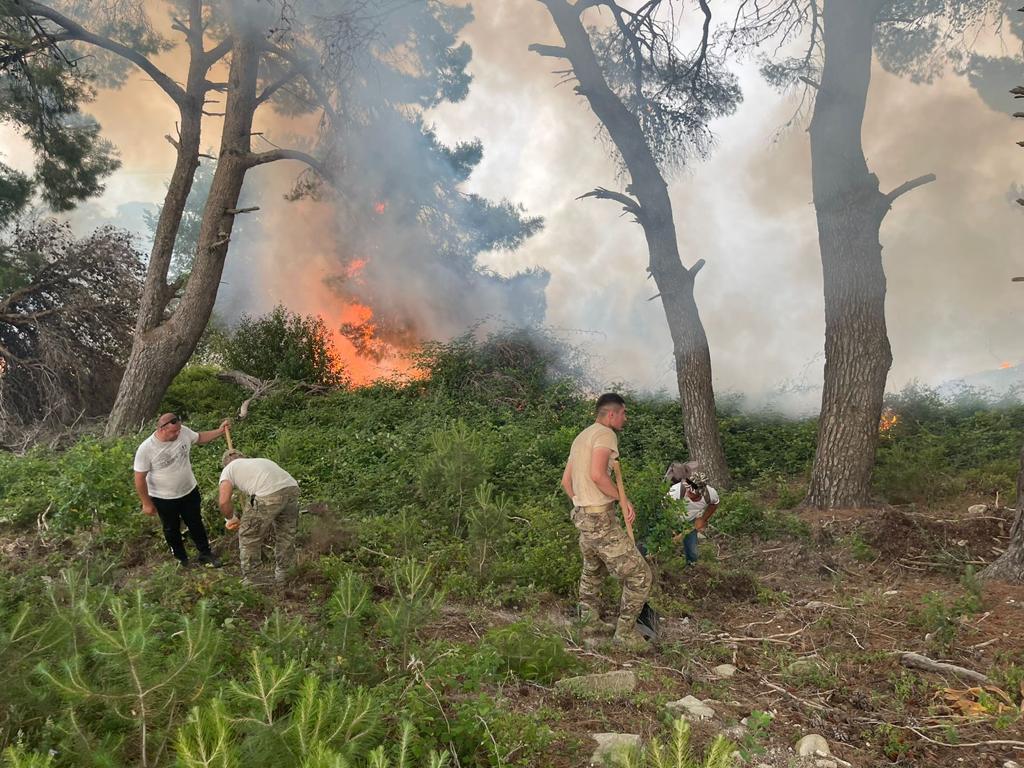
When they heard about the construction of 2 HPPs in their area, the inhabitants of the villages of Zall-Gjoçaj in 2019 erected a tent at the entrance of the Zall-Gjoçaj National Park and hid themselves for several months, preventing the penetration of the works into the Zone of Protected.
" We reacted before the works had even started. They said the works hadn't started yet. When they did, they justified it by saying they hadn't entered the protected area yet ," explains resident Dhimitër Koleci.
" When they entered the Protected Zone, they were told that the Protected Zones Agency, part of the Ministry of Environment, would react. Then they turned a deaf ear, and that's how this chain of events goes ," the man summarizes the reaction of the residents of the villages of Zall-Gjoçaj, Melth, Gjoçaj, Derjan and Urxall.

The permit for the construction of the HPP was granted shortly before the announcement of the National Park Lure - Mali i Deja, in Dibër, legitimizing the construction of the HPP in the heart of the Zall-Gjocaj National Park before the approval of the protection status.
" The permit was granted 28 days before this area was declared protected. It is the same institutions that approved the Environmental Impact Assessment of the HPP, which then made the proposal that the Zall-Gjoçaj area become part of the Lurë – Mali i Dejës National Park ," analyzes lawyer Dorina Ndreka-Asllani.
" The problem of Zall-Gjoçaj is very special. In Zall-Gjoçaj, a hydroelectric power plant is not being built and the water continues to flow, but water is being diverted within the National Park, within the protected area, with 2 tunnels about 4 km long, and the water is being diverted from its flow forever ," emphasizes the resident of the area, Dhimitër Koleci.
The referral for justice in the administrative court has faced them with challenges and sacrifices to protect the water, an ordeal that has been going on for almost 3 years.
" It's a never-ending nightmare. Residents from Zall-Gjoçaj come, travel 12 hours. They walk 3-4 hours, come to Tirana and they've never been asked how this HPP is harming them, why they've filed a complaint ," 54-year-old Dhimitër Koleci says in frustration.
Despite the court proceedings in the Administrative Court, the company "Seka Hydropower" sh.pk continued with its plans to build the "Seka and Zais" HPPs, on the Uraka River and the Melthi stream, in the municipalities of Mat and Mirdita.
" They have thrown all the inert materials into the river, they have destroyed the mills, even the cemeteries, they have thrown stones with dynamite explosions, they have behaved worse than the invaders ," adds Dhimitër Koleci. The company "Seka Hydropower" sh.pk did not respond to a request for comment on the residents' claims, sent via email, at the time of publication of this article.

Dozens of residents in the territory of the country have faced the builders of HPPs and institutions, due to the conflict caused by the use of water. Protests, objections, arrests and court proceedings have been the result of the struggle for basic needs and the preservation of the ecosystem.

The Administrative Court of Appeals in an official response to ACQJ clarified that it does not have specific statistics for HEC-related cases, but from its research in the system of court cases there are 18 processes related to HECs.
In July of this year, five years after a request for security measures by a group of residents from Valbona and the "Toka" association, the Supreme Court ordered the suspension of the concession of two HPPs in the Valbona Valley National Park.
This marked an achievement for residents who took the project to court, although the HPPs were already built and operational, producing electricity. On November 9, the judicial enforcement forced the company "Dragobia Energy" and "Gener 2" to implement the decision of the Supreme Court and suspend the concession contract for the two hydropower plants in the Valbona River, until another final decision from the court.
The Ministry of Infrastructure and Energy explained in an official response that it has started the procedures for the termination of contracts for 27 entities that have resulted in serious contractual violations.
Environmental and tourism experts find that the strategies for the development of village tourism and the granting of permits for the construction of HPPs contradict each other.

" For local communities, the most sustainable would be to develop tourism alternatives that are related to the needs of local communities and the use of natural and cultural resources, in a way that will protect them for the needs of future generations ," analyzes tourism sector researcher Aida Ciro.
She gives the positive example of how in the Municipality of Gramsh - where a HPP started works at the entrance of the Holta Canyon and then was suspended - the orientation towards tourism and new destinations has increased the commitment of the local community and the opening of new businesses.
" The map and number of 'destinations' offered by tour operators have been expanded, thus allowing a larger number of the local community to be included in the tourism value chain through the provision of various Services or products, ranging from guides, to the production of local products, hospitality, transport, etc., " concluded Ciro.

The government again opens the way for projects within Protected Areas
For the National Agency of Protected Areas, the approval of new borders will improve the situation, while environmental organizations and experts oppose the government's decision with the argument that it paves the way for development projects that damage the environment.
" The approval of the new boundaries of environmentally protected areas by the National Council of Territories (NKT) with its decision no. 10, dated 28.12.2020, is a qualitative step in this direction, as now each protected area is limited by its digital border with georeferenced coordinates, within this border the real surface of the protected area is accurately given ", the AKZM analyzed the zoning proposed by it.

" The finding made by the AKZM is that we should remove the areas where the HPPs are built from the Protected Areas, so the idea is not to remove the HPP from the protected area, but to remove the Protected Area ," analyzed lawyer Dorina Ndreka-Asllani.

Earlier , according to experts, 12 environmental organizations and a group of professors from the University of Tirana, the decision of the National Territorial Council shrinks Protected Areas and erases 15 thousand hectares from the map to pave the way for infrastructure projects such as the construction of HPPs, while the conflict with local communities over water rights may deepen.
" The main problem lies in this review because certain areas are being removed from protected areas, to allow for economic development or the development of 'gray infrastructure' within these areas, such as HPPs or the case of the airport in the Vjosa-Nartë Lagoon Protected Area ," Olsion Lama, an expert at PPNEA, analyzed for ACQJ.

Light at the end of the tunnel...
But the construction of HPPs in Protected Areas seems to be starting to be overturned case by case in the country's courts, restoring hope for the residents. The Administrative Court of Appeal in Tirana decided on November 10 to uphold the decision of the Administrative Court of the First Instance, for the annulment of the decision of the Energy Regulatory Body, for the licensing of the company "Seka Hydropower" shpk, in the production of electricity from HEC "Zais", as it lies in the protected area.

" We don't tire ourselves out in vain, but we tire ourselves out for the perspective ," comments 68-year-old Sali Koleci, on the final court decision that put the hydroelectric power plant within the protected area in Zall-Gjoçaj out of operation.
" I used to go out and catch trout at the door of the house, and now you put it in the pipes, and that whole river dries up, so much so that in the summer the river smelled of dead fish, the living things smelled of dead fish. We will not give up to protect our nature ," concludes Sali Koleci.