


Author: Merxhan Daci
Day by day, during the last weeks the price of oil is increasing. Currently, diesel is sold at 230 Lek per liter, the same amount of petrol, and gas at 90 Lek. This situation that weighs directly on citizens' pockets has started since 2021 and along with it the chain effects.
The National Association of City Transport warned that from March 1, the urban transport service for the capital's residents would be suspended if the government did not approve their demands. In a letter addressed to Prime Minister Rama, the Mayor of Tirana, Veliaj; Deputy Prime Minister Ahmetaj; to ministers Ibrahimaj and Balluku, the companies raised the concern that the increase in the price of oil has increased costs for 48% of their activity. Although the service was not interrupted, the operators removed the subscribers from the market in order not to further burden their finances.

The association asks the government to approve their request for fiscal policies, to compensate for the losses that are being caused by the increase in the price of oil. Their requests are the VAT refund, the removal of the oil excise duty of 37 ALL/liter; the removal of the circulation tax on fuel of 27 ALL/liter, as well as the reimbursement of the ticket price for some categories that travel for free.
"50 percent of urban transport costs come from oil. Prices have not increased for the most part, but there are abusers in the market. Oil is the basic element. We are in continuous talks, there are promises, there has been no action so far, if it is prolonged even a little longer, most operators will go bankrupt. Last year in September it started to increase, in January and onwards it has increased continuously, 20-25% more. They said they would help you, we believed them," Dashnor Memaj from the Transport Association tells "Sinjalizo".
Even in intercity transport, if these rates of increase in the price of oil continue, an increase in the price of tickets is expected.
Taxi drivers also warned of an increase in the price of the taxi service due to the increase in the price of oil.
The head of the Albanian Taxi Union, Bilbil Cara, said in the media that a 30% increase in the current value is required.
Cara told "Sinjalizo" that they have been making a request to the municipality for months.
"We made a request to the Municipality in September when it was increased for the first time and we continued with other requests in November and January and in January we made a study and sent it to the Municipality and now we are waiting for the Transport Directorate to The municipality should send it to the Municipal Council for raising the price of the taxi meter."
He adds that the taxi service has quite a few problems that are mainly related to the increase in the price of fuel.
"The difficulties for us as a public taxi service are very great because with the increase in the daily price it has become impossible to work because the daily turnover itself does not manage to cover the expenses, having very heavy traffic on every road plus the price of fuel it is very difficult for us to work and support families on a basic living income."
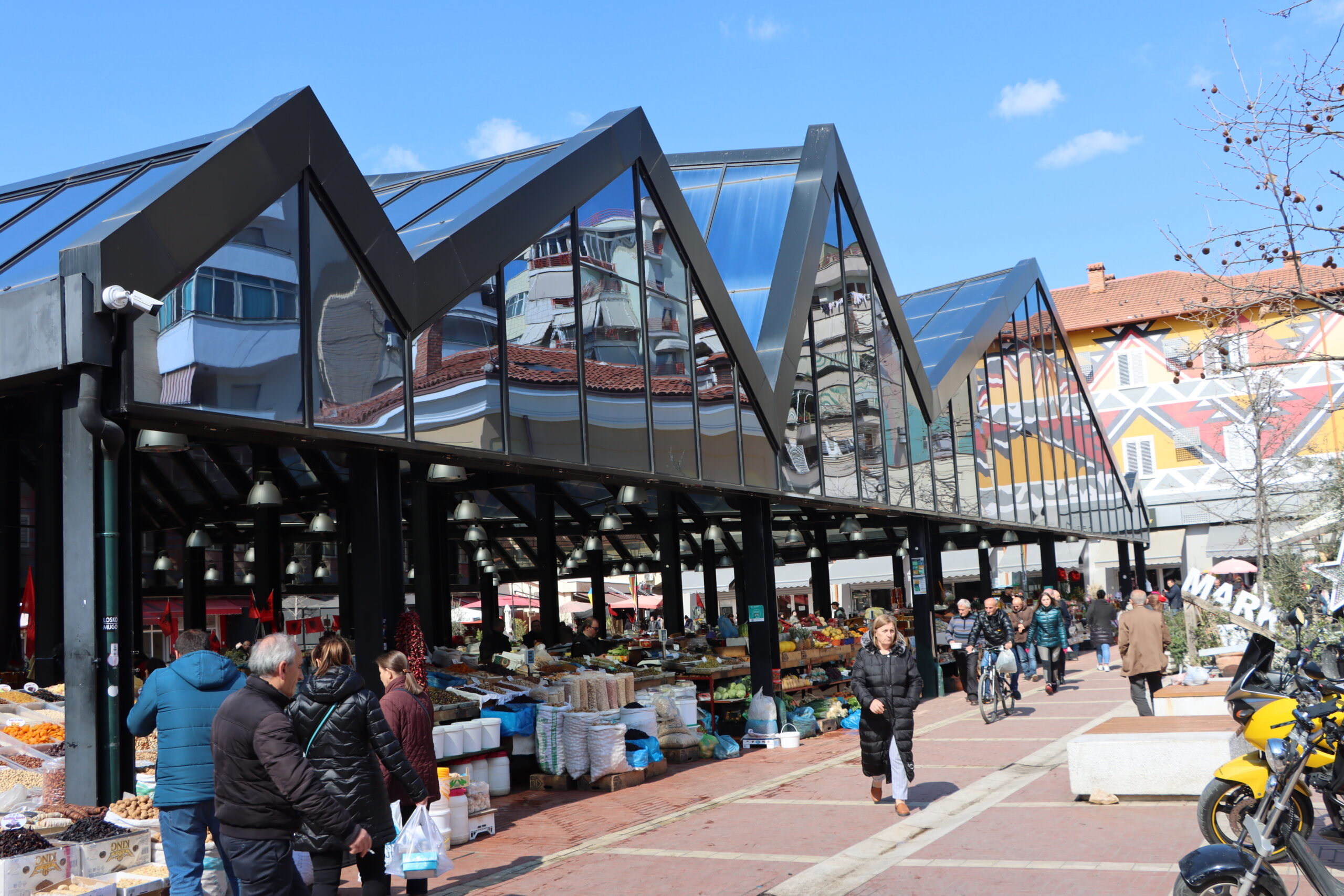
Agriculture was directly affected, followed by the food market
The increase in the price of oil has also brought problems in agriculture. The farmers of Devoll protested in February in front of the Directorate of Agriculture Devoll together with their tools. Farmers came out in protest because of the increase in the price of oil and chemical fertilizers.
The farmers told the media that they have no support from the state, while they emphasized that the problem for this sector is the price of oil, subsidy schemes or the increase in the price of chemical fertilizers. Some farmers said that they came out with a loss and others that they had no profits at all.
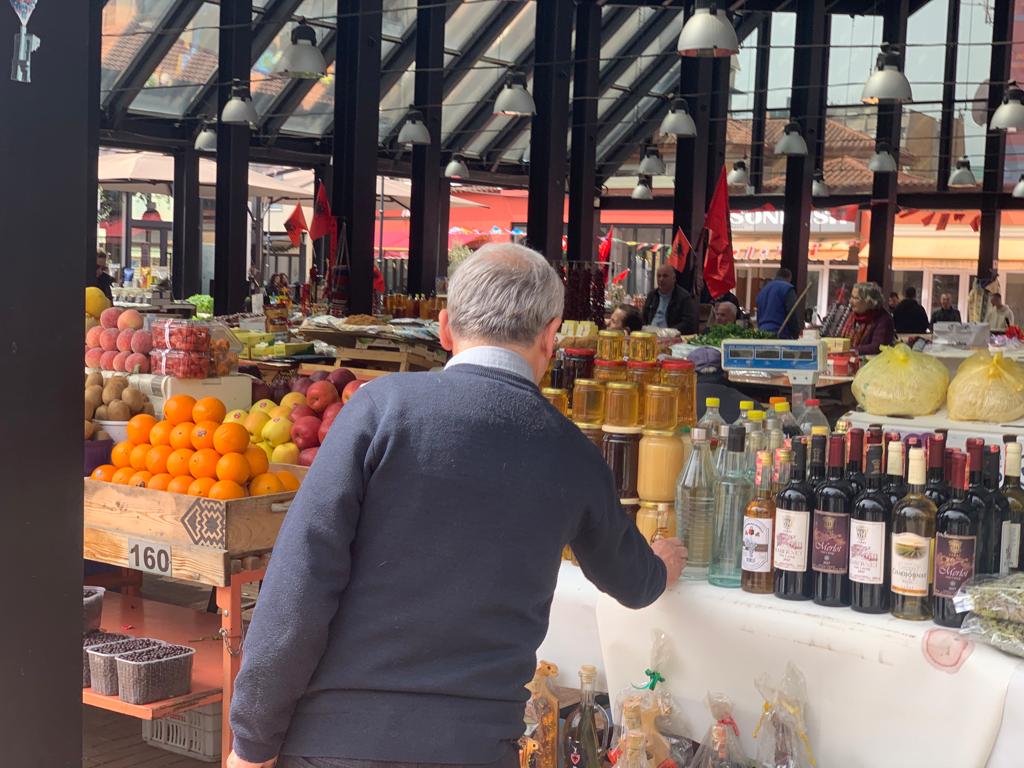
Since the increase in the price of oil brings a chain increase of many products, this is reflected in the local market with the price of flour, meat, fruits and vegetables, bread, and other basket products.
Confindustria requested the establishment of a parliamentary commission to investigate what is happening in the market.
"Due to the recent increase in the price of fuel and electricity to historical levels, it will require the establishment of a Parliamentary Commission to investigate the causes and the missing role of the responsible executive and regulatory institutions".
This proposal was supported by the Head of State Ilir Meta.
"Appreciating the finding of "Konfindustria" that the unjustified increase in prices is a clear indicator of the presence of cartels, monopolies and oligopolies in the market, I join the proposal for the urgent establishment of a Parliamentary Commission to investigate the causes and the missing role of the responsible executive and regulatory institutions," Meta wrote, among other things.
Is this a "cartel" behavior? Can and should the state intervene?
The Competition Authority, whose mission is to protect free competition and consumer interests, has stated that it is currently monitoring the market and has started investigations.
The head of this institution, Denar Biba, has informed that the price increase may be an indication of a prohibited agreement (so that the operators have agreed with each other) but it may also be influenced by foreign markets. .
" We have been monitoring the hydrocarbon market for a week, so the indicator was the sudden increase in price in unison, it could be one of the indications of a prohibited agreement, it could be influenced by foreign markets, therefore we have decided to investigate for a period that is as fast as possible within our capacities ," said the head of the Competition Authority, Denar Biba.
"Sinjalizo" officially asked the Competition Authority if it had reached any conclusions from the monitoring carried out so far. The response was that the matter is still under investigation.
"The Competition Authority, based on Article 28 of Law no. 9121 "On the protection of competition", as amended, has carried out a monitoring in the market, whether there is concerted behavior or not. Following this, the Competition Commission has taken decision no. 866, dated 25.02.2022 "On the opening of the preliminary investigation procedure in the wholesale market of diesel fuel and gasoline". Based on Article 42 of Law no. 9121 "On the protection of competition", as amended, during the preliminary investigation, the right to consult the files is not implied. The Competition Commission will express itself at the end of the preliminary investigation period."
But can the state intervene by influencing the reduction of the price of oil in Albania?
Sotiraq Dhamo, Professor of Finance at the Faculty of Economics in Tirana, told "Sinjalizo" that the state should intervene in several ways.
"At a minimum, I could suggest: First, not to allow, but on the contrary, to fight the monopoly in the supply and trading of oil and its by-products, to remove some of the taxes included in the price of oil, including the circulation one. To invest by himself or with a private company in the field of domestic oil processing".
According to economic expert Enriko Ceko, it is enough to remove the excise duty and the turnover tax and the price of oil decreases significantly immediately. And according to him, this does not cost the state budget. As Ceko said, among other things, there are a few companies that command the fuel market and that agree among themselves on setting the price.
" Yesterday, the international market was at a high price of 89-90 dollars per barrel, while today it was 81 dollars. Why didn't the price of oil drop today? This is the question I ask the minister. This is politics, not the market? In Europe, only Albania and Romania extract oil from the ground. This logic doesn't work because on the stock exchange, we buy the oil we buy today for 6 months or a year. This is an abuse. The excise tax is 37 lek, but according to the government, it increases based on inflation. The concept of excise tax for a country that produces oil should not exist. Countries that export oil have 0.3 euros. The turnover tax is 23 lek. It doesn't exist as a concept. It is enough to remove the excise tax and the turnover tax and oil drops to 143 lek. Removing the excise tax does nothing to the state budget. There is no free market. In Albania, everything is monopolized, like the fuel market. There are 6-7 companies "They have the market. They silently agree on how much the fuel price will be. Fuel in Albania receives 115 lek tax ," said Ceko.
"Sinjalizo" asked the Minister of Infrastructure and Energy, Belinda Balluku, for a comment regarding the developments regarding the price of fuel, but by the time of publication of this article there was no response.
Oil in Albania is cheaper than in Switzerland and Luxembourg, Kosovo and the whole region
In Global Petrol Prices, an international platform that generates data on the price of oil and by-products for all countries of the world, Albania until February 28 of this year resulted in an average oil price of 192 ALL per liter, registering the 23rd highest oil expensive in the world.
In the region, Serbia comes right behind us, with 184 ALL/liter, Montenegro with 171 ALL, Macedonia with 145 ALL per liter. Oil in Kosovo these days at the beginning of March turns out to be somewhere around 1,44 euros.

But, in terms of purchasing power, Albania has the most expensive oil in Europe, with its citizens spending 4.7% of their income to buy a liter of oil. Two years ago, this share was 4.5%, indicating that oil prices in the country have been rising faster than incomes.
Albania has the lowest per capita income in Europe, together with Kosovo.
According to these data, the price of oil in Albania is at the same rate as the price in countries with very high economic development such as Switzerland, Luxembourg, Germany, Singapore, etc.
The Government of Kosovo has decided to set maximum wholesale and retail sales prices for oil and by-products.
The Government says that it has taken this decision to protect consumers from large price movements in the oil and oil derivatives market.
" In order to protect consumers from large price movements and eliminate disorders in the oil and oil derivatives market in the Republic of Kosovo, the Government decided to determine maximum selling prices/wholesale and retail trade margins ," the Government's decision states.
A country rich in oil but importing... even from Russia
Russia (already in open conflict with Ukraine) is one of the world's largest suppliers of grain, gas and oil. In 2021, our country imported 12% of oil quantities from Russia.
However, Albania is considered one of the richest countries in Europe in hydrocarbon reserves. The exploitation of oil started at the beginning of the 20th century and the peak of exploitation reached in the 70s of the last century, where the production of crude oil reached the level of 2,5 million tons of oil per year. Patos-Marinza is the main oil area in Albania and the largest in Europe, with an area of about 17,8 thousand hectares and its proven reserves are about 5,4 billion barrels of oil.
The oil sector has always been an important sector for Albania's economy. The oil fields in Albania are located mainly in the western and southwestern part of the country.
According to several studies carried out by Albpetrol, but not only, from 1985 to 1990 the oil reserves in the existing sources in Albania were in total about 437.6 million tons.
Protests have been called, but many people have not gathered
Considering the low economic level and the several times increase in the price of oil, civil society organizations have several times called for protests.
Although at the moment there is no citizen mobilization to oppose the increase in the price of oil, gasoline and gas in the capital, earlier there were several calls for protest which did not gather many people.
Various organizations have called on consumers to turn off their vehicles (mainly in Tirana) for at least an hour on the road as a sign of protest, but this has not worked and no one has reacted.