


Ida Ismail
For more than a decade, Tirana has entered a new phase of urban development. New projects such as the New Boulevard, the Grand Ring Road, or interventions in existing roads have given the capital a modern look with tall buildings, squares, and new streets. But behind the shiny facade lies a bitter reality for thousands of people with disabilities, as Tirana remains an inaccessible city for them.
Improvised survival ramps
Tanush Çaushi, an engineer who uses a walker, faces the lack of ramps and dedicated lanes in Tirana every day. He is forced to use expensive taxis, as public transport to get from Astir to the office near the Air Albania stadium is not accessible. Çaushi says: “The slope of the ramps must be 7%, not smooth, which even when installed, the criteria are not applied. The lack of ramps in public or private institutions has often prevented me from receiving service.”
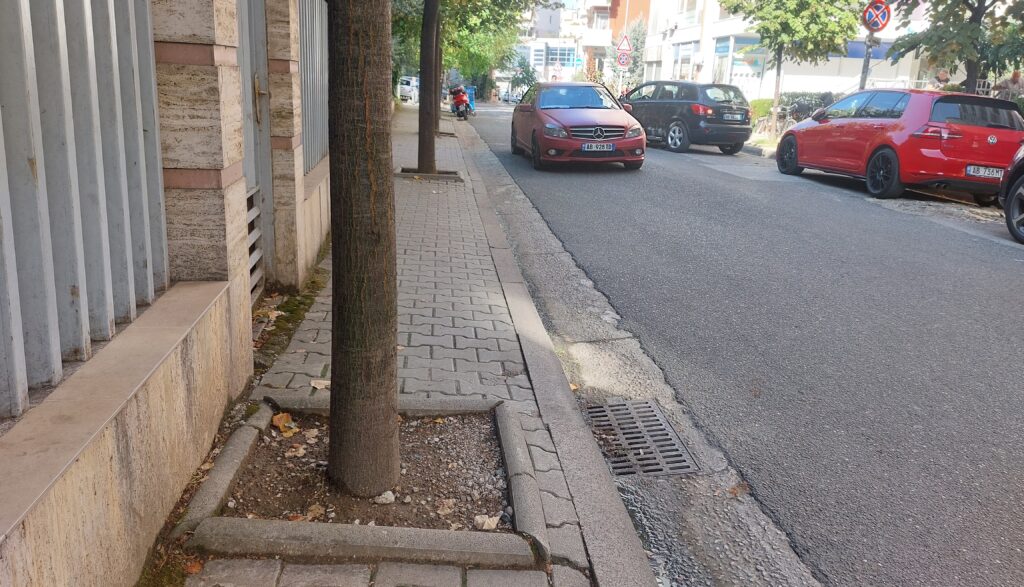
Tanush Çaushi's story shows that this category is often forced to improvise to survive in a city that doesn't think of them.
"Due to the lack of ramps, I was forced to install three ramps myself in the building where I live," says Çaushi.
New roads, with old obstacles
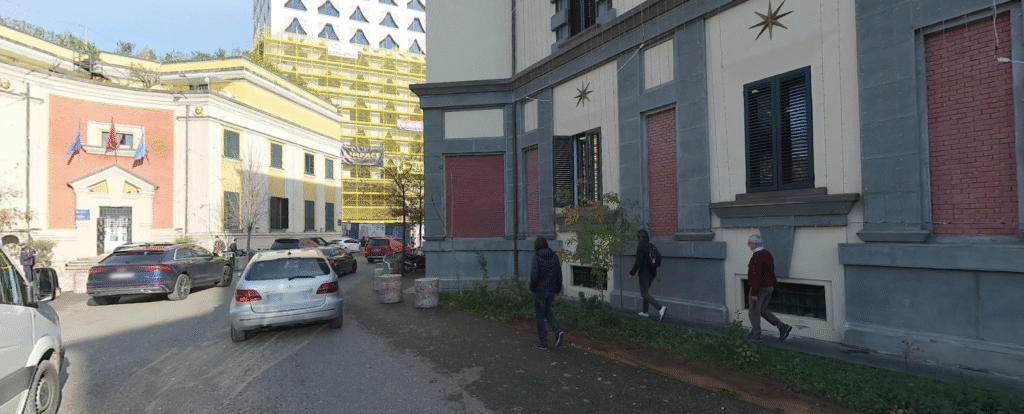
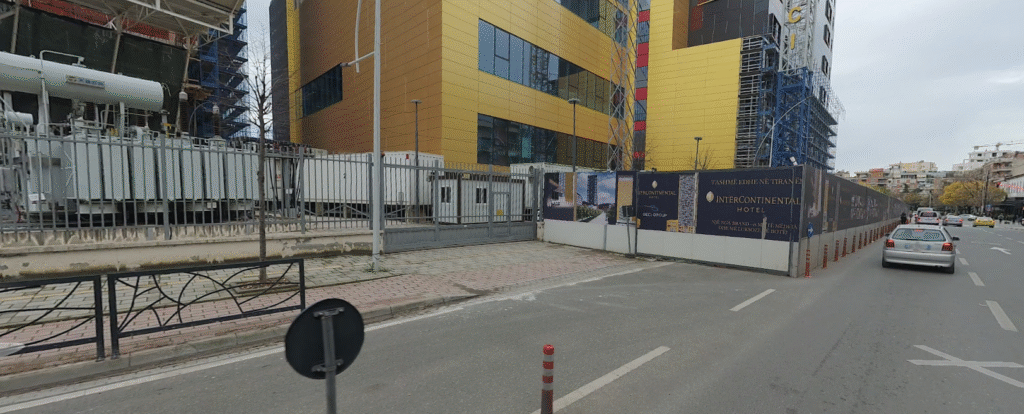
In a field observation in invested areas, we see that in the Astir area, the existing ramps are very steep and unsafe for people with disabilities. The New Boulevard, although built with wide sidewalks, does not have sound and orientation signs for the blind. On the Elbasan road, after reconstructions in some parts of this segment, there are no suitable ramps to cross to the other side of the road, endangering the movement of people in wheelchairs.
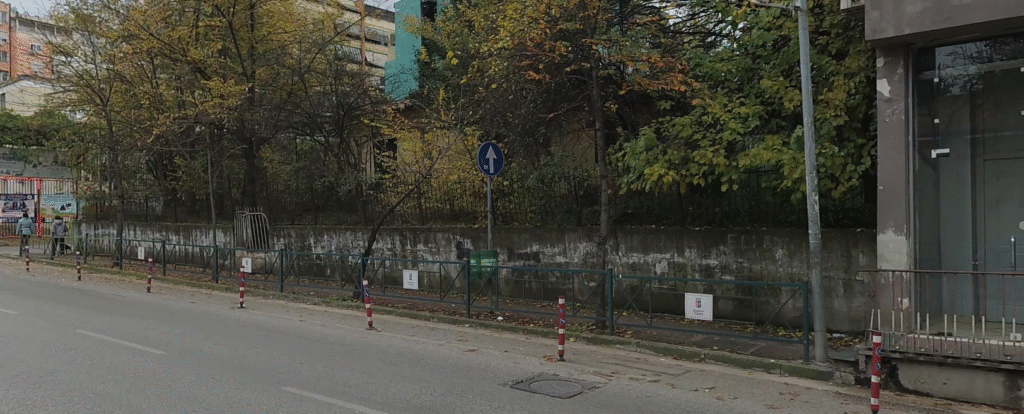
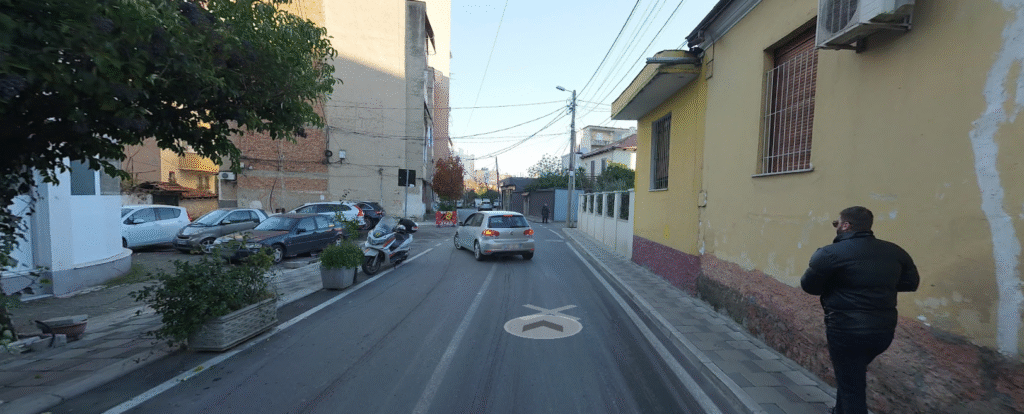
At the Artistic High School, a lane has been created dedicated to people in wheelchairs, but in most cases it is used by bicycles and even motorbikes. Other streets in the capital offer narrow, overcrowded sidewalks, occupied by vehicles, with broken or smooth tiles, which on rainy days become a real danger for people in wheelchairs. Meanwhile, with the new infrastructure, trash cans are placed in the bicycle lanes.
The situation is also worrying for 10 blind people, a figure according to data from the Albanian Association of the Blind. This category faces a lack of sidewalks adapted to move with a cane, although investments have focused only on acoustic traffic lights. One of them is the president of the Association of the Blind, Jonid Ferhati, who said: "When there are no roads that are not adapted, how can I get to the traffic lights? There are no roads, no sidewalks to move with a cane. There are no standards, and even some that have been made are without certification and without consulting us."
There is a law, but implementation is lacking.
The Law on the Inclusion and Accessibility of Persons with Disabilities stipulates that all public or private institutions have an obligation to ensure accessibility for all types of disabilities in transportation, health, social care, education, employment, and other Services and opportunities.
For Suela Lale, an activist for the rights of people with disabilities and director of the “Së Bashku” foundation, the problem does not lie in the lack of legislation, but in its implementation. Lala: “Even when the private sector issues a construction permit and a certificate of use, the state does not monitor it properly. Meanwhile, we have seen that the state itself, when investing, overlooks the issue of accessibility for people with disabilities.”
Lala adds that people with disabilities are excluded from decision-making, in a clear violation of the UN Convention.
Even the USAID Accessibility Monitoring Report notes the non-implementation of the legal framework for the rights of persons with disabilities.
"Although the government has adopted relevant standards, they are not implemented in practice. Independent movement on streets and sidewalks is almost impossible for people in wheelchairs. Public transportation and many public buildings remain inaccessible," the USAID report states.
Public institutions without access
The situation is the same in public institutions, schools and public transport. Albanian Radio Television has no ramps and no elevators, which makes it difficult for people with disabilities to move. To continue with institutions such as the Parliament and the Municipality of Tirana that do not have ramps. The Prime Minister's Office has a non-standard ramp, with a slope inaccessible to people with disabilities. Even the Health Commission institution has a ramp outside the standards. The Alternative Report on the implementation of the Convention on the Rights of Persons with Disabilities for 2024 shows that only 37% of public buildings have a ramp at the entrance.
Health centers, post offices and even the renovated pavilions of the “Mother Teresa” University Hospital Center (MUTHC) continue to be partially accessible and lack elevators inside the buildings. The report highlights that 50% of vocational schools and vocational training centers are inaccessible to people with disabilities. Existing schools have problems with steep ramps, in the absence of internal elevators. Schools reconstructed or built after 2020, all those built with EU funds in Thumanë, Durrës, Tirana are up to all standards, unlike those built with funds from the Municipality of Tirana.
The reconstruction of the “Mihal Grameno” School was carried out through an investment by the Municipality of Tirana, but apart from the ramp at its entrance, there is no internal elevator that would help students who use wheelchairs. Even in public universities in Tirana, such as the Polytechnic, a student in a wheelchair says that there is a ramp, but that it has a slope so high that it is inaccessible to her. The situation is different from what Prime Minister Edi Rama claims, that the transformed schools in Tirana are models of the best European standards.
In addition to the problems with the roads, public transport has become another challenge for them. According to Dashnor Memaj, president of the Urban Transport Association, intercity transport lines are equipped with ramps, except for the 'Student City' line, while only the Kamza line is equipped with voice announcements for the blind. People with disabilities face a lack of adapted stops and overcrowded buses.
Complaints to the Commissioner for Protection from Discrimination
The Commissioner for Protection from Discrimination has received hundreds of complaints, but the recommendations remain without punitive mechanisms. During 2024, 89 complaints were filed, compared to 101 complaints filed during 2023, in which the complainants alleged more than one cause of discrimination.
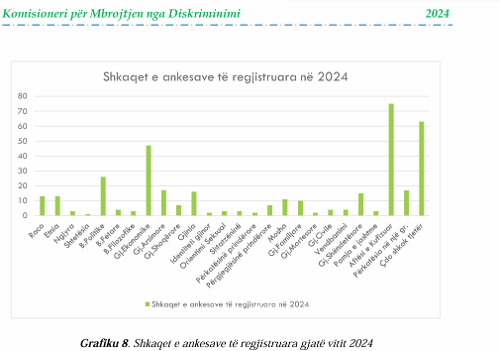
The Commissioner notes that appropriate measures have not been taken to meet accessibility standards for people with disabilities, regarding the designation of parking spaces for people with disabilities, access to newly constructed or reconstructed buildings, lack of accessibility in road infrastructure, sidewalks, etc.
Unfortunately, Tirana is still far from being a city where you can move easily as a person with disabilities. The lack of accessibility translates into discrimination, isolation, and exclusion from public life.