Author: Fatjona Mejdini
In Tirana, public spaces around residential blocks are disappearing more and more.
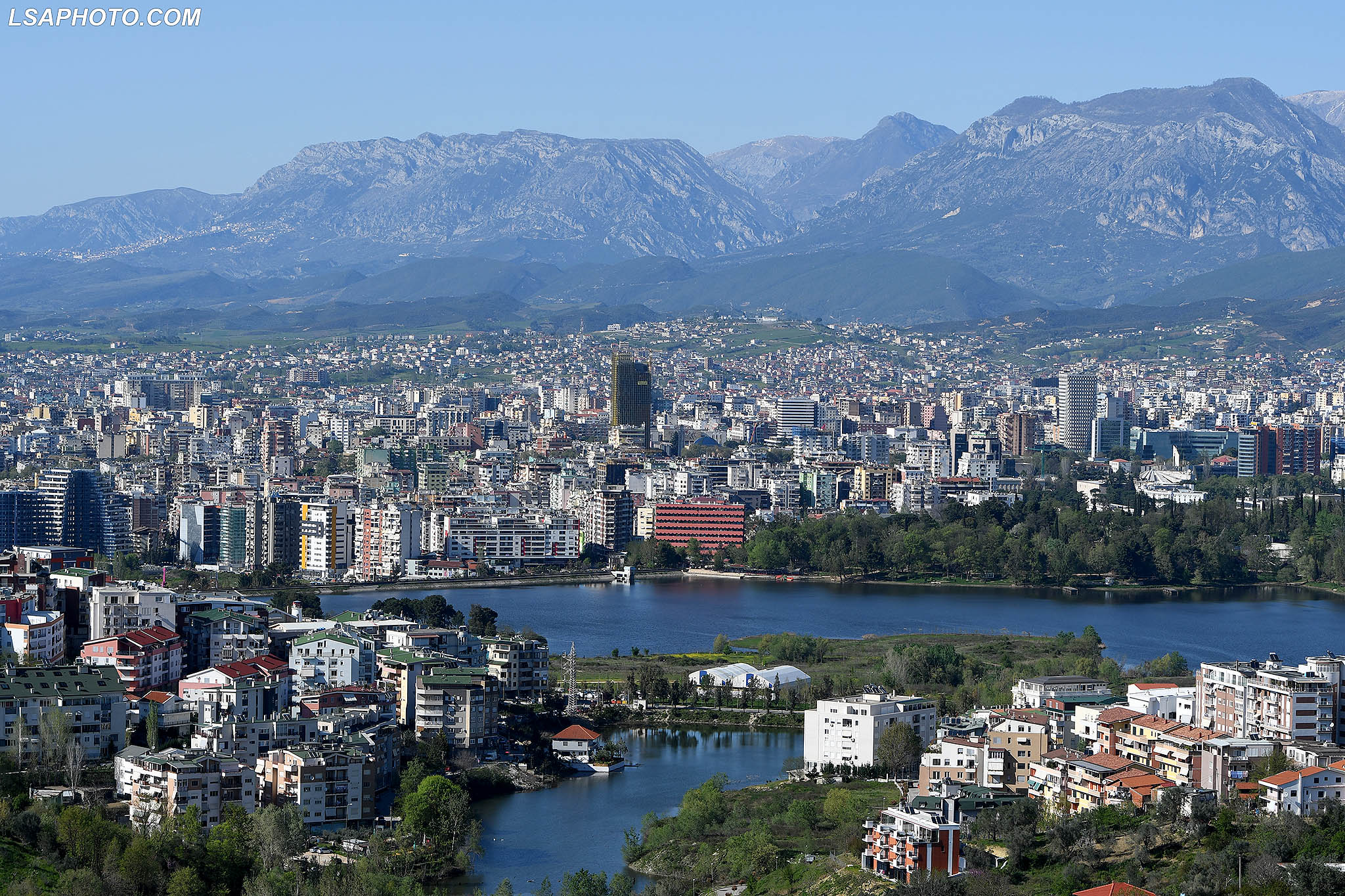
While the Head of the Municipality of Tirana, Erion Veliaj, continues a media campaign for planting trees near Artificial Lake Park, the municipality run by him allows every day the establishment of businesses in the green, public spaces between the buildings in the neighborhoods of Tirana.
The flower gardens inside the residential blocks have been present in almost every area of Tirana, but during the last decade, their elimination and transformation into private premises, mainly bars and restaurants, has started.
Likewise, the Municipality of Tirana refuses to provide information regarding the amount that the owners of these bars and restaurants pay for the use of public spaces, calling this a trade secret.
One such case is in the area near the Faculty of Civil Engineering, on Sandër Prosi Street . In 2007, when the Municipality of Tirana was led by Edi Rama, this area was dominated by green spaces and gardens under the buildings. After the current mayor of the Democratic Party, Lulzim Basha, took over the management of the Municipality of Tirana, in 2011, the private bar-cafe business began to flourish in this area above the gardens, but there were still some green spaces left in this area that were not occupied.
In February 2016, when the Municipality of Tirana had been led by Erion Veliaj for a short time, during the rehabilitation works of Zog i Zi, he declared that the Municipality would work to restore the identity of the squares and gardens between the buildings.
"From the smoke of meatballs, the space at Zogu i Zi is transformed into a flower garden and a resting place . I don't know how long it will take us to restore each square to its identity, but I know that not a single day will pass without at least one change," Veliaj said at the time.
But nothing happened in the area in front of the Faculty of Civil Engineering.
The spaces occupied by the premises remained as they were, while even the few free spaces that were left were occupied by other premises in 2018.

"We are forced to sit there (at the bar), to rest, but we have to drink coffee.
"If you don't drink coffee, they won't let you sit down," said a resident of this area.

According to the head of the EcoAlbania organization , Olsi Nika, Tirana is already a city with a population of more than 800,000 inhabitants and this large increase in population has not been reflected in the growth of green spaces.
According to him, existing studies show that during 2009-2014 the area of green space changed from 1.989.703 m 2 to 2.091.797 m 2 , with an increase in urban green areas of about 3.52%, while the population increased by 18.57%.
"The ratio of residents to actual green space has declined during this period in Tirana," he told the Center for Quality Journalism.
According to Nika, as the city continues to grow, green spaces are vital.
"This is a challenge, especially in the development of cities, where there is pressure for space, resources and development. In addition, green spaces are also socialization and recreation areas for citizens and as such are also very important", he continues.

A similar case occurred in the neighborhood near Asim Vokshi and Petro Marko streets , near the Harry Fultz Institute . In 2009, when Rama was the mayor, we see through Google Earth that there was a green space between the buildings, but in 2012, a few months after Lulzim Basha took over the mayorship, this space disappeared.
From a green "hill" this space became square, while from the satellite image you can see parked vehicles.

In 2013, the National Inspectorate of Territorial Protection, IKMT, launched an action to vacate the spaces near the Lake Park , namely the multi-story bars built next to the building on Mother Teresa Square , but it seems that this action stopped there.

In 2015, at the end of Basha's term, the spaces in front of the Harry Fultz Institute were occupied by bars, as you can see from the satellite images above.
While with the takeover of the municipality from Veliaj, these spaces continued to be occupied by private business.
"We are not satisfied with the green spaces in our neighborhood. They always promise changes, especially now that the elections are coming, they do anything to show that they are doing it, but look at it yourself. We don't have greenery here", said Frederik Hoxha, a citizen who lives in this area.
Meanwhile, the Municipality of Tirana continues to collect funds for the greening and afforestation of Tirana.
Part of the revenue collected from parking in the city goes to make it greener, while the rest goes to public works.
"I believe that the citizens have seen that every penny that goes to the Municipality of Tirana is immediately translated into investment, so the guarantee for this is the fact of how many trees we have planted this year, how many bicycle lanes we have built, how many dedicated bus lanes we have added for to encourage citizens that an electronic payment is transparent in their relationship with the Municipality, but it is also the ideal way to finance projects such as the orbital forest or the greening of Tirana", said Veliaj in February 2017.
Leonard Olli, member of the Democratic Party in the Municipal Council, points out that the Municipality of Tirana declares that there are about 4 million euros in annual income from Tirana Parking.
"If only a part of them were really used for the greening of Tirana, I believe that Tirana would be a "botanical garden", he said.
Trade secrecy as an excuse for lack of transparency
The Center for Quality Journalism requested information from the Municipality of Tirana regarding the fees paid by a number of bar-cafe businesses for the use of public spaces for their profitable activity. This request came as a result of numerous complaints that a large number of businesses do not pay or partially pay their obligations for the occupation of public spaces, thus contributing to the increase in corruption and preferential treatment of some operators.
The municipality refused to respond, citing the law on tax procedures and trade secrets as the reason for not providing the requested information. It was justified that the tax information of a commercial entity enters the information protected by the legislation in force through the trade secret clause and only a very low number of institutions had access to this information.
[Pullquote]
Decision No. 59, dated 30.12.2015 on the “System of local taxes and fees in the city of Tirana” provides for fees of 1500 ALL/m 2 , 750 ALL/m 2 , 400 ALL/m 2 and 200 ALL/m 2 for Zones A, B, C and Administrative Units outside the city of Tirana respectively.
[/ pullquote]
But, in fact, such a justification does not hold. Based on the 2015 Municipal Council Decision , titled “Fees for Occupying Public Spaces”, in the case of using land for the purpose of exercising commercial activity such as placing goods outside the place of trade, surfaces occupied by platforms, surfaces surrounded by flower pots, decorative plants, railings, decorative trees, plastic barriers and other items, etc., similar to them, the obligation is monthly, with a basic fee, which should be public information.
This refusal, based on the justification of trade secrets and the right to preserve private information, was also rejected by the Commissioner for the Right to Information, who, like the Center for Quality Journalism, also considered the payment made by these businesses to be information that should be public and accessible to citizens.
The latter has ordered the Municipality of Tirana to provide the necessary explanations for the requested information by March 29, 2019. Until the moment of publication of this article, the Municipality of Tirana has not yet responded.
*In the main photo, businesses in the public space next to Asim Vokshi street.
** This article was produced as part of the project “Tiranalytics: An assessment of local government public spending in the Municipality of Tirana” supported by LevizAlbania, a project of the Swiss Agency for Development and Cooperation . The opinions and positions expressed in this article do not necessarily represent the opinions and positions of the donor.