


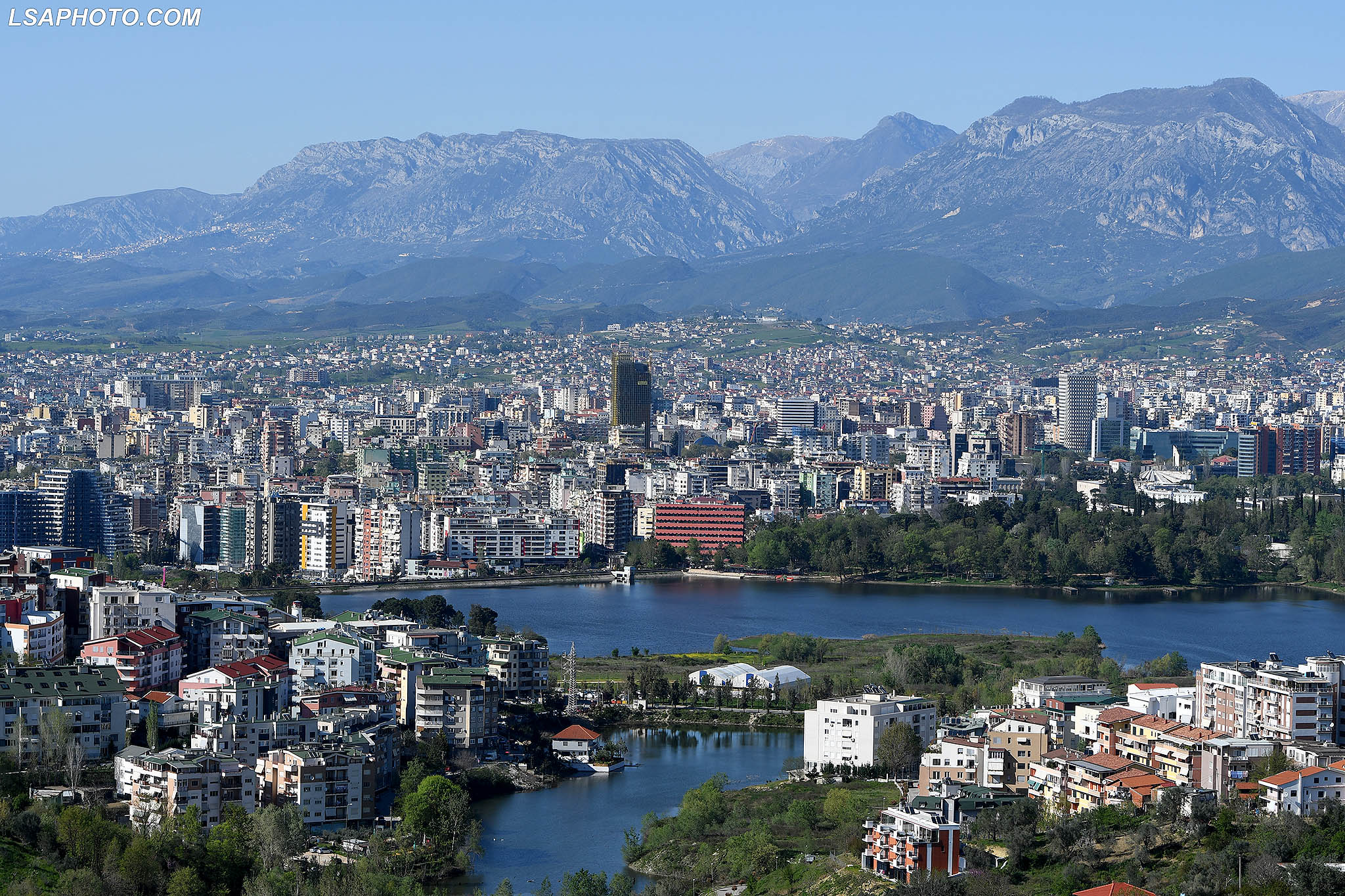
Author: Denis Tahiri
The National Environment Agency and the Institute of Public Health report a reduction of up to 60% in air pollution in Tirana due to the restrictions of the COVID-19 pandemic, but environmental experts consider this "an accident" and warn of a return to the previous state , once the country is fully opened.
With an electronic device in hand, Arion Sauku from the environmental organization Mileukontakt has been measuring the air quality in Tirana, Albania’s most polluted city, for two years. In March, he noticed a drastic drop in pollution levels for the first time in two years, almost twice below the European Union’s permitted norm. Sauku says the new data did not excite him. Shortly after the government banned the movement of cars and citizens as a result of the COVID-19 pandemic, the regeneration of nature and the disappearance of the dense cloud of smog over Tirana was an expected “side effect” for local environmental monitors.
The improvement of air quality as a result of measures to prevent the new coronavirus pandemic is also confirmed by the National Environment Agency and the Institute of Public Health, the two institutions responsible for the official measurement of air quality in Albania.
The National Environmental Agency told Fact that, in two measurements conducted at the end of March and the beginning of April, the level of air pollution from hazardous PM 10 particles had dropped by 60%, compared to the same period a year earlier.

From the monitoring carried out on March 28, the presence of PM 10 in the air was 21.77µg/m³, less than half of the allowed European Union norm of 50 µg/m³, for the first time in many years.
The lowest rate of PM 10 in the air was recorded on April 5, 2020 at the value of 12.8 µg/m³.
PM 10 particles are among the main air pollutants in Tirana and are blamed as the cause of a series of dangerous diseases. According to the National Environment Agency, the presence of PM 10 in the air in 2019 was approximately 20% higher than the European Union norm and there were cases when it exceeded more than twice this norm.
Dust particles, mainly caused by Tirana's booming construction sites, are not the only pollutants. The Institute of Public Health reports a significant decrease in gases discharged into the air during the months of March and April of the quarantine.
According to the Public Health Institute, levels of SO2 (sulfur dioxide), CO (carbon monoxide), NO2 (nitrogen dioxide) and benzene have nearly halved.
Meanwhile, the level of O3 (ozone) increased during March and April.

The National Environment Agency blames the high traffic of vehicles and the construction sector for the high level of air pollution in Tirana over the years. The agency states that particles with a diameter of PM 10, PM 2.5 and PM 1 are the cause of a multitude of dangerous diseases for the population.
"The dust penetrates deep into the lungs, causing worsening of breathing, especially in the elderly, heart disease, heart attack and arrhythmia. PM can damage the central nervous system, the productive system and can cause cancer," said the National Environment Agency, adding that PM particles can also cause premature death.
Air improvement, an "accident"
The improvement of air quality in Tirana as a result of drastic measures against the spread of the SARS-CoV-2 infection is considered an "accident" by environmental experts in Albania.
Environmental activists worry that, once the restrictions are lifted and people return to normality, the air parameters in Tirana could deteriorate even more than in the pre-pandemic period.
-

Tirana
“COVID may pass, but I would like citizens to keep their masks on, as pollution will return,” says Olsi Nika, a biologist by profession and executive director of the environmental organization Eco Albania . “There is no surprise element, since, for cities like Tirana, the main polluters are not industrial, but pollutants that come out of the exhaust of cars,” he added.
Environmental expert Mihallaq Qirjo told Faktoje that the COVID-19 situation clearly showed that Tirana's main pollutants are now known in both categories, dust and gases.
"In general, the pollution in Tirana maintains the pollution pattern that comes from a bad infrastructure.
So, the very high percentage of fine dust is typical of the poor quality of the roads, their lack of washing, the presence of potholes or the passage of large cars loaded with inerts", he explains.
Qirjo also notes with concern the increase in chemical gas pollution, which, according to him, is caused by the old fleet of public transport in Tirana, the growing fleet of private vehicles, as well as the poor quality of fuels. "I am not very optimistic that the post-Covid situation will maintain the same parameters, but I think that there will be a greater kind of responsibility to manage the air than before the period of Covid", added the expert.
For Arion Sauku from Mileukontakt , freeing the country from austerity measures means the immediate return of smog in the capital.
"If everything is released as before, the bus fleet of Tirana Municipality will be the same. Private vehicle fleet, same, same fuel, same construction.
I can say that the pollution will be the same, if not even higher", he said pessimistically.
Little progress
The pandemic of the new coronavirus, SARS-CoV-2, has affected hundreds of people in Albania and caused 31 victims. Experts estimate that there is a dark link between the pandemic and polluted air, which exposes people to diseases that worsen the chances of dealing with COVID-19.
Environmental activists in Albania think that the extraordinary situation caused by the pandemic can be a good lesson for decision makers, so that the latter can address the high air pollution in Tirana. They also demand increased funding so that responsible institutions, such as the National Environment Agency, carry out periodic air quality measurements.
Arion Sauku told Faktoje that the pandemic was a practical case that showed how air pollution could be reduced.
"We saw that by reducing traffic, pollution goes down. If Tirana's bus fleet will be renovated and traffic will be limited in some problematic areas for a few hours, these are some measures that must be taken by the central and local governments", he said.
In addition to restrictions on the movement of cars, experts Nika and Qirjo also suggested higher quality control of fuels and construction sites, as well as a higher awareness of the population to leave cars at home. However, the two experts added that the bad financing of institutions does not leave much room for hope.
“Air quality is one of the areas that has made the least progress in Albania,” says Mihallaq Qirjo, while emphasizing that not even the minimum necessary to improve the parameters has been done. “Albania is the only country in the Balkans that does not report online on air quality,” he adds.
Nika from Eco Albania claims that, despite the efforts of environmental experts, the annual state of the environment report does not fulfill many of Albania's obligations.
"If governments are going to make air quality a priority, they should open the tap a little more and give experts the budget they need to fully exercise the function they have.
These institutions should be open to cooperate with other organizations and institutions, which produce data", Nika concluded.

"This article is published in the framework of the project "Facts and Environment", implemented by the Albanian Center for Quality Journalism and Faktoje, in the framework of the project "Toward the Improvement of Labor Relations and Professionalism in the Albanian Media" supported by the European Union, implemented by the Albanian Institute of Media and the International Federation of Journalists (IFJ). The sole responsibility for the content of this article is the author's and under no circumstances can it be considered to reflect the position of the European Union"