


Author: Merxhan Daci
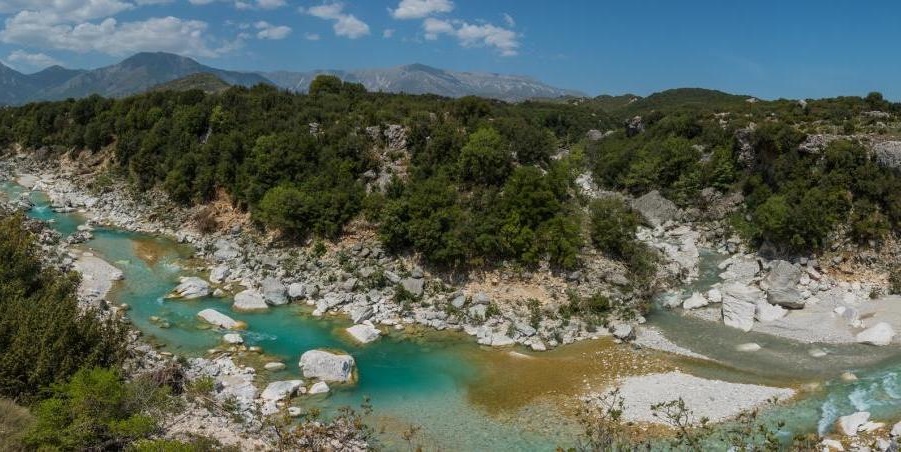
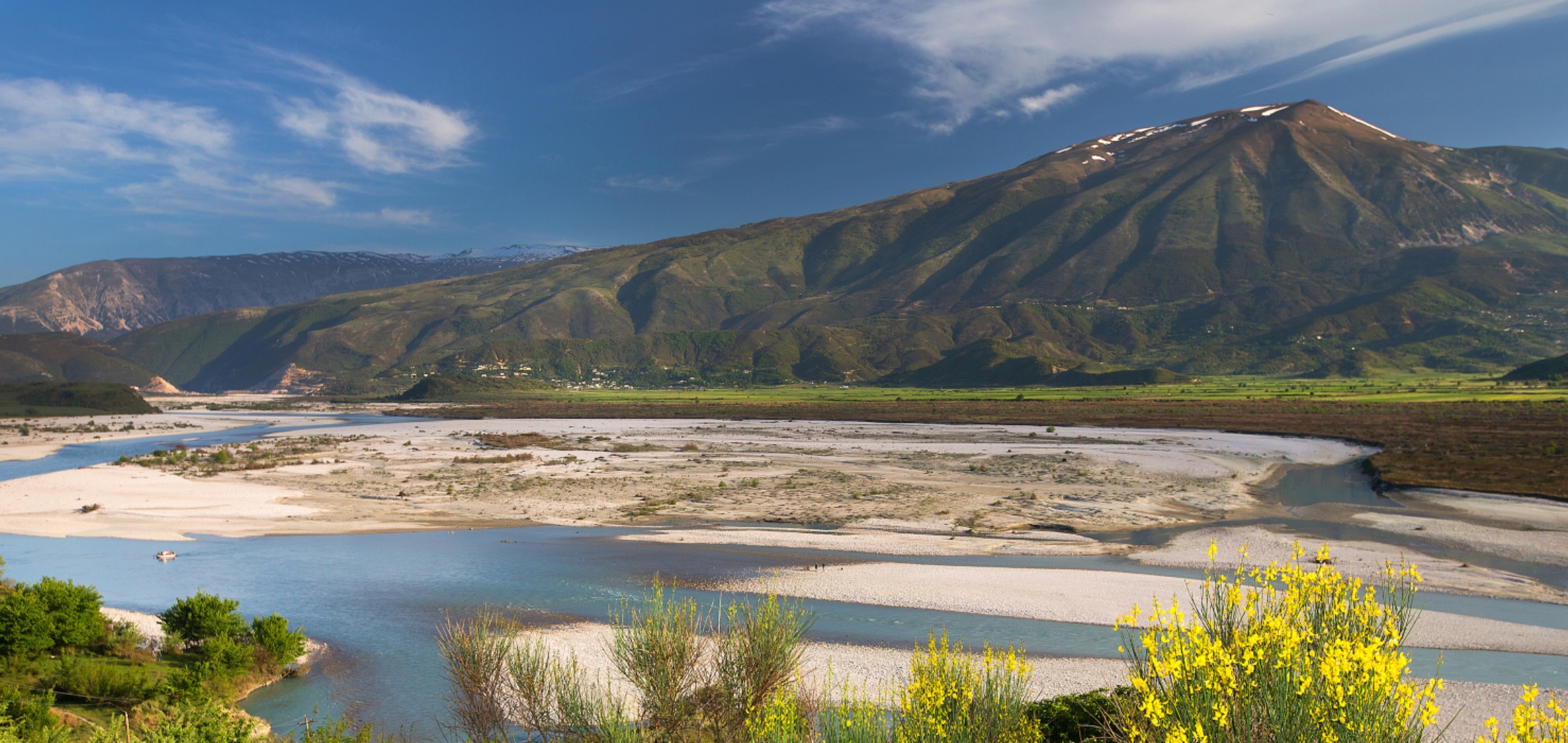
Mali me Gropa-Bizë-Martanesh is a protected natural area, however it has often become a "favorite place" for cutting wood. There have been many such cases and only in one of them, recorded on July 18, 2019, the damage caused by the cutting of trees was calculated in the amount of ALL 736.000.
The offender was caught red-handed by the State Inspectorate of Environment, Forests, Water and Tourism last summer and was fined, but not sent for criminal proceedings.
Deforestation accounts for about 60% of environmental crimes in Albania.
In the last five years, 2015-2019, a total of 1,153 proceedings for environmental crimes were registered in Albania. However, only 285 people have been convicted.
The low level of punishment for environmental crimes, according to experts, has to do with the lack or neglect of monitoring, as well as the low punishments, especially for the crimes that occupy the largest part.
The most frequent environmental crimes in Albania
The annual reports of the General Prosecutor's Office on the state of crime in the country, analyzed by Faktoje , show that approximately 60% of the proceedings registered with the competent bodies are for deforestation.
Air pollution, deforestation and illegal fishing are among other environmental crimes.

Illegal cutting of decorative and fruit trees in Albania is at high levels
Number of proceedings and cases under trial
Over the last five years, the number of proceedings registered as environmental crimes has mainly increased. This is except for 2016, when compared to the previous year, the number of proceedings decreased.
From 2016-2019, the number of proceedings has been constantly increasing.
A total of 5 proceedings were registered during this 1153-year period.

However, if we look at how many of the proceedings have gone to court, compared to the registered proceedings, the number is small.
In total, in 5 years, the number of proceedings that went to court is 260. So, only 22,5% of the registered proceedings went to trial.

Defendants, sent to court and convicted
In total, 648 people have been registered as defendants for environmental crimes in Albania in the last five years.

Of these defendants, 446 of them have gone to court. In other words, nearly 69% of the total number of defendants went to court.

During 5 years, a total of 285 people were convicted for environmental crimes. So, 64% of those who went to court were convicted.

Why is criminality low?
The low level of punishment for environmental crimes has been acknowledged several times by the Minister of Tourism and Environment, Blendi Klosi.
"Municipalities irresponsibly dump waste near the river. This is an environmental crime, the Criminal Code requires it to be punished by 1-7 years. Is anyone being punished today? No. This environmental crime should not be tolerated," said Blendi Klosi, citing this example at the Environmental Crime Conference in February of this year.
Xhavit Shala , lecturer at the Security Academy, at the same Conference on Environmental Crime said that the chain of reporting institutions should be strengthened.
" Increase the striking force against perpetrators of criminal acts. This is very important, the current practice of the dysfunction of the police-prosecutor-court chain must be corrected ," he said.
Luan Mema , an expert on environmental crime, told Faktoje that one of the main reasons for low impunity is the lack of evidence.
" Some of the environmental crimes leave little or no trace or are even hidden, so this makes the case difficult in court ," said Mema.
The OSCE Ambassador to Albania, Bernd Borchardt , invited to the Conference on Environmental Crime in 2018, said that the lack of evidence and investigations has led to low impunity.
" This small number of reported cases shows that there was not enough evidence and above all there was not enough investigation. Therefore, there is a need to strengthen the entire inspectorate-police-prosecutorship-court chain and this is an issue on which the work of this inter-institutional working group should focus ," said Borchardt.
Two years later, Faktoje asked Ambassador Borchardt whether the institution he represents sees an increase in the punishment for environmental crimes in Albania.
“ In two years, the Presence has witnessed significant changes in legislative and institutional terms.
On the legislative side , the amendment to the Criminal Code in October 2019 has criminalized many violations that were previously only administrative offenses. The impact can be read from the annual report of the General Prosecutor's Office for 2019. Environmental crimes account for 0.87% of total crimes, a slight increase from 0.79% in 2018. So, we see an increase in prosecuted crimes.
The institutional change refers to the decision of the Council of Ministers in December 2019 to transfer competencies regarding environmental crimes to the Ministry of Interior and the Albanian State Police. This is expected to strengthen the fight against such crimes ,” Borchardt told Faktoje.
The OSCE ambassador in Albania added that now these changes will have to be reflected in the results. To achieve this, according to him, cooperation between government agencies, technical expertise for municipalities, and an increased awareness among citizens, NGOs, media and academies is important.
Changes in legislation and monitoring structures
At the end of 2019, there were some changes regarding the environmental articles in the Criminal Code.
Penalties have increased, where for some offenses you can be imprisoned for 15-20 years.


However, even though deforestation accounts for about 60% of environmental crimes in Albania, the penalties for this criminal offense have not increased, but have remained from a fine to 1 year of imprisonment.
Luan Mema , an environmental crime expert, believes that these legal changes will impact the fight against environmental crime.
" The new changes have brought us closer to the environment in Albania and I think they will provide an innovation in this direction ," Mema told Faktoje.
As for the changes in the structures that follow environmental crime, the Ministry of the Interior has acquired competences in the protection of the environment.
IKMT will no longer be the National Inspectorate of Territory Protection, but will be the National Inspectorate of Environment and Territory. The actions of IKMT will be carried out in cooperation with local police structures.
IKMT will expand the scope of its activities and functions, having in its competence not only the protection of the territory, but also the protection of the environment, mainly of water, land and forests, with an emphasis on forests.
This change aims, according to the Minister of the Interior, Lleshaj, to increase the preventive power of the institutions in the protection of the environment in the country.

“This article is published within the framework of the project “Facts and Environment”, implemented by the Albanian Center for Quality Journalism and Faktoje, within the framework of the project “Towards Improving Labor Relations and Professionalism in the Albanian Media” supported by the European Union, implemented by the Albanian Media Institute and the International Federation of Journalists (IFJ). The sole responsibility for the content of this article lies with the author and it can under no circumstances be considered to reflect the position of the European Union.”