


In a country where laws promise accessibility for people with disabilities, the reality on the ground tells a different story. From malfunctioning elevators to non-existent ramps, public infrastructure in Albania remains largely inaccessible, leaving individuals like Suela Lala, who has been in a wheelchair for 27 years, to face daily challenges. Despite the legal framework, physical barriers continue to dominate the urban landscape, making the simplest activities a challenge for the disabled community.
Authors: Desada Sadiku and Ujeza Doshlani
"It was different in Sweden," remembers Gaz Dani, a member of the second group of the Blind Association of Albania. (The first group are people who have completely lost their sight, while the second group are individuals who have partially lost their sight).
"There, the traffic light made a different and fast noise when it was green and another noise when it was red, to signal to a blind person that he could cross the road", says Gazi, who went to Sweden to live in in 2017, when one of the biggest movements of Albanians towards European countries took place.
"It was better there for people with disabilities. The sidewalks were almost flat and separated by lines and barriers, felt by individuals with sticks, but seen and signaled by sighted people," he says, adding that the blind in Europe (specifying Germany) had stripes. neon sign, which told others at night to "be careful". "And electric batons, with automated voice in the local language, to make it possible to cross the road or whatever might be in front of a blind person," he continues.
In Albania, the situation seems to be quite different from what Gazi describes. The law provides for the creation of facilities in the public infrastructure, as well as in the construction of public buildings, but these facilities are far from their return to reality. In the Albanian capital, which is known for the construction of high-rise buildings and towers, the infrastructure for people with disabilities is almost non-existent, even in state institutions.
"We have problems stemming from the lack of urban planning, from unplanned development", says Gent Kaprata, Lecturer of Urban Planning at UET.
"The entire planning system, especially in urban, suburban and rural areas, lightly developed, all development is focused on cars. In this sense there is no space for people."
According to Kaprata, there is no lack of funds in Tirana, there is a lack of space to build special sidewalks for people with disabilities. Meanwhile, if we look at other big cities, such as Elbasan and Durrës, the opposite happens. So, the problem is not only in urban planning, but also in infrastructure.
Rights only on paper
Law 8626, dated 22.06.2000, on the "Status of paraplegic and tetraplegic invalids", article 3, states that the state creates conditions for paraplegic and tetraplegic individuals, so that they can participate in social life equally as others, providing for them a necessary, economic level to live in a dignified manner, suitable housing, living and working conditions, as well as normal opportunities for treatment, education, recreational, entertainment and sports activities. But the citizens, who face the Albanian reality every day, are presented with a completely different situation.
Suela Lala, who has been in a wheelchair for 27 years, because of a blind lead, says that when we talk about access, we talk about those ramps at the entrance, we talk about low sidewalks, while there are many other elements, such as elevators , accessible toilets, raised strips for people who cannot see, so that they can move independently in the city, which are completely, yes completely non-existent, according to her.
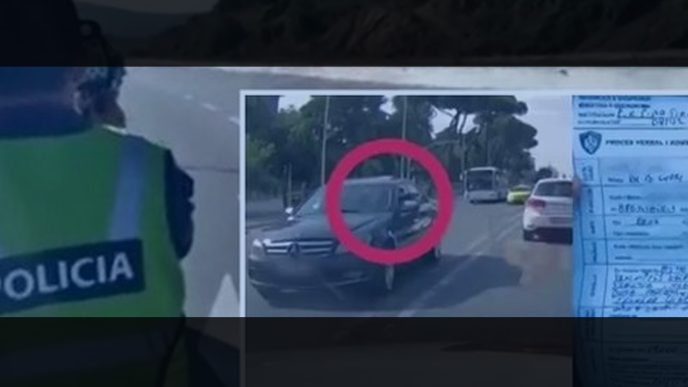
Another problem for Ms. Lala continues to be public spaces or dedicated spaces, such as parking lots reserved for people with disabilities.
"Even the two elevators in the parking lot in the center of the capital, which are supposed to be functional, are not," she says.
Suela Lala is also the director of the Together Foundation for the Protection of the Rights of People with Disabilities. The Foundation has won the parking issue with the Commissioner for Protection against Discrimination. "Even those parking spaces that are available are few in number (far from the predicted 5%); they are blocked by other people for personal parking and the municipality has no people to control them."
Institutions know the situation, but do not react
According to Robert Gajda, Commissioner for Protection from Discrimination, the majority of complaints are directed mainly to physical accessibility to public institutions.
"In terms of accessibility, Albania is at very low levels, it is negative in many aspects, as far as people with disabilities are concerned. We still do not have a plan or a dedicated priority from the central or local government for physical accessibility", says the Commissioner.
"In a monitoring we carried out, at least 50% of schools (all over Albania) are inaccessible and keep in mind, when we talk about accessibility, we talk about the minimum level, because accessibility must be guaranteed even inside the building. We are talking about access from the outside-in, but we are not yet discussing the accessibility inside, which is totally missing", he continues.
According to the Commissioner, one of the institutions, for which there have been many complaints in terms of accessibility, is the Albanian Post. Another institution, where there were complaints, was the Municipality of Vora, the airport of Tirana, in terms of parking spaces for people with disabilities, the "Air Albania" stadium (for a concert event), which has elevators adapted, but they did not use them, leaving aside the participants with disabilities, etc.
In the last five years, according to INSTAT, in 2019 there were 2.152 PWDs in health care centers, in 2020 there were 2.205 PWDs, in 2021, 2.416 PWDs, in 2022, 2.503 PWDs and in 2023 there were 2.902 PWDs .
In Shkodër, according to the municipality, as far as the roads with special signage for the blind are concerned, special signage for the blind has not been installed so far.
"As for the means of public transport, they have access for public persons and the number of vehicles that have a ramp for people with disabilities is 8, of which 7 (seven) for the Fermentim-Bahçallek city line and 1 (one) for Shkodër-Shirokë-Zogaj", says the municipality.
The Municipality of Shkodra has 557 employees, while the dependent institutions of the Municipality of Shkodra have 380 employees, but only 2 people with physical disabilities are employed.
In the Municipality of Saranda, there is only an entrance ramp to the institution for people with disabilities, and generally in other institutions there are only ramps built with a slope for entrance.
"The old buildings, which belong to the constructions of the 90's, do not have elevators and this results in the lack of access for people with disabilities in public institutions", says the municipality.
In the city there are no traffic lights for the blind and there are no roads with special signage that can be felt by sticks for the blind. According to the municipality, the means of public transport, which have access for persons with disabilities, are the means of the Sarandë-Butrint district line.
There are 148 people employed in the institution of the Municipality of Saranda, but there is no disabled person who is employed.
The municipality of Saranda has under its jurisdiction: the Services Company, which has a total of 114 employees, among whom 3 are disabled, as well as the Cultural Center, which has a total of 29 employees, among whom 2 are disabled disability.
According to the Municipality of Korça, out of 128 buildings, 69 have ramps or entrances on the ground floor, to help PWDs.
"Buildings that are equipped with elevators are 4. Buildings that are equipped with toilets for the disabled are 2. There are no traffic lights for the blind in the city, nor roads with special signage for them. The means of public transport do not have access for persons with disabilities", says the Municipality of Korça.
The municipality of Korça says that until July 2024, 291 people are employed in this institution, none of them are disabled.
In two subordinate institutions, such as the Public Services Enterprise, there are a total of 398 employees, but only one disabled person was employed in August 2024 and in NSHMAÇ, out of 386 employed people, only one disabled individual found in the staff.
Meanwhile, in Tirana, according to the Municipality of Tirana, the areas equipped with acoustics for the blind are from Dritan Hoxha Street to Zogu i Zi , which have three acoustic traffic lights; continuing further, from Durrës Street to “Skënderbej” Square, with two acoustic traffic lights. The two main boulevards, Bulevardi i Ri and Bulevardi Zogu i Parë , are equipped with seven traffic lights. According to the municipality, there are eight traffic lights in the Mesme Ring (at the intersections dedicated to pedestrians) and the Small Ring, and there are two traffic lights starting from Materniteti i Ri to the Shkoza area.
From an observation at these addresses, the signals equipped at the traffic lights are present, but they are not functional.
Of the 16 public transport lines, the city, the vehicles of 14 lines are equipped with ramps, and have space for wheelchairs. The municipality says that the vehicles of two lines: no. 6, Lapraka and line no. 9, Student City – Jordan Misja , do not have space for wheelchairs, and there are no ramps, because the infrastructure, where these lines pass, does not allow the use of vehicles with a flat platform. 221 vehicles of the city lines are equipped with ramps for people with disabilities.
Asked about other public spaces in the equipment with accessibility for people with disabilities, the Municipality of Tirana says that 47% of school facilities, 47% of facilities - kindergartens -, 50% of facilities - daycare -, 64% of facilities public are equipped with a ramp.
Whereas, 53% of facilities - gardens -, 50% of facilities - nurseries - are buildings, which have access to the same quota as land.
Despite Albania's efforts to increase accessibility for persons with disabilities, a number of issues still need to be resolved. There is a clear contrast in the way this important segment of society is treated, when it comes to infrastructure and urban planning, compared to other European countries. Although laws and regulations exist, they often remain on paper.
This article is part of the Investigative Journalism Laboratory project, which is financially supported by the Public Relations Office of the US Embassy in Tirana. The opinions, findings, conclusions, and recommendations expressed are those of the author(s) and do not necessarily represent those of the Department of State.