


Ida Ismail
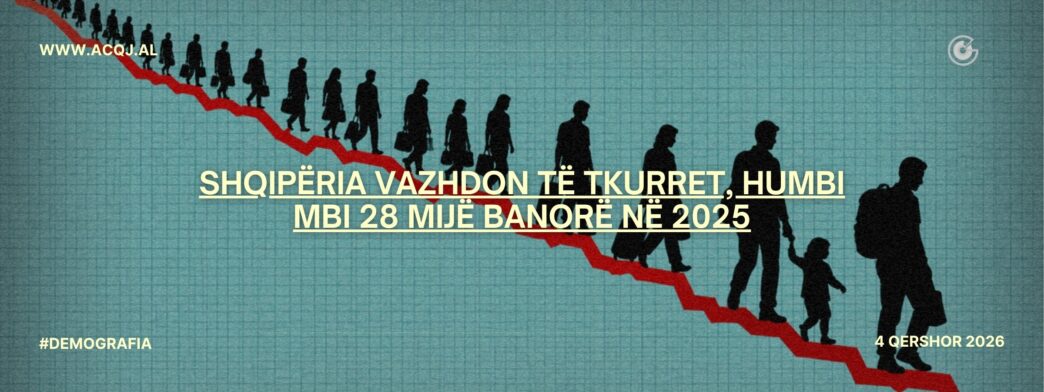
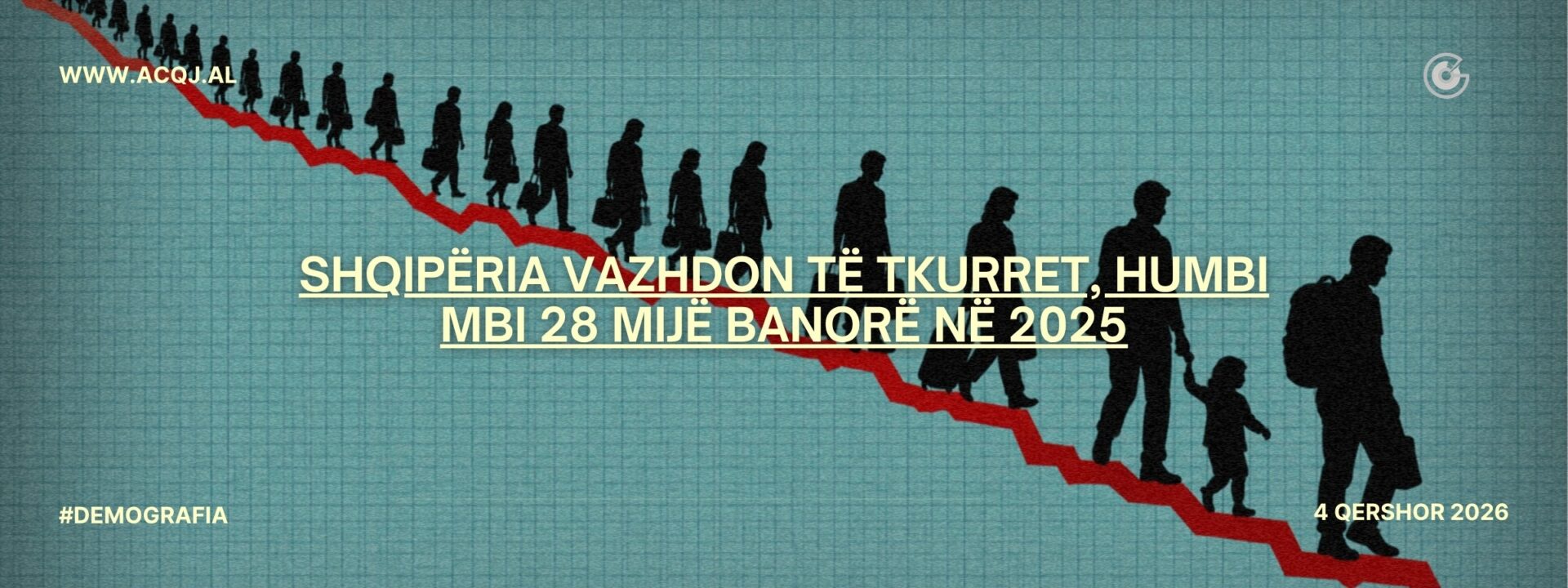
The population in our country continues to shrink from year to year. The latest INSTAT data show that during 2025, Albania lost about 28.500 inhabitants. The population dropped to 2.33 million inhabitants in January 2026, marking a decrease of 1.16% compared to the previous year. Although the number of births continues to be higher than that of deaths, emigration continues to remain the main factor emptying the country.
In 2025, 22.541 births and 21.394 deaths were recorded, producing a natural increase of only 1.147 people. However, this has not been enough to curb the country's demographic contraction.
Net migration was negative with 28.531 people, meaning that more people left Albania than returned or settled in the country. Practically, for every Albanian added to the population through births, the country lost approximately 25 others through emigration.
An analysis of the data by age group shows that the population decline affects almost the entire younger generation, starting from babies to the 30-34 age group, reflecting the impact of emigration and the movement of young people to other countries in search of better living and employment opportunities. The picture is different for older age groups, where the number of people aged 65-69 increased by 2.5%, while the 70-74 age group increased by 6%.
Tirana continues to be the most populous region in the country, concentrating around 32.8% of the total population. It is followed by Fier, Elbasan and Durrës, which hold the largest share in the geographical distribution of residents in Albania.
Kukës and Shkodra suffered the largest population declines, with 2.59% and 2.56% respectively. The phenomenon is creating an Albania increasingly concentrated in a few urban centers, while peripheral areas are losing their inhabitants.
As demographic indicators worsen, the latest audit by the Supreme State Audit Office highlighted serious shortcomings in the institutional response. As the country faces a continuous population decline, the SAI found that public institutions are lacking an integrated approach and a single national strategy that fully addresses the phenomenon.
The audit also highlighted problems in employment programs and the Social Fund, which are failing to cope with growing demands. The Youth Guarantee Program, designed to integrate young people into the labor market, has shown significant fluctuations in implementation and inconsistent results.
Data from the National Employment and Skills Agency show a marked instability in the implementation of employment promotion programs. From 28% implementation in 2020, the figure increased to 97% in 2022, only to drop again to 68% in 2023 and 46% in the first eight months of 2025. In many cases, revised budgets result lower than the initial ones, reflecting a lack of consistency in planning.
One of the most promoted measures to encourage births has been the baby bonus. However, its effectiveness has been limited, as funds have been decreasing year by year.
According to the audit findings, Albanian families do not make decisions about having children based on a single financial payment. The decisive factors remain economic security, long-term employment, housing, high costs of living and accessibility of social Services.
Population decline is not just a demographic statistic. It directly affects the economy, the labor market, the education system, and the financial sustainability of the state. If the current trend continues, Albania risks entering a cycle of demographic decline, fewer young people, fewer births, more emigration, and an increasingly aging population./ acqj.al