


Author: Dallandyshe Xhaferri
Midnight covered everything except noise pollution. It is 02:15 in the morning and in the villages near the Metallurgy of Elbasan, the sounds of the unloading of the irons that then end up in the melting machine are heard.
Even when the day breaks, 3 kilometers away, in the village of Vidhas, residents can see the smoke with their naked eyes. A gigantic mass that after coming out of the industrial plants slowly disperses occupying the sky of Elbasan.
With the conviction that the metallurgy of Elbasan is working at full capacity at night, Erald Vaja has posted on the platform "Sinjalizo" photographs that prove this process.

" When we wake up in the morning we find ourselves covered in smoke, while at night we travel by car in the fog of smoke ," says Vaja, emphasizing that the former Elbasan Metallurgical Plant houses the ferrochrome plant, the steel processing plant, "Kurum International" and the oil refinery. The opening of the latter in June 2016 was met with protests by residents of the area.
" They dump industrial waste into the irrigation canal and the plants don't even grow anymore ," says Vaja, indicating that for the villages around Metalurgjik in Elbasan, the problem is not only air pollution, but also water pollution.
" In Balldren, in our village, Vidhas, even our plants don't grow anymore ," the resident further explains, according to whom the spillage of industrial waste from the oil refinery has damaged their crops. Residents have often reacted with protests not only about the economic damage, but also to their health.
" Only two of my family members lost their lives to lung cancer, while 60% of the people I know have lung problems, coughs ," Vaja concludes.
Dirty Elbasan
Air pollution measurements carried out by the Ecological Club of Elbasan show that in the areas around Metalurgjik, the pollution is twice as high as in the city. The situation becomes even more alarming if compared to the standard of the European Union countries. Environmentalist Ahmet Mehmeti speaks with the language of facts.
" Within the city, the most polluted areas are the road intersections, the railway intersection area and the place called 'Tek Lulet'", says the expert, adding that the level of Carbon Dioxide (CO 2 ) in the city goes to 531 μm 3 from 350 μm 3 which is the European standard value, - " while the average value reaches 860μm 3 , - he concludes.

Of concern remains the level of PM particles, which are small matter with a very small diameter ranging from 10 microchromes to 2.5 microchromes. Continuous exposure to them as a result of substances released from industrial activity and transport by means of cars (especially old ones), causes the appearance of various diseases in the respiratory tract, skin, etc.
" Of the 47 monitored points in Elbasan, in 25 of them the level of PM 2.5 particles was within the norms, while in the other 22 the level was exceeded, going from 30-180 μm 3 ," Mehmeti informed "Sinjalizo".
Tirana 2022/ Worst quality air, where there is traffic and construction
Arriving late at your destination doesn't seem to be the only consequence of heavy traffic in Tirana. According to measurements conducted by Green Lungs , the areas with the worst air quality in Tirana are also those where traffic is heaviest during the daytime.
" The intersections, 'Elbasan Road', 'Zone 21', the part of the former train station are considered areas with a high level of pollution ," Arion Sauku, an environmental expert, tells "Sinjalizo".
" The 'Great Ring' that was under reconstruction had twice as many dust particles ," he adds, emphasizing that in addition to CO 2 (carbon dioxide), car exhaust and NO 2 (nitrogen dioxide) are also spread in Tirana's air.
" European Union norms during the implementation of works on the 'Great Ring Road' were exceeded by two or three times ," he says, adding that old vehicles still remain a problem for air quality in Tirana.
" All vehicles manufactured before 2005 are the biggest air pollutants, and then comes the numerous construction projects being carried out in the capital ," emphasizes Sauku, indicating that during the reconstruction works of the 'Air Albania' stadium in 2020, the level of PM 2.5 and PM 10 dust particles was very high.

Tirana is officially presented as clean
The municipality of the capital presents a clean Tirana. And unpolluted. But during the alternative measurements carried out by the professor of the Department of Biology at the Faculty of Natural Sciences in Tirana, Aleko Miho, by his colleagues and students, it turns out that the values of the level of pollution in the area located in the northwest of the center of Tirana are different from what Tirana Municipality has published.
In the 48 ha area, part of Administrative Unit number 9 and number 10, air measurements were carried out by the students of this department in 2019 and 2020 during the morning and afternoon, for several consecutive days.

" PM10 exceeds the norm at 8 stations in the morning, and 14 stations in the afternoon, where the high levels of particles at the entrance to 'Jordan Misja' road and at the former train station are of concern. CO2 and NO2 significantly exceed the Albanian norm at all stations (22 in total) where measurements were carried out," the study states.
" Our goal was not to monitor, but to see and be clearer about what the air around us is like ," says Professor Miho, adding that the data reported by the Municipality of Tirana for the same period do not match the conclusions drawn from the measurements carried out by the students.
" For air quality, for 2019, only data is provided for SO2, O3, CO, NO2, but not for particles; for NO2, an average value of 37.85 μg/m³ (at the norm) is given, while the average value of 22 measurements by us for the area in February 2019 is very high, 125.7 μg/m3, or 214% above the norm. These data are reported in Tirana for the period 2012-2019 at the norm or almost at the norm ," the students' paper states, highlighting the fact that the KTA (National Environment Agency) and the Municipality of Tirana do not include in the report the time of measurement, often in the location and method.

" Another problem with official reports is the non-inclusion of noise, acoustic pollution, and airborne particles, which must be included in environmental reports ," says Miho, indicating that during the work with students, it was noted that the total green area in this area was around 13,500 m2 ( 2.81% of the study area), or 1.23 m2 per inhabitant, while in 2007 the green area in this same area was around 22,200 m2, which means that the green area has decreased by 40% in the last 13 years.

" Greening is important for the area as it releases O2 , absorbs CO2 , enables water retention, and helps in noise insulation ," explains Professor Miho.
Kuçova and the problems that oil brings
The exploitation of oil in Kuçovo started in 1934, thus marking the oldest oil extraction area in the country.
Today, 88 years later, a good part of the area's wells still work with the technology of the 30s.
A. Xhelili, a resident of the village of Kozarë, tells "Sinjalizo" that oil is extracted from wells in the village at full capacity, but air pollution measurements have never been made in the village.
" My house is located a few meters away from this oil well (points with a finger) but I have never seen institutions come and measure air quality ," he says, adding that there have been many cases where oil has leaked from the pipelines.

" The pipelines are from the Italian era, so it happens that they break and oil comes out on the surface of our backyards, but the company employees come and cover the holes again ," he says, while an "Albpetrol" worker says on condition of anonymity that they cover the pipelines with gravel.
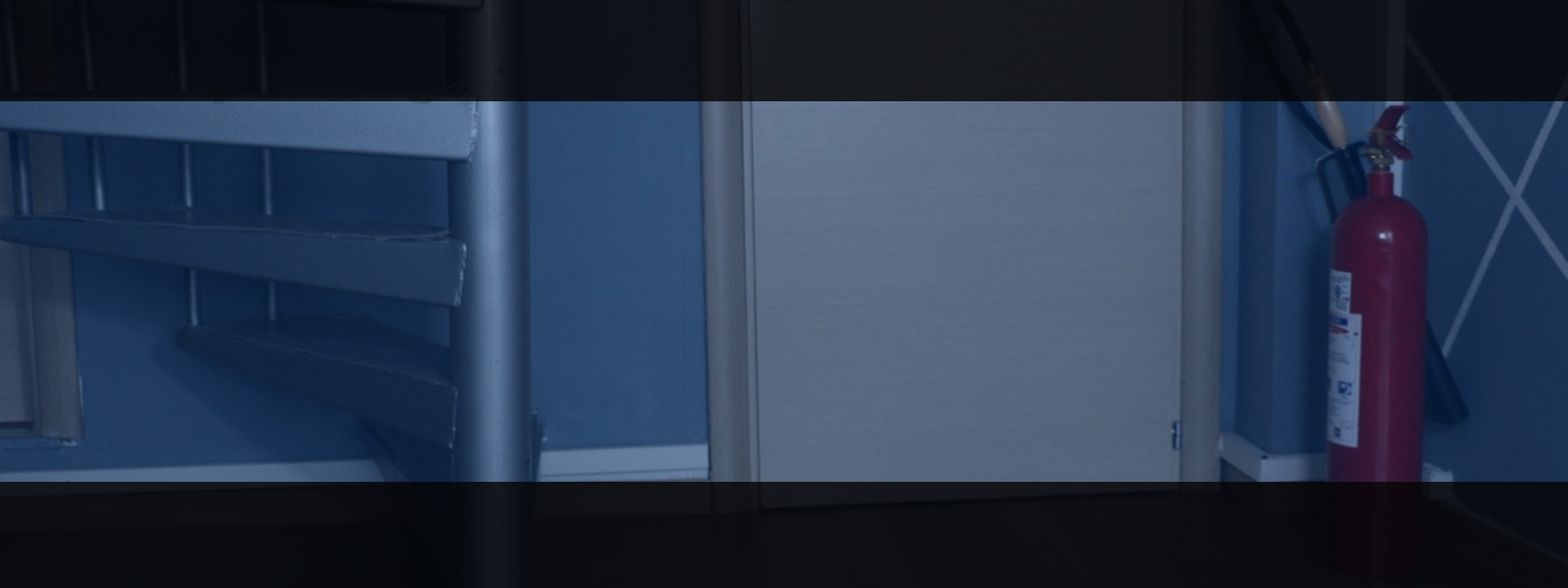
" In case of fire, we have a fire extinguisher here ," he says, adding that employees stand guard 24 hours a day at the site where the oil is extracted.
In the official response to "Sinjalizo", the Municipality of Kuçovo has made the company "Albpetrol" responsible for the pollution, while admitting that there has been no air monitoring in the city of oil workers for years.
" Measures have also been taken by the company responsible for the pollution, 'Albpetrol', but the very fact that the extraction network and logistics are outdated makes it very difficult to finally solve this problem ," the written response states.
According to the residents of the village of Kozarë, who refuse to be identified because they have not yet legalized their homes near the oil wells, there are almost 400 active oil wells in this administrative unit, which affects the spread of air, soil and water pollution. the smell of oil.
Lung diseases, like pollution, are slowly "dying" Albanians
The release of toxic gases, dust particles, CO 2 , NO2, PM 10 are some of the main causes of respiratory and skin diseases.
According to the report published by the World Bank, in Albania, in 2019, 2 people lost their lives as a result of environmental pollution outside and inside the home. In other words, 257% of the total deaths in the country came as a result of pollution.

According to the report, most deaths from air pollution are closely related to the release of particulate matter known as PM 2.5.
" Elements such as particulate matter (small pieces of dust in the air) including PM10 and PM2.5 cause long-term damage because they can penetrate deep into our lungs and some can even enter the bloodstream ," Professor Miho tells "Sinjalizo", adding that the lack of treatment of waters that flow into rivers affects the high level of phosphates in river waters, as well as in the sea.
" Untreated waters discharge high nutrient contents such as: Nitrogen (N), Phosphorus (P 4 ), which are the cause of what we call eutrophication, which is accompanied by a lack of oxygen and algae blooms, a lack of animal life in the waters. The waters flow onto the coast where some of the algae can be poisonous to fish and consequently to humans ," he concludes.
According to the official response from KTA, this institution performs monitoring of urban air only in 6 (six) main cities, such as Tirana, Elbasani, Durres, Shkodra, Fieri and Korça.
In the National Monitoring Program for 2022, KTA complains that in Elbasan and Tirana, the situation is critical due to the violation of laws and the exposure of the population to pollution.
" Zone B, which includes the municipal units of Fier, Durrës, Vlorë, Shkodra, Korça, Patos, Ballsh, Kamza and Paskuqan, determined either by direct measurements, or as a result of local studies, by the effective exceedance, or high risk of exceeding, pollution limits, by at least one pollutant ," the Monitoring Program then states.
How to get rid of pollution?
According to the Elbasan Ecological Club, the main role in reducing air pollution would be played by the use of filters in industrial factories as well as the use of quality fuels. Also, non-use of old vehicles and maintenance, use of biomass according to technical standards for combustion.
Environmentalist Ahmet Mehmeti sees as very important the interaction of the local and local government with the civil societies, the community to undertake joint activities to maintain the air in the parameters of the EU.
" During these years, we have held advisory sessions from time to time with the Municipality and the Prefecture to improve air quality ," says Mehmeti, although the level of air pollution due to industrial activity in cities like Elbasan and Kuçovë remains high.