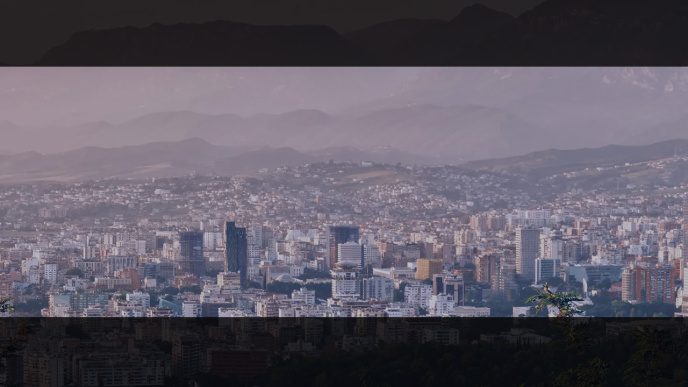



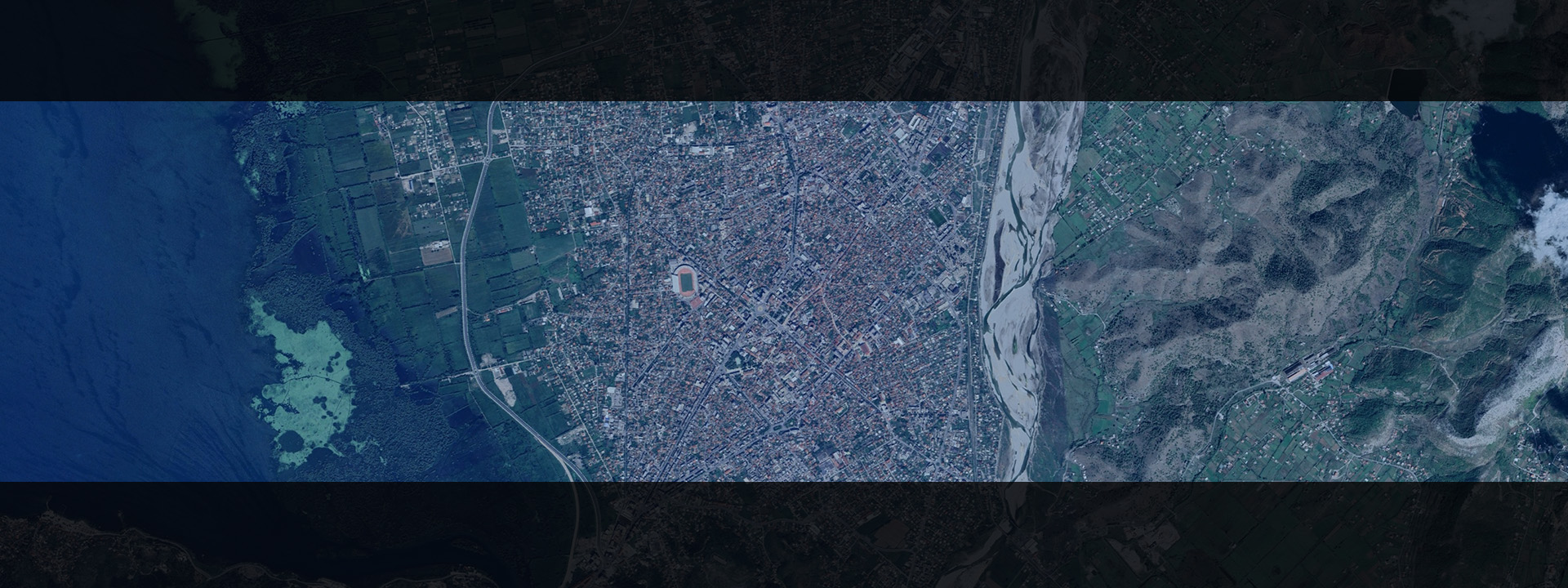
Like many cities following the democratic transition, even Shkodra has been prey to the phenomenon of construction without criteria. But while many cities are already recovering green spaces and increasing their surface area, Shkodra is left behind and invests only in those remaining spaces. To ACQJ's question about how many square meters of green space this city has added in recent years, Shkodër Municipality refuses to answer.
Author: Syrjan Rahova
During a walk in the early years of democracy in Shkodra, you not only enjoyed the wonderful pedestrian area , Shkodra culture, subtle humor, bike rides, but also the greenery, which was in every part of the city.
However, the old greenery has already given way to concrete, including Shkodra in the list of cities, where the development and construction without criteria have caused its citizens to lack green spaces.
Pjeter Pali, an old resident of Shkodra, remembers very well the time when greenery was an important part of the whole city, saying that, from a green garden, Shkodra has turned into concrete blocks after the advent of democracy.
"They only made Shkodra concrete. A flower garden is near the institute, where pensioners play dominoes, which is surrounded on all sides. Another, at the fountain, where people usually fall down in an alley there; it is over too", he says, adding that irregular constructions have affected the damage to these spaces.
"Constructions take place in places and I don't know how these builders get building permits. After democracy, there is no order in anything," he says, not hiding his disappointment.
But the shrinking of green spaces in the capital of the north affects all residents. Jetmira Balaja, mother of a child with disabilities, calls the presence of green spaces in the city a necessity.
"I don't have any flower garden near the house. There should be parks, flower gardens and playgrounds for children, as I have a son with disabilities and they are in great need," she says.
On the other hand, for Egla, a young girl from Shkodra, the lack of green spaces in the city has affected her lifestyle.
"These unfavorable conditions have affected the lifestyle, making it slow, but not at all favorable for each of us", says the young woman, who adds that, despite the situation faced by the citizens of Shkodra, they need the institutions to exercise control over constructions without criteria, which are made in the city.
"They are constantly reducing the quality and polluting the air that we breathe every day", she concludes.
The law on territorial planning is "forgotten" by the institutions in Shkodër
Shkodra or, as it is known throughout the country, the capital of the north has a population of 204,954 inhabitants, with 55% of this population concentrated in the city. According to the law “On territorial planning and development” and its by-laws, which also include green spaces, in residential centers with over 10 thousand inhabitants the standard of greenery should reach 9 m 2 per inhabitant. On the other hand, the standard for public spaces reaches 28.1 m 2 per inhabitant. However, in the entire Municipality of Shkodra there are only 111.631 m 2 of green space, which practically translates into 0.5m 2 per inhabitant.
Referring to the Green CoPlan report in Shkodër, air pollutants are mainly traffic and residential activities, such as heating, cooking, etc. The level of dust particles, PM2.5 , according to Albanian and European standards has been exceeded, referring to measurements made, on Jeronim De Rada Street , on Skënderbej Boulevard , on the Parrucë roundabout , as well as in the Bexhisteni neighborhood.
According to this report, but also according to various environmental experts, one of the ways to overcome this situation is to invest in green, public spaces, but such an initiative has been almost neglected by this municipality. For the years 2020-2022, the Municipality of Shkodra has spent a total figure of 41.062.789 ALL, this figure is the same as that predicted for the year 2023.
ACQJ has managed to secure the investments made by the Municipality of Shkodra for 2022 in the city's green spaces. In total, the improvement of the quality and maintenance of the city's street greenery and flower gardens is carried out for an area of 102,331 m 2 of green area. This area includes 64 flower gardens with a total area of 85,331 m 2 in the city of Shkodra and 17,000 m 2 of flower gardens in Velipojë, as well as in the street greenery, where 6,343 tree roots have been planted throughout the city.
"A three-year procurement procedure is in progress for the continuity of the green maintenance service," the Municipality of Shkodra announced in a response to ACQJ.
In three years, 90 m are added2 constructions, not a meter of greenery
In the past year, in the Municipality of Shkodra, according to INSTAT, 38 building permits were granted, with a total area of 35,649 m 2 . Meanwhile, in 2021, the municipality approved 33 permits for new construction with a total area of 30,082 square meters. On the other hand, in 2020 the number of construction permits granted was 35, while the total construction area was 25,207 square meters.
And while constructions have increased in three years by 90 square meters, the same cannot be said about the increase of green space in the city. During the past three years in Shkodra, not a single square meter of greenery has been added, according to the data of the Municipality of Shkodra itself.
The geographer, Ervis Kymbi, says that the general local plans for the addition of green spaces for the city of Shkodra exist, but they have remained only on paper, while they have not been implemented on the ground.
"This phenomenon is not only in Shkodër, but in all of Albania. The plans are there, the colorful maps are there, the ideas are there and all these must be implemented by those in power. This is where the coordination of the local government with the central one starts, so that these plans are realized, because these plans were paid for by the taxpayers", he says, adding that these plans should not sleep in the drawer.
Kymbi emphasizes that Shkodra has a plan in terms of environmental problems, which also includes green spaces, but in Shkodra it has not been implemented, describing this as an indifference that the local government often has towards the territory for certain reasons.
"The degradation has come from: Are the capacities and human resources from the Municipality of Shkodra to control the territory?", he says, re-bringing attention to the large space that the Municipality of Shkodra received from the 2015 reform.
"This reform, which was very necessary, at the same time brought its own weaknesses and precisely the lack of human resources, which translates into a lack of financial resources", he says, making an appeal to protect areas such as Shiroka or Zogaj , which have turned into recreational centers, potentially making concreting and commercialization of these parks more possible.
Meanwhile, the urban planner, Imeld Sokoli, says that as a result of the transition and the low level of territorial management, Albanian cities have suffered densification of constructions, mainly in the central areas, directly reducing the green and public spaces in these residential areas and Shkodra is no exception.
"The local authorities must at least respect the General Local Plans, where they must meet the minimum standards, presented in them through the KSHP coefficients (utilization coefficients for public spaces)", he says, adding that in practice this does not happen , because mainly the municipalities see these instruments as instruments only to develop a territory and not to balance the development of the territory in its entirety. This happens because this aspect is not monitored in practice by central level institutions.
"In the 30 years of transition, public areas have been occupied by illegal constructions and as a result have decreased. New, public spaces are very rare and the construction of new, public spaces is very rare, and this again means that we have a rate of them, low in the city level", says Mr. Sokoli, who adds that, usually these green spaces are amortized and not maintained, which leads to non-access and non-effective use of the existing ones.
"These spaces in the city of Shkodra are very few and often depreciated, as is the case of the former Bazaar flower garden at the entrance to the city. Shkodra is a city that is surrounded by natural resources, but unfortunately decision-makers have not tried to exploit this fact in the public interest," says the urban planning expert, emphasizing that Shkodra still does not have a proper city park today, which could have been developed on the eastern shore of the lake, along the newly completed bypass .
He also adds that the competent institutions have allowed the construction of infrastructures and construction development in these areas, which is to the detriment of the public interest of the city, as well as its natural spaces.
"An action plan must be drawn up on the development of green infrastructures and public spaces, in order to drastically reduce air pollution and the level of noise and smog in cities", concluded Mr. Sokoli, adding that, as the main potential for this, donations from the European Union should be considered, which has taken concrete steps in this direction, and is ready to support countries that want to make progress in the implementation of the European green agenda.