


Author: Denis Tahiri
" I raised my children with livestock and they keep me alive. I applied for the 2022 national scheme for small livestock. I have 40 of them. In the preliminary list, it turned out that I was the winner, and before the elections, a group from AZHBR called me to verify the declarations I had made on the form via e-albania. Then they came to the booth and paid special attention to the number of livestock that I had declared. On May 20, I called the AZHBR toll-free public number to ask whether or not the money had been allocated as a beneficiary and the operator replied that the money would be allocated to me when the verifications were completed throughout the country ."
This is what Fatriu, who introduces himself as a farmer from the villages of Lushnja, writes for "SINJALIZO", and that under the concern that the support scheme is being delayed, the elderly man also raises other issues as long as his name is listed as a winner, but the financial support does not seem close . "As a farmer, I express my dissatisfaction because the fee for one head is 10 thousand lek, while the prices of grass have increased. We need real help and not charity. Second, the delay in the allocation of lek is excessive" - adds Fatriu, who recalls that he is winning support from the state for the second time, but that the family business of livestock farming has turned him and his family into conditions of survival and sacrifice. " I have no opportunity to hire a shepherd, so almost every day of the year I am after them, they are the only opportunity to support my family and raise my children " concludes the complaint of the elderly man, whose name is published changed by "SINJALIZO". During the interview, he adds that with the money deposited in his bank account, he plans to prepay for the winter food he buys from fellow villagers.
It turns out that about 9 thousand farmers applied for this scheme, which compared to last year, there are 2 thousand more citizens seeking assistance for subsidies in livestock farming. However, agriculture and livestock farming continue to be an investment of the elderly and not of the young . In the south of the country, in one of the villages on the border with Greece, one of the teenagers contacted by "SINJALIZO" confesses that he can't wait to leave. The teenager does not see himself connected to agriculture and livestock farming. In the houses that once buzzed with the voices of their residents, the buildings resemble abandoned objects. In the village houses, traces of livestock stables are still clearly visible, wooden structures, with roofs covered with soft ferns. They once served to keep thousands of animals, mainly sheep and goats.
T. H, now 85 years old, remembers that when the cooperative was dissolved and the animals were distributed to the villagers, each house received both a goat and a sheep. “ We lost 8 sheep and 12 goats,” the old man says.
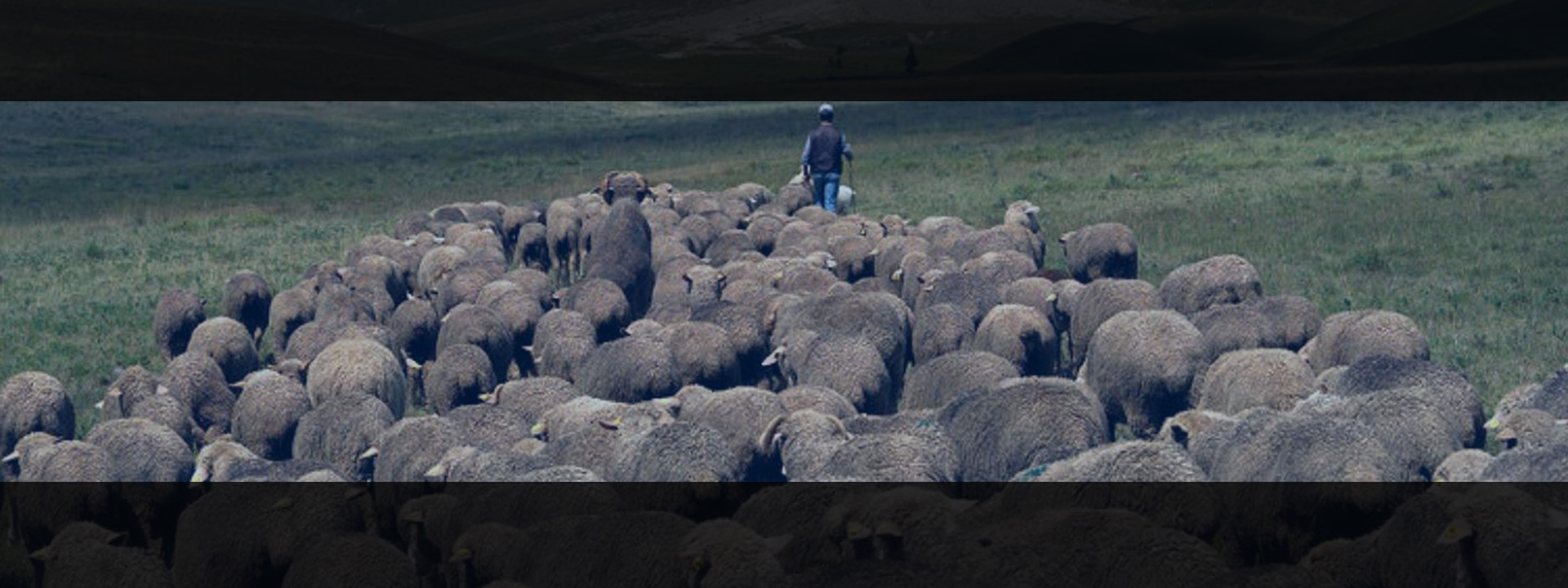
" Everyone built their own stables and appointed a shepherd for a neighborhood in the village. Each neighborhood had its own shepherd for the goats, while they kept their own sheep," he says, adding that there are now a total of 5 herds in the village, two with goats, two with sheep and one with cows.
According to the Institute of Statistics in 2021, the number of wool in Albania is 1,48 million heads. The main category of wool consists of dairy sheep with about 75,38%. Meanwhile, the number of animals in 2021 was 775,337 heads, where 77.26% of them are dairy goats. On the other hand, the number of pig heads was 159,237 heads.
For cattle breeding for the year 2021, the highest figure is in the district of Fier with 17.25% and Korça with 11,13% of the total number of heads. Meanwhile, the districts of Vlora and Korça have the highest number of woollens, respectively 23,74% and 16,51%.
Livestock through the decades
According to an article by gazetaShqiptare.al, in 1938 Albania had 54 thousand horses, 10 thousand mules, 391 thousand cattle, 21 thousand buffaloes, 1 million 574 thousand sheep, and 932 thousand goats. These figures, which in the Albania of 2023, are reported many times less.
The fact that the livestock sector is already in crisis is no longer something that can be discussed. In 2017, 475 cattle were counted in our country, meanwhile, a year later in the statistics, a decrease of 8 cattle would be noticed. While the year 2019 would mark another reduction, but this time with a much larger figure, where in total compared to 2018, 51 thousand fewer cattle would be counted. Almost the same pace would be followed in 2020, where the country lost another 53 thousand cattle. Meanwhile, from 2020 to 2021, another decrease of 26 thousand would be recorded.
A similar trend is also seen in wool, where from 1.925.000 in 2017, the figure would drop to 1.480.000 in 2021. This figure means that the country has lost a full 445 thousand wool heads. There is also a decrease in the number of goats in the country, where in 000 2017 goats were officially reported, while in 933 the number would decrease to 000, where within 2021 years, 775 fewer goats would be counted in the country.
The only ones showing an increase from 2017 to 2021 are beehives. In 2017, there were only 290 beehives in Albania, while in 000, this number has increased to 2021.
Experts: The wrong policy is being followed
"The first reason is for me, the incentive policy that was oriented towards large farms at a time when we are a country with 80% excessive livestock and we have land conditions and an economy such that we could have 10 or 20 large farms in our territory due to the characteristics, for the small amount of land and if an analysis was done with experts in the field, it would appear that we should also support excessive livestock", says the former head of the Farmers' Union, Eduart Sharka. He further adds that the farmer who keeps 2 cows should also be supported because in his opinion, livestock has a particularity, it must have optimal quantities and be profitable. " A farmer who keeps two cows, has 2 hectares of land, sows wheat, but uses the straw for the cows", says the expert, giving a concrete example.
Mr. Sharka says that fiscal policy is also wrong. According to him, collectors are no longer interested in buying from farmers since they buy the product with zero VAT and sell the by-products they extract from milk with VAT, which is a tax on turnover. According to him, this brought about a change in course. " This taxation violates the VAT law, violates the constitution, it is an unfair taxation. Today, the market for agricultural and livestock products is 90% informal due to the VAT blunder. Only because of the blunder and what surprises us a lot and is to be worried about is that we have said that if VAT is equalized, the state budget wins. The subsidies it will give, it receives from the formalization of this sector."
But a factor that is significantly affecting the number of cattle and small animals in Albania is also the reluctance of the younger generation to engage in agriculture. " The generation that was involved in livestock farming has grown old, but the younger generation does not want to get involved because at the moment it is an uncertain business, not subsidized by the state," he says, adding that in Albania you have to become a shepherd, live in the mountains and sell milk below cost. " Even if your cattle die, no one subsidizes you. Macedonia, which is the closest, in the event of a crisis in the market, when supply is greater than demand, the state buys them at the average market price in order not to alienate the livestock farmers," he concludes.
Even Kapllan Sulaj, a professor at the Agricultural University of Tirana, agrees that there are no young or middle-aged people who can deal with livestock, to breed small animals and not to keep them in non-extensive or natural growth herds.
"Taking care of livestock means spending part of your life outside, staying in stables, staying outside the house, while taking care of cows, you can carry out activities that are close to the family," he says, adding that cattle in Albania do not migrate, but are mainly kept on farms. For the professor, another factor that affects is the lack of credit in this sector. But tourism is also another factor that has influenced, according to him.
"It's that consumption has increased, for example. In the coastal area during the summer where there are more tourists, consumption has increased ," says Mr. Sulaj, adding that support for young people who want to become part of this sector should start at 100 thousand euros or higher.