


Denada Jushi
"I run from one pharmacy to another, even though I'm 78 years old, looking for blood pressure medication; sometimes I can't find it and the pharmacists want to give me similar ones, and sometimes they're late when I order them," a citizen near 21 December tells us.
But why are there no medicines today?
In Albania, the problem of medical medications is not only found in pharmacies, but often also in hospitals.
Shortage, but in some cases citizens also face the trade of expired medicines and uncertainties about their quality.
Clearly, this system in the country lacks control and transparency.
This problem was also clearly reflected at the National Pharmaceutical Conference, recently held in Tirana, where discussions took place. On the one hand, the government articulated its commitment to reform and modernize the sector, while on the other hand, market actors raised concerns about the lack of transparency and centralized decision-making that, according to them, is causing harm to a delicate sector.
Further, representatives of the pharmaceutical industry brought concrete examples of these issues, based on their experience.
One of them is related to the way in which drug prices are determined and lists are updated, processes that, according to them, take place without consultation and without sufficient information for them.
Another case is the inclusion of over-the-counter drugs in the price control list, which they said was unusual. This has led to the withdrawal of several well-known brands from the market, creating gaps in supply, they said.
The statement that Albanian citizens are forced to order paracetamol or ibuprofen from abroad through friends or relatives is not simply their wish, but due to the fact that they do not behave in Albania.
The problems are not limited to prices and supply. Audit data shows an even more worrying situation.
Reports from the Supreme State Audit Office, over the years , indicate that over 102 thousand units of expired medicines have entered the market, directly endangering the health of patients. There have also been cases of hospital medicines being distributed on the market, indicating a lack of control in the supply chain and inclusion in the reimbursement lists of medicines without an approved price or without supply contracts.
According to the findings of the Financial Audit and Compliance Report on the Mandatory Health Insurance Fund, the Albanian Supreme Audit Office has identified serious weaknesses in the supervision of the pharmaceutical chain, which affect both the supply of citizens and the protection of public funds.
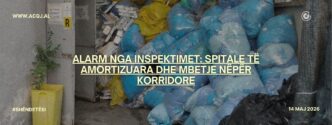
Thousands of expired drug units worth tens of millions of lek have been found in several pharmaceutical warehouses. According to the report, procedures for their disposal were not followed with full documentation, which increases the risk that such drugs will be returned to circulation or not be properly tracked.
On the other hand, the audit also highlighted concrete shortages of reimbursable medicines in pharmacies. For dozens of medicines, there were no supply contracts with importers, while for some others, problems with license renewal or production interruptions were reported. In practice, this has led to gaps in the market and difficulties for patients who depend on periodic treatments.
The SAI also raises concerns about insufficient controls over pharmaceutical warehouses, significant discrepancies in inventories, and a lack of on-site verification of reported drug shortages. According to the auditors, the system has functioned more on administrative declarations than on real controls.
In this respect, the comparison with the countries of the European Union shows a lot of difference. In the EU countries, the pharmaceutical system is based on strong regulations, consultation with market actors and rigorous and absolute quality control at every link in the chain. Regulatory agencies operate independently and are subject to high safety standards.
While Albania has made steps towards approximation with European legislation, especially after the 2015 changes that liberalized the market, these reforms appear to have come without the necessary oversight mechanisms. Uncontrolled liberalization has paved the way for the entry of medicines from markets outside the EU, raising doubts about their quality and safety.
So it is unclear how long citizens will be "looking" for medicines, and above all, be sure that they are not expired.
But it is certain that we will continue to receive requests from relatives to at least get our medicines from the EU, since we are unable to create standards like the EU. /acqj.al