Author: Ina Allkanjari
Eljon Mulgeci, a student of the Faculty of Economics, is pursuing his master's degree at the University of Tirana. He is among dozens of students from different universities in the country who reported on the "Sinjalizo" platform the problems of the digital library. The unusability and lack of information about the existence of the platform are two of the weakest points of U-Library . The digital library has been operating for 3 years and is part of the promise of the pact for the university , however, since its creation, the difficulties in finding materials that fit the teaching curricula have been clearly present.
"The digital library was eagerly sought by students, but it encountered many difficulties in application. At first, when it was created, scientific papers were missing. The problem continued with the part that was no longer discussed about this platform and many students have no knowledge about its existence, " Mulgeci told "Sinjalizo".
Even Lediana, a student of the Polytechnic University in Tirana, remembers that the creation of a digital library in universities was among the conditions of the "pact for the university", decided after the student protest. Something like this should have been implemented and accessible since June 2019.
" At first, it was promised that academic writings by Albanian and foreign professors, various literature for different branches of study, scientific journals, etc. would be included. But what was promised was never done," the student complains.
Asked about the shortcomings she has identified on this platform, Lediana says that the main problem is access, which means that the platform is mostly out of order. Regarding the teaching literature and professors' publications, she says that she has not managed to provide teaching curriculum materials and that in most cases these publications have been purchased.
"This digital library really didn't help me during my school years, as I never found a solution for the materials I needed on this platform," says the student at the Polytechnic University of Tirana. Gevio shares the same concern.
"The digital library does not fit what we asked for. This is because on this platform it is not easy to find the materials you need. Once you register in the online library you realize that access is often limited, also there is not a variety of books that can be helpful for the teaching curricula. Even those materials that we manage to find are very difficult to use as they come out with problems. The pages don't open, the letters often appear disorientated."

On the other hand, school institutions are also assessed as passive during the process of wide information.
"At the university they didn't tell us anything about the existence of this digital library, I heard from other student friends of mine that there is such a library. To date, I have purchased every material I have needed or textbook that I have been asked to purchase, it would be nice to have online access to the teaching curricula ," Lazarino, a student at the University of Shkodra, told "Sinjalizo".
The project for the creation of the digital library
The Pact for the University was drafted after the student protest organized during the month of December 2018. This document includes the commitment to address student demands for better study conditions, quality improvement, academic integrity, transparency and accountability in higher education. Demand number 7 of the students within this pact consists in the construction of libraries with European standards and with free online university books for students in the Albanian language.
The demand for an online library with European standards was dictated by the high cost of book prices. At the same time, the impasse faced by students who did not access scientific publications and who faced challenges to complete course assignments and conduct scientific research within HEIs.
In the 2022 monitoring report published by the Civic Resistance, the government's promises for education during the first year of the "Rama 3" government are touched upon. Within the framework of the Pact for the University, it is written that " the online library contains a large number of scientific materials in foreign languages, although this platform cost 687.825 USD, students are unable to find information that matches their curriculum and do not access any books or scientific materials in the Albanian language."
Rigels Xhemollari, representative of the Civic Center, tells "Sinjalizo" that this project, despite the high costs, did not help the students, since according to him, the content of the digital library does not include materials related to the content of university curricula.
" The Digital Library was a promise of the government within the University Pact with the aim of reducing the costs of purchasing students' books. The goal of replacing physical literature was not achieved and the cost of the library does not correspond to the benefit it brought to the academic world. The fact that a good part of students are unaware of its existence is because it does not have content that could be of interest to students", said Xhemollari.
The story of a library that "lost" the books
The digital library was introduced by the Prime Minister and the Minister of Education, Sports and Youth in April 2019 with the aim of addressing the issue of book purchase costs. In addition, students were also claimed to have full access to scientific publications. According to government representatives, this library provides access to scientific researchers to 50 scientific journals, 193 academic books and 30 modules for self-learning a foreign language. Each student or lecturer can access the online library through a unique account and password. The total investment from the state budget for the digital library is 687.825 USD without VAT, an investment that covers the period between 2019 – 2022.
Project refinancing
From the start of this project, the Albanian Academic Network, which is the leading institution for the establishment of the electronic library, tells "Sinjalizo" that the digital library had the implementation time until the first quarter of this year. Asked by "Sinjalizo", RASH also declares the nature of the platforms, where foreign languages are not missing either.
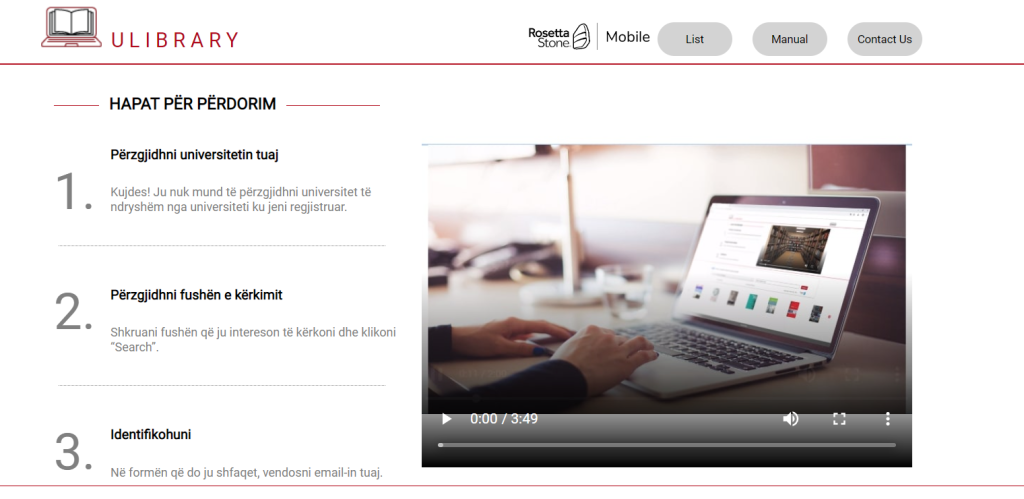
" The electronic library was implemented on April 1, 2019 for a period of 3 years until March 31, 2022. The fund allocated by MAS, according to the contractual provisions and the approval of the package in use by the Membership Assembly of the RASH Center, consisting of public universities and the Ministry of Education and Sports, is worth US$ 687,825. This amount for 3 years included access to two platforms, firstly to the archives of the EBSCO digital library as well as access to the online foreign language learning platform "Roseta Stone" with 30 foreign languages by lecturers who have them as "native languages ", it is stated in the RASH response.
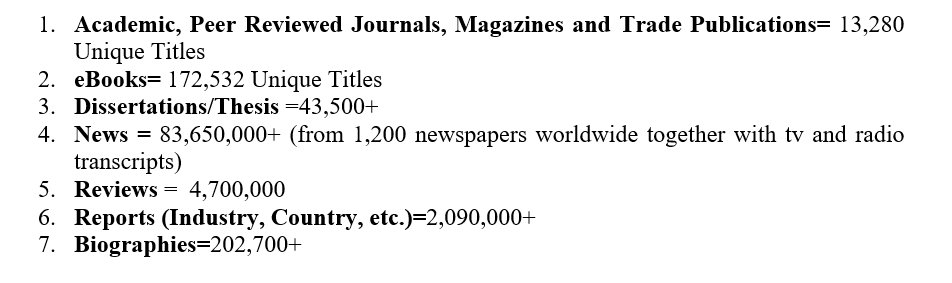
But despite the details made available for "Sinjalizo", RASH emphasizes that there is no literature and lectures in the Albanian language on the platform. "It should be the authors of books and literature who decide to publish books, articles, dissertations or scientific works on EBSCO based on copyright", it is further said for "Sinjalizo". According to the Albanian Academic Network, the library mainly contains academic materials (papers, scientific articles) as well as books in electronic format (e-library), from the database which is made available by EBSCO.
While declaring that this library is accessed by all public universities in the country, RASH specifies for "Sinjalizo" that currently 126.810 students and 8.100 academic staff are registered on this platform.

In decision no. 621, dated 22.10.2021 on the approval of the national education strategy 2021–2026 and the action plan for its implementation, ensuring access to digital libraries is again included with the lead institution RAN, with a start date of 2022 and an indicative cost of 127,500.

"Sinjalizo" turned to the Ministry of Education to find out if a refinancing is planned for U-Library digital libraries. This institution delegated the request for information to the Albanian Academic Network, which writes for "Sinjalizo" that it has currently received a request from the Ministry of Education and Sports for the continuation of the service, which is still under review.
" Based on the available funding and specific requests for access to EBSCO's archives by RAS member universities, a request for renegotiation will be sent to EBSCO if there is a prior decision-making by the RAS Assembly, where MAS and the rectors of each public HEI are represented. The implementation period will be starting from January 2023 onwards based on the decision-making of the Assembly," writes RAS, emphasizing that this project will again include access to foreign scientific literature: books, journals, articles, dissertations and master's theses and beyond.
Again, regarding the Albanian language and school curricula, the National Academy of Sciences (NAS) provides that "this is a decision-making process for the HEI itself and the authors. If it is positive on their part, then negotiations will be held with the digital library service providers to consider the possibility of including this literature in the relevant scientific archives."
Questions about the digital library
Associate Professor Albano Zhapaj considers the initiative to create a digital library as not necessary. According to him, this platform is necessary, but not irreplaceable.
"I believe that the digital library is secondary, hard copy books are primary. The digital library may of course have been necessary during the pandemic when students could not go out and should have had the materials there. Universities have more serious problems than the library, until last year when I was the director of curricula at the University of Tirana, the rectorate lacked computers, there were specialists who did not have computers in the office, or had them with very poor parameters. So the support staff that will help professors, branches, other support structures, do not have the necessary technological materials to work," Zhapaj emphasizes.
According to the professor, each branch should have its own digital platform, where lecturers and students can access the data received from the university. But it should be avoided that the materials are taken from other universities, or from students who have completed the cycle of studies. Professor Zhapaj adds the features of a digital library and its access by anyone.
"The problem is that the author cannot be forced to put his book online, as he may have given the rights to the publishing house, so the issue is very complicated," insists the professor, who adds that this library should set copyright as a condition.
The lecturer adds that on this platform, the materials must be scanned and not in word or pdf format.
"If our materials are not scanned, they can be taken and this creates plagiarism, appropriation of intellectual property, etc. For me, the digital library should be for auxiliary materials and every lecturer should provide the relevant text".
Associate Professor, Majlinda Keta, tells "Sinjalizo" that the digital library is not connected simply and only to the student protest. According to the lecturer, after the protest and especially after the transition to online learning, this library has given results.
" The University of Tirana on its official website guides students towards using the two types of online libraries that we have. Using an online library requires that a student, in the conditions of his/her apartment, near the faculty or university where he/she has chosen to study, have access to the interest and an internet connection," says the lecturer of philosophy of education at the University of Tirana, adding that the lack of equipment needed to study online is still a challenge for Albanian students.
Lecturer Keta suggests that for students who are equipped with a card, a laptop or a computer should be made available, helping young people to conclude quality work in the online library.
"Studying or using an online library cannot be done from a mobile phone. It is impossible for many reasons, ranging from poor viewing quality to eye strain, and moreover, it will do more harm than good to students," says lecturer Majlinda Keta.
Another element that the lecturer highlights is related to student curricula. According to lecturer Keta, " student curricula, those of course heads, must also include mandatory access to the concept of the digital university. These can be part of the online library but can also be many other digital forms such as film excerpts, expert testimony, interpretations of public speeches on issues related to various university disciplines."
But whether the library is functional or not, Ali Jashari, as a lecturer at the University of Korça, answers positively.
" These platforms are mainly used by master's students, those who have to defend their diploma topics, but also by lecturers for their qualifications, especially those who are defending their doctorate. The positive thing is that access to this platform is free, I think this is a great convenience and asset that we did not have before," says Jashari.
Asked whether the materials published by the lecturers themselves are uploaded to this digital library, the lecturer said: "Our published materials, as well as other publications, are uploaded to the university website and are all available online, offering the opportunity to be used by any type of researcher."
The promise and problems on the initiative undertaken
The large student protest of December 2018 revealed a series of dissatisfactions regarding the quality of education in Albania. These dissatisfactions were listed in 8 main points which were presented to the Ministry of Education as non-negotiable demands. One of the demands was related to the construction of an online library according to European standards and the availability of books in Albanian and free of charge.
Education expert Ndriçim Mehmeti tells "Sinjalizo" that the digital library was a promise of the Ministry of Education and Prime Minister Rama, to convince students after the protests that the government would offer better opportunities. According to him, the promise of the library, like university campuses, remained only on paper.
"The Ministry initially allocated 500 euros, whose fate is unknown and probably the destination of the library has changed along the way. Students have little to no knowledge of the existence of this library. They will probably put the blame and responsibility on the universities. This would be redundant, as universities should be supported with funding and modern infrastructure to make this promise feasible. Therefore, large reading rooms should be built or adapted with comfortable conditions, with computers, unlimited internet and 24 hours a day, as it happens in the universities of the civilized world".
Asked about the shortcomings that this digital library has and what should be offered to help students, the expert says that lecturers should be given the opportunity to download lectures and assignments for students through an application.
"The library is not simply a good will, but a set of actions and measures that would also be accompanied by significant monetary funds. For example, how would works or digital materials from foreign authors be obtained? Who would pay for granting the right to use them? Who would protect the copyrights of teachers, researchers or scientists at home and abroad?" concludes Mehmeti.