



Author: Aurora Shpataj
Concerned about the phenomenon of buying and selling diploma subjects, academician Artan Fuga reiterates that this phenomenon is a crime. Contacted by "Sinjalizo", Professor Fuga insists on the damage caused to education.
" Generally, these websites that offer this type of service are the first actor that makes the process possible, it seems to me that they are an illegal business, they should be considered an illegal business. A business that goes against public interests, with education, with school. It's the same as if there were tutorials on the web on how to rob a bank, how to kill a person, how to destroy a private or public asset. It's the same thing, so let's say they are evil businesses ."
What Professor Fuga does not hesitate to ring the bells for is related to a phenomenon that does not stop. Although, the denunciations have been many and at the same time the investigations. The flourishing online offering of diplomas in every field and educational level is done against payment. Control filters are almost non-existent.

“Sinjalizo” began tracking these sites, introducing herself as a student looking for a diploma of various levels. First, she contacted a site that offered diploma topics, which was asked for a master's degree. After a few hours, the response was; “ If you have any ideas, that's fine, if you want, we can suggest some .”
After entering the conversation with the site, we also asked how much the degree costs. The offer, on the other hand, was for a topic in both English and Albanian.
" The price of a diploma in Albanian is 200 thousand lek, while in English it is 250 euros ."

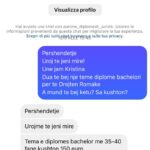

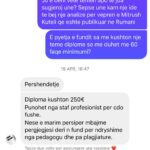
Surfing the Internet to buy knowledge continued on another website, but this time for a bachelor's degree.
The response we received from the site was: “ A 35-40-page bachelor's thesis costs 150 euros .”
When you learn that you have been stolen!
But plagiarism or receiving diplomas made by third parties has begun to harm even good students. This was the case of Fatjona, who studied Public Relations at the University of Tirana. She tells us how she came into contact with the person who had stolen her thesis topic.
" Unfortunately, this phenomenon has become a concern for students who are writing their own diploma thesis. It happened to me personally that an acquaintance of mine accidentally started my diploma thesis ," says Fatjona, a former student at the University of Tirana. She tells "Sinjalizo" how she managed to prevent the student from being represented in the committee with her thesis.
" At first I was shocked and directly asked him where he got it from, but he didn't give me any information. Then I asked him to stop presenting a plagiarized diploma or else I would make it a problem with the rectorate and the commission. Only after threatening him, if I may say so, did he give up ."
Professor Artan Fuga considers this process as penalizing good students.
" There is a problem here, because by setting 9 or 10 for those who get them ready-made, we penalize those students who work. Because those who work, perhaps bring them with a poorer quality than those who buy them. Because the latter buy them from a person who may be a doctor, while the one who makes them himself may be a student who has his own defects, has his own limitations, but has done a better job than the other one. Here the entire value system is overturned. I have nothing to ask of the student; he simply has to work for himself to knock on the market, he has to increase the demand for teachers ."
The university is silent
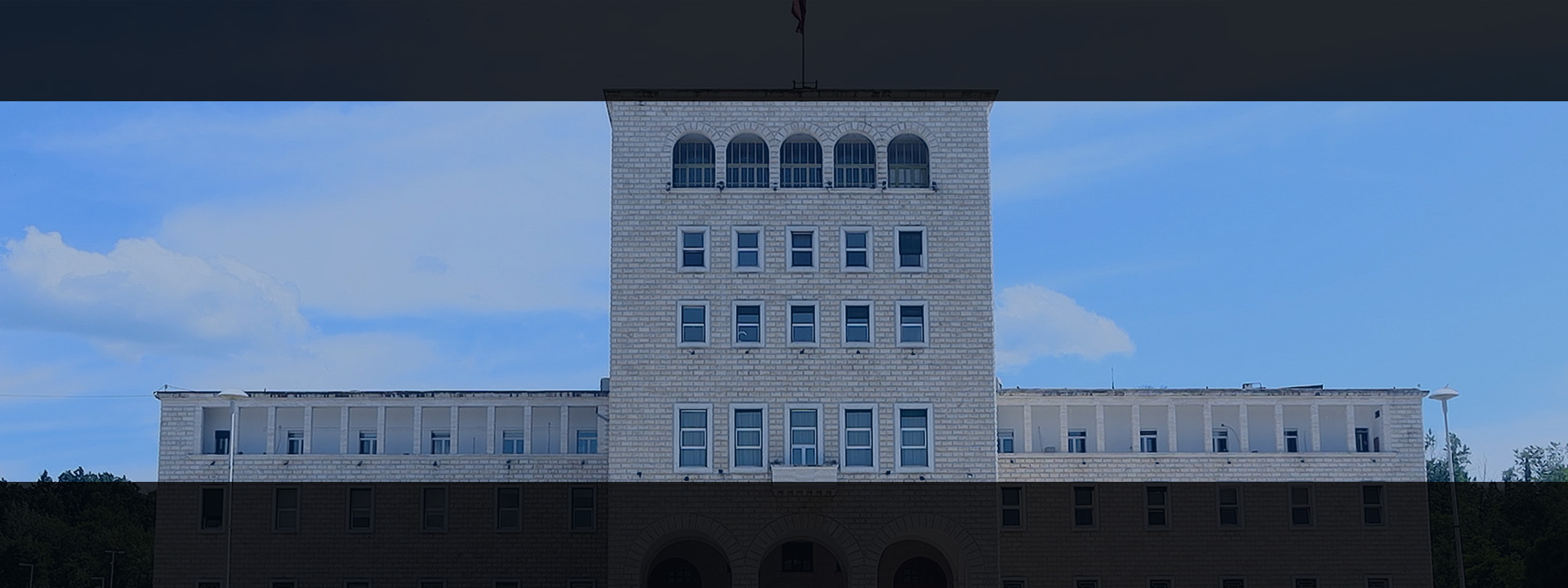
Sinjalizo also sent an official request for information to the University of Tirana where we asked for information to be made available to us on questions such as: how many plagiarized diplomas have they managed to identify over the last 5 years, at what level of study have students caught plagiarizing, in bachelor, master, with what formula do they identify that diplomas are plagiarized, and what happens to students who are caught plagiarizing. The University of Tirana did not provide data on how many violations were found in five years.
“ The University of Tirana, based on Law No. 80/2015, “On Higher Education and Scientific Research in Higher Education Institutions in the Republic of Albania”, in the sub-legal acts issued in its implementation, the Statute and Regulations of the UT, the Code of Ethics, as well as the regulations for graduation in the First, Second and Third Cycle of “Executive Master” studies, has foreseen as a violation the phenomenon of plagiarism or “academic dishonesty ”.
But while plagiarism is unacceptable, no light is shed on this phenomenon as revealed by the competent bodies.
“ All diploma theses are done under the guidance of an academic staff member as the scientific supervisor of the topic. The diploma thesis contains a series of requirements and criteria of form and content. The diploma thesis respects the requirements of the format, regulations and rules of academic ethics that apply at UT, where plagiarism is prohibited. If the thesis is not presented according to the required format, it will not be accepted until all format requirements are met .”
The only way to identify plagiarizing students for the University is in the hands of the degree supervisor. This means that there is no specific formula for performing breach detection.
" As for how possible cases of plagiarism can be identified, this is primarily related to the leading academic staff, who orient and assist students in selecting literature and writing the diploma thesis, assists the student in obtaining results, processing them, and writing the diploma thesis according to approved guidelines. The leader guarantees the quality of the results and approves or not, whether the thesis is complete to be presented to the committee, including plagiarism ."
This vacuum is also confirmed by academician Fuga.
" I am not very aware of this university level, I know that anyway it is not that easy to detect plagiarism, it is not impossible, but not easy either. This must be understood. However, there are some mechanisms that you can find on Google or on the web that you can search for. From the simplest method that takes a text or different parts of the text if those phrases, that text or part of the text has similarities or copies of any other text. This is an ethical duty and is in the ethical regulation of UT and scientific research. But as far as I know there is automation, a digital program that is recommended for this use, I am not aware of it . "
Fuga says that teachers should have no complaints about this situation, because they have the power to prevent it.
" So, the first suggestion is; no complaints. Those businesses are illegal, then they should be declared illegal. We as lecturers have nothing to do with them. If a student goes and does that thing, and passes it off to me as an original work, the fault is mine as a lecturer ."
But the university has a different point of view in the response sent to "Signalizo". "The leader has the responsibility to make the student aware of the risk and consequences in cases of detection of fraud, forgery and plagiarism. At the moment of submission of the thesis topic, if plagiarism is detected, the supervisor has the right not to approve the thesis defense."