


On social networks and in the spaces of interaction in the Albanosphere, right-wing, radical movements in Albania and in the diaspora are spreading ultra-nationalist ideologies, distributing materials with fascist and Nazi content. They have positions contrary to democratic principles and aim to promote discrimination against minority and marginalized groups. They operate in conditions of anonymity, as they fear monitoring (which is not happening) by institutions.
Author: Heldis Ismailaj
Right-wing, radical movements in Albania have begun to spread ultra-nationalist ideologies through social networks in a more organized way.
A flourishing of platforms containing ideological, fascist propaganda has begun to infiltrate the spaces of thought in the Albanosphere (the space of interaction of Albanians online).
With local followers, but also from the diaspora, these movements distribute materials with fascist and Nazi content on the most important interactive platforms on the network, such as Facebook , Instagram , X ( Twitter ), TikTok , Youtube , etc.
At the same time, these groups have begun to actively signal their activity in the public sphere beyond the digital network. Marking their areas of action, sympathizers of these ideologies often distribute materials with ideological, right-wing content around the city of Tirana.

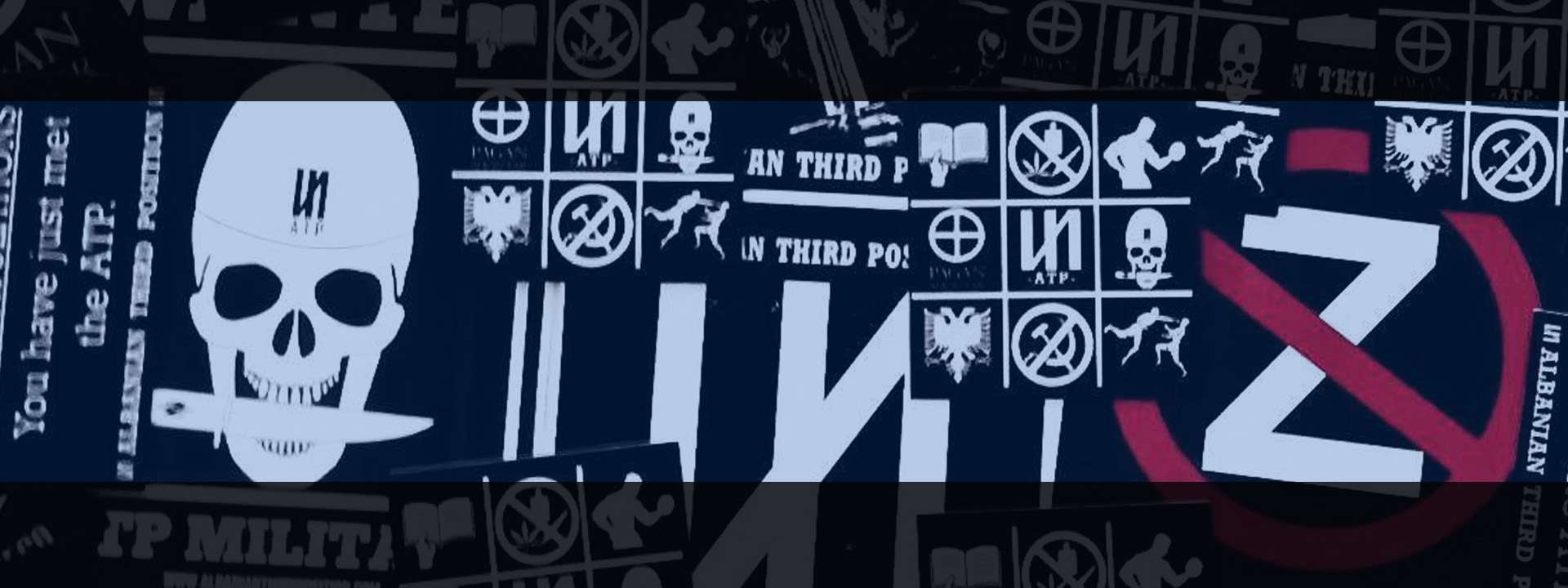
Among them, the most notable is the Albanian Third Position ( ATP ) platform, which also has a blog , which makes it easier to distribute materials for followers of Nazi-fascist ideology among users.
Presented as a meta-political movement, it offers followers a platform where they can be informed about pan-European ultra-nationalist and Nazi-fascist politics.
With themes that include the group's ideological manifestos, archives of nostalgic images of Albania's relations with fascist Italy, Albanian paganism, and anti-communism, this grouping offers a platform where you can "educate yourself" about the Third Movement.
The Third Position is a group of neo-fascist political ideologies that first emerged in Western Europe after World War II. Further developed during the Cold War, it took its name from the doctrine that represented a third position between Western Bloc capitalism and Eastern Bloc communism.


This movement opposes the principles of modern democracy and Abrahamic religions, and promotes Albanian traditionalism, paganism, homophobia and racism.
The most common interactions between followers of these platforms are about the role of Islam in Albania and the conspiracies "promoted" by George Soros , such as " replacing whites " in Europe, topics that today also find a voice in Albanian politics.
Arlind Qori, activist and teacher, victim of these groups, shows that their activity is extremely harmful to the social fabric of society.
"My experience with these groups is limited to being the object of slander or conspiracy theories, being accused of being a "Sorosist", with all the conspiratorial implications that this marker carries", says Qori.
A central plank of these movements' platform is the Great Replacement , also known as replacement theory or the great replacement theory , a far-right, nationalist conspiracy theory espoused by French author Renaud Camus.
The original theory states that, with the cooperation of the left and a pro-European population "replacement" group, the white European population in general is being replaced demographically and culturally by non-white peoples, especially from Muslim-majority countries, through mass migration and the decline in the birth rate of white Europeans.
For more information on their approaches to the extreme right as a factor in the country, we sought the opinion of Prof. Dr. Andi Pinari, deputy dean at the Faculty of History and Philology, Sara Kelmendi, researcher at the Institute for Democracy and Mediation , and Dr. Arlind Qori, lecturer at the Department of Political Science and co-founder of the Together Movement.
"38,9% of respondents believe that there is a grand conspiracy to depopulate Albania and replace the local population with foreign immigrants. 38% of the sample say that Albanians should not mix with other races, thus also showing discriminatory tendencies, which the respondents themselves have had," says Sara Kelmendi, a researcher for IDM on violent, non-religious extremism in Albania.
This indicates considerable scope for far-right political groups to gain sympathy among the general public.
The materials of extreme right groups are easily found published on these platforms in Albanian and English. Their posts appear as a well-thought-out targeting campaign of a certain audience in the Albanian sphere of online interaction.
The ideological dissemination initiatives used by these platforms closely resemble models of other online fascist groups, according to a 2022 report by RAN Practitioners ( Radicalisation Awareness Network ).
With a number of nearly 3000 followers on their main interaction platforms, the various far-right groups active in the country are increasing their audience day by day by taking advantage of the anonymity that the network allows.
The positions of the extreme right in Albania
Oriented towards "preserving" national identity, groups that identify with far-right policies push ideologies that they consider ultra-nationalist. According to the rhetoric they use in the materials distributed on the network, these movements are the genesis of a new, political, pan-European spirit, which sees the Albanian close to his European "brothers".

During our research on right-wing spaces online, we identified 13 channels where Albanian ultra-nationalists interact. With nearly 3000 followers on Telegram alone , these groups reach their audience with an active presence on other popular networks, such as Meta , Youtube , X (formerly Twitter ).
"If there is an enabling ground (for far-right policies), it clearly is, because it is exactly this aggravated political climate, which then translates into citizens, who are disappointed by the government and the political factor. Political disappointment is much more evident than other factors", says Sara Kelmendi.
"It is a conglomeration of all these socio-economic, political and cultural drivers that can make Albania more or less exposed to being prone to a form of extremism. Albania has a kind of enabling environment to have currents that respond to the characteristics of the extreme right," she adds.
The platforms connect nationalism and the feeling of national unity with the idea of creating a homogeneous, Albanian space.
The materials and comments they share on the network hold ultra-conservative positions, which align with those of the European extreme right. These groups express opposite attitudes to liberal movements, marginalized communities, minority groups, ethnic groups and immigrants.
"In the broader sense of the extreme right, the spread of these ideas is facilitated by social despair, the weaknesses of economic and social organization, such as trade unions, student unions, etc., which would serve as emancipatory channels of grievances economic and social", says Arlind Qori.
With quite violent posts and images against minorities, these groups attack the initiatives for the promotion of basic rights, which some minorities have begun to enjoy in Western societies.

A good part of the individuals who join these rhetorics in the network are also fans of the football teams in the country, which creates a close connection between the Albanian ultra-nationalists and the football ultras.
"As far as I remember, there may have been some neo-Nazi symbols in football matches or some peripheral pages on social networks, but nothing more," says Arlind Qori.

The close connection of football ultras with the extreme right is a factor that has recently begun to be studied in the European context as well. Many fan groups in Europe (hooligans) manifest far-right rhetoric against Islam, immigration, LGBTQIA+ people, as well as misogynistic rhetoric.
During the research and monitoring of the interaction spaces of members of various groups that manifest Nazi-fascist ideology in the Albanian sphere , it was observed that the majority of them manifest the desire to maintain anonymity, until the moment when their political movement begins to be more accepted in society. Mostly out of fear that they are being monitored by the forces of order; an unrealistic fear, because, judging by the responses of various state institutions, there is no monitoring.

"This year we have an increase of 4.2 percent of respondents who agree or partially agree that there are individuals or groups that promote violence in the areas where they live compared to 2021. Respondents are less inclined to express agreement on the acceptance of individuals or groups that promote ethno-nationalist extremism. The survey conducted at the end of 2023 confirmed again that political extremism remains more worrying for citizens than religious or ethnic extremism", says Sara Kelmendi regarding the study conducted on the trends of violent, non-religious extremism.
In fact, there is no data from state institutions that could provide any indication of the extent of interaction between these ideologies. This statement comes as a result of negative responses to the possession of information on the topic from various institutions that ACQJ has contacted.
With the desire to understand more about the information that the Albanian institutions have collected on the movements of the extreme right in the country, some requests for information were sent to some state institutions. We contacted the Ministry of the Interior, the State Police, the Prosecutor's Office, the National Authority for Electronic Certification and Cyber Security (CESK) and the Coordination Center against Violent Extremism (QKEDH).

The extreme right rejects the Albanian republic as the representative model of Albanians
The members of the far-right Albanian groups reject the model of the republican state and invite the return to the "traditional, European" state.

In the Manifesto published on the platform of the Albanian Third Position group , followers are invited to re-conceive the model of the state and return to the monarchical state. By linking their line of thought to the model of Skanderbeg's "state", for them the democratic state and the republic have betrayed the Albanian spirit and the traditional and cultural values of Albanians.

The Albanian state, according to them, should be an ethnic state, which unites the people through racial affiliation, and race is the basic thing in preserving values and blood.
Through official "propaganda" platforms, far-right groups allow members to download and distribute materials.
Posters, stickers , and reading materials, selected by platform administrators, can be downloaded to be distributed by hand or displayed in the cities where they live.
Many members take the initiative to put up stickers in different areas of the cities where they live, both inside and outside the country, often covering up other stickers that are “leftist.” The distribution of the materials aims to declare the presence of the far right in spaces where you would not think they are present.
Albanian Third Position and the movement for right-wing policies in Albania
Albanian Third Position ( ATP ) describes its organization as a political third position movement. The main topics of discourse relate to Albanian culture, race, politics, and the vision of the state.
The presence of this initiative is first seen online, starting in 2019 with the publication of a letter by Ismet Toto, a political figure, representative of the movement called neo-Albanianism of the 30s.
"Neo-Albanianism was an intellectual and cultural movement in Albania in the 1930s, with main representatives Branko Merxhani and Vangjel Koça, which sought the modernization and cultural independence of the Albanian nation, in an attempt to further what the National Renaissance had achieved, namely the establishment of the Albanian state," says Prof. Dr. Andi Pinari.
Prof. Pinari adds that essentially neo-Albanianism is not directly related to the extreme right or fascism, as it was rather an intellectual and cultural movement, which sought cultural independence and the modernization of the Albanian nation. Although it had nationalist elements, according to him, it was not a direct political ideology, as fascism was.
Arlind Qori thinks that the spread of extreme right-wing ideas is facilitated by the degradation of the educational system.
"...has brought the need for brief explanations of the "scapegoat", as in the case of conspiracy theories, but also as an effect of the ideologies encountered in the West, which necessarily have an impact on Albanian society".

Social media is also a space where these groups easily capture the attention of the audience. TikTok interactions account for about 41 thousand views on the ATP website alone.
On other far-right accounts, this number of views increases, as in the case of Illyrian Pagan , which counts around 102 thousand views.
This demonstrates the efficient access to the network and the ease with which materials with fascist messages are distributed.

Also present on Youtube , where they have 58 thousand views, on Instagram , with almost 1400 followers, among the main accounts for sharing their positions, ATP actively shares content about culture, religion, race and conservatism.
They mostly interact with each other through the social network Telegram . Chosen as a platform that guarantees anonymity, they share beliefs and ideas with each other, organizing themselves in close groups, but also with physical gatherings of some members.
The method of action is through the creation of open channels for the distribution of ideological information, which are mostly closed and where only channel administrators can post.
The ATP initiative , such as the creation of the Pagan Shqiptar platform , counts around 974 followers on Instagram and posts content related to Albanian paganism and traditionalism, promoting the denial of religious beliefs.

With an increase in interest in spirituality and paganism, sites that connect the national and historical context with pagan religions in Albanian lands have become popular, facilitating the serving of far-right propaganda.
"16.3% of the sample claims that, in the area where they live, there are individuals or groups that promote violent, political extremism. Regarding ethno-nationalist extremism, there is actually a significant increase of 10,3% compared to 2021 in the percentage of respondents who express that they are concerned with this form of extremism", says Sara Kelmendi.
Often, by reposting the same materials, groups like ATP find it easy to serve these materials to wider audiences, not directly addressing their policies, but achieving the dissemination of key concepts.
"When (the respondents) were asked about the forms of discrimination they had faced in the last year, they ranked first discrimination based on ethnicity, discrimination and hate speech based on political affiliation, and discrimination and hate speech based on religious belief, with a total of 119 responses, which also included reports of verbal violence, discrimination based on socio-economic status or sexual orientation, and gender-based discrimination," adds Kelmendi regarding the study conducted by IDM.
The policies of this initiative seem to be against the democratic state and progressive movements. By attacking marginalized groups through the anonymity that the network and the platforms they use, including Telegram as the main communication platform, they spread their messages without consequences.
Closed interaction channels, mostly created on Telegram , allow all members to communicate ultra-nationalist views with each other.
Appearing in virtual "agoras", their messages are accompanied by strong hate speech against marginalized groups.
The images spread connect the spirit of national unity with the language of hate and encourage the alienation of religious groups, ethnic minorities, sexual minorities and refugees.
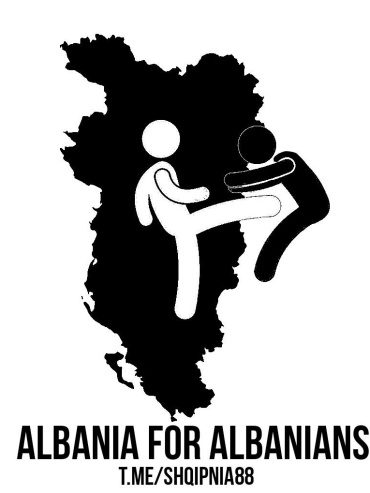

It is often commented on the attitudes that channel members have against left-wing ideologies or migrants.
The signing of the Italy-Albania Migration Protocol for the transfer of 3000 migrants to a camp built by the Italian state led to an increase in activity on these platforms.
There was no shortage of calls to organize protests and extreme calls to throw Molotov cocktails at refugees, to send "a message" about their non-acceptance on Albanian territory.
The participants, through "freedom of expression" in anonymity, quietly share with each other their thoughts and beliefs regarding the idea of a conspiracy to depopulate Albania and repopulate it with immigrants from African countries.
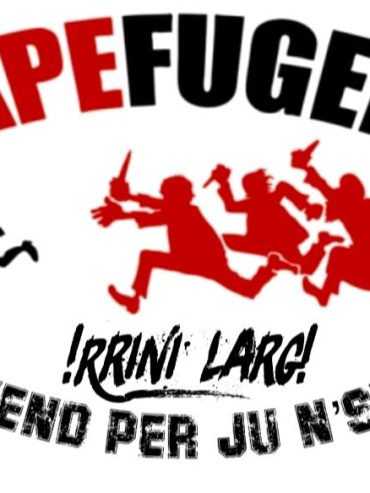

The tools for monitoring hate speech or content that incites violence against certain groups are limited to this rhetoric. This is clearly demonstrated by the lack of data from Albanian institutions on this growing trend .
We have noticed during the research a lack of initiatives for the identification of groups that manifest tendencies with a high risk potential for violence.
The far-right movements in Albania have been showing increased activity in social networks and interaction spaces for years, spreading ultra-nationalist ideologies and promoting attitudes contrary to democratic values. This tendency brings great challenges to Albanian society, to politics and institutions, prompting the need for a discussion and a stance in defense of the values of freedom, tolerance and respect for diversity.
This article is part of the Investigative Journalism Laboratory project, which is financially supported by the Public Relations Office of the US Embassy in Tirana. The opinions, findings, conclusions, and recommendations expressed are those of the author(s) and do not necessarily represent those of the Department of State.