


Author: Marjo Braka
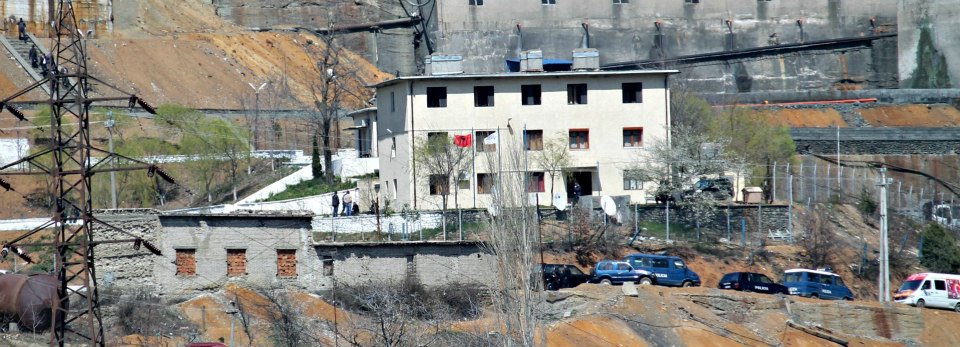
Thousands of residents of the villages of Zhupan, Drizë and Plyk in Fier have been complaining for years about the high level of pollution as a result of the deposition of hazardous waste in the premises of the former Azotic and carcinogenic substances from the activity of the Oil Refinery. The Municipality of Fier in a document from 2016 admits that the area is becoming unlivable due to pollution, but paradoxically the processing company is "legalized" with an environmental permit. The former Azotiku and the 40-hectare area continues to be considered a hotbed that causes pollution in the environment.
About 5,000 residents of the villages of Zhupan, Drizë and Plyk in the city of Fier have been living with polluted air and soil for years. A quantity of 40 tons of toxic substances, including arsenic, was deposited on the territory of the former Azotic, precisely in the area of the Ammonium Nitrate Plant.

The Municipality of Fier, in the final report of the 2016 Strategic Environmental Assessment, reports that the Azotik territory poses a real risk of pollution.
" In the territory of Azotik, namely in the area of the Ammonium Nitrate Plant, an amount of 40 tons of toxic chemicals, including arsenic, which was once used as a raw material for the production of nitrogen fertilizers, has been deposited. Despite the deactivation of arsenic waste and standardized burial, with 30-year monitoring by the EU, a study of the composition of the soil and groundwater of the area has not yet been carried out, to see the long-term impact of these wastes ," the report states.
The report also adds that legacy pollution continues to be felt in the air.
" The legacy pollution of Azotik, formed by the amount of cyanide and arsenic, is still felt in the air, up to the villages of Drizë, Zhupan, Plyk and the "11 Janari" neighborhood, in a population of about 5,000 inhabitants ."
As KTA also considers, cyanide poses a high risk to human health.
“ In the Fier area, indicative measurements have recorded serious problems caused by the current and former oil industry. In the vicinity of large industries, problems with CAM may exist, but monitoring a single source is not an efficient tool for abatement strategies. Appropriate monitoring of emissions should be introduced to control emissions from point sources. Dumps and deposits created by former industrial activities may also contribute to emissions and the formation of particulate matter suspensions ,” the Official Gazette states, referring to reports from the Energy Regulatory Authority.
"Faktoje" was on Tuesday, May 5, also in the villages that lie near the territory of the former Azotik.
" We're used to it, it doesn't impress us anymore. We have the problem of children, because our lungs are exhausted. We have poison from all sides. Poison from the former Azotik on one side, the well water often smells, the oil plant is there and there. There were some pine trees, they cut them down too ," 55-year-old Drita Mysli from the village of Drizë told "Faktoje".
For 75-year-old Hekuran Mehmeti from the village of Plyk, the former Azotiku, one of the works of the communist system, today poses a threat to the health of residents, especially children.
" There are remains from the time of communism there. They were buried, but they spread and pollute the land. We also had problems with water. It was said that a park would be built, some foreign companies would come, they would green it, but so far nothing has happened. I am not worried about myself, but about the children. Some unemployment and some air, there is nothing to keep them in Plyk anymore, they are leaving, " said 75-year-old Hekuran Mehmeti.
But for the approximately 5,000 inhabitants of the villages of Zhupan, Drizë and Plyk, the former Azotiku is not the only problem.
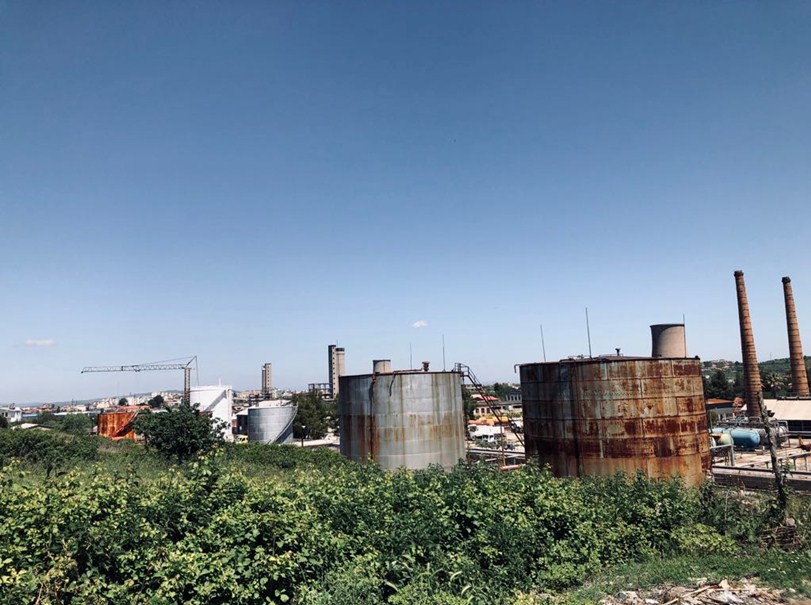
About 500 thousand tons of oil are processed every year from the Oil Plant in Fier, through the company AL.Global Oil.
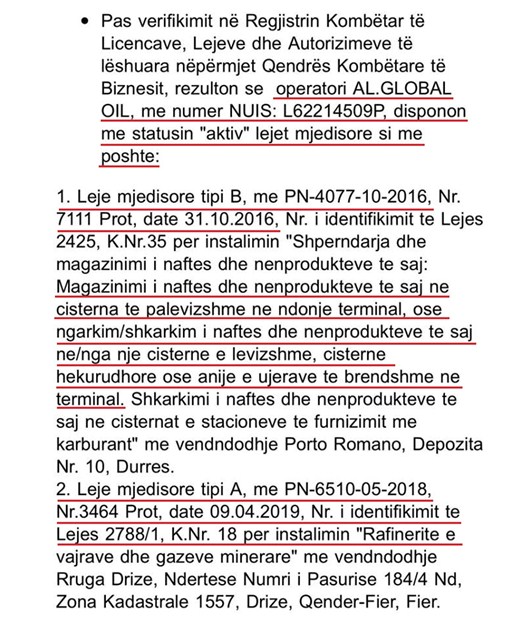
According to a response filed by the National Environment Agency, AL.Global Oil, the operator that currently manages oil processing at the Fier Oil Refinery, appears to be equipped with an environmental permit.
" The presence of the oil refinery near the former Azotik also brings air problems, making the area unlivable in the long term ," states the 2016 Strategic Environmental Assessment report from the Fier Municipality.
"Everyone who passes through the Koshovica Pass feels the wind in the air. It is heavy and we are often forced to wear a cloth to cover the mouth. There is as much pollution as you want. The company operates with the old infrastructure", 62-year-old Alush Karemanaj from the village of Drizë told "Faktoje".
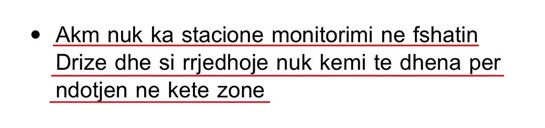
"Faktoje" also asked the National Environment Authority about the concerns raised by the residents of these areas, but KTA informed us that there is no monitoring station in that area.
"Faktoje" also asked the Fier Municipality about the planning for the reduction of the area of the former Azotik. The municipality confirms that the General Local Plan of 2016 continues to be implemented only in theory, but it has not found applicability on the ground.

While the project for the rehabilitation of the former Azotic site still remains on paper, the community of 5,000 inhabitants of the surrounding areas remains threatened by the toxic substances deposited and the pollution that is being carried out with an environmental permit.

This article is published within the project "Facts and Environment" implemented by the Albanian Center for Quality Journalism and the Organization "Faktoje", within the project "Toward the Improvement of Labor Relations and Professionalism in the Albanian Media" supported by the European Union, implemented by the Institute Albanian Media and the International Federation of Journalists (IFJ). The sole responsibility for the content of this article is the author's and under no circumstances can it be considered to reflect the position of the European Union.