


ACQJ editorial office
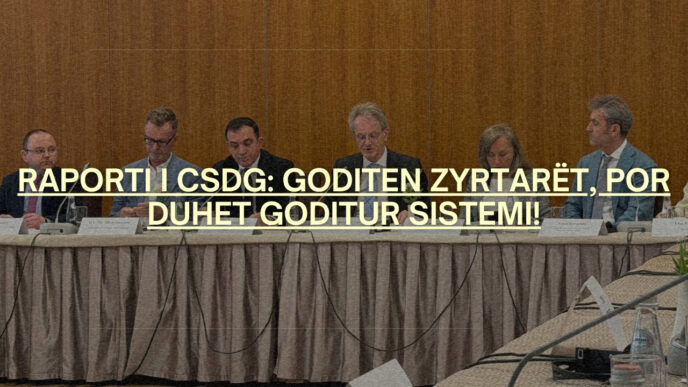
In 2025, Albanian citizens feel more insecure due to corruption and organized crime than they do in the face of any military danger or external threat. This is one of the main findings of the 2025 Security Barometer , the national survey that the Center for the Study of Democracy and Governance (CSDG) conducts annually to measure public perceptions of security.
Since its launch in 2019, the Barometer has become a rare reflection of how citizens view the state, institutions, and the risks that surround them. This year's study, conducted in a turbulent global and regional context, clearly shows that for the perception of the Albanian public, the greatest risk does not come from abroad, but from within.
“Since the beginning of measurements in 2019, the sense of security among Albanian citizens has been generally stable, but accompanied by an increase in sensitivity to internal threats. Around 60–70% of citizens continue to feel personally safe, while the perception of institutional security remains more fragile,” says Arjan Dyrmishi, author of the study and Executive Director of CSDG.
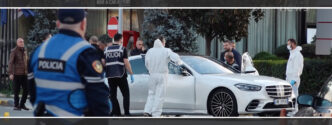
Corruption ranks as the biggest national threat, far ahead of any other risk. Next comes organized crime, which is perceived as closely linked to corruption, creating a chain that undermines trust in governance and justice. When the assessments of the main and secondary threats are combined, these two risks far outstrip any other threat, be it military, cyber or environmental. For the public, the risk is not in the borders, but in the system, in the lack of transparency, in weak punishment and in the perception of links between politics and crime.
"Since the first edition, Albanian citizens have perceived internal risks as more important than external ones. So in Albania the enemy is seen within the system: corruption, organized crime, lack of justice," Dyrmishi continues.
Organized crime remains a deep-seated problem that is widely perceived as a permanent threat to security and the economy. The majority of respondents consider it a very serious problem at the national level, although less visible in their local area.
The north and center of the country, especially Shkodra, Elbasan and Lezha, are cited as the most problematic hotbeds of crime. Drug trafficking ranks as the main activity of criminal networks, followed by money laundering and violent crimes. Most citizens believe that cannabis cultivation directly feeds organized crime, although they are divided on whether its legalization would weaken the influence of criminal groups.
In addition to economic factors such as poverty and unemployment, citizens identify three institutional reasons that fuel crime: lenient sentences, corruption, and the secret links between politics and crime. These create, they say, a culture of impunity that makes it difficult to draw a clear line between power and crime. Organized crime is perceived to negatively impact the free market, distorting competition through tax evasion, extortion, and intimidation.
One of the strongest findings of the 2025 Barometer relates to the perception of organized crime interference in the May 11 elections. Most citizens believe that criminal groups have influenced the campaigns of both major parties, through vote buying, illegal financing and, less frequently, direct threats. For about one in five respondents, someone in their circle has been contacted to influence their vote, while one in four says they know someone who has traded their vote for money or favors.
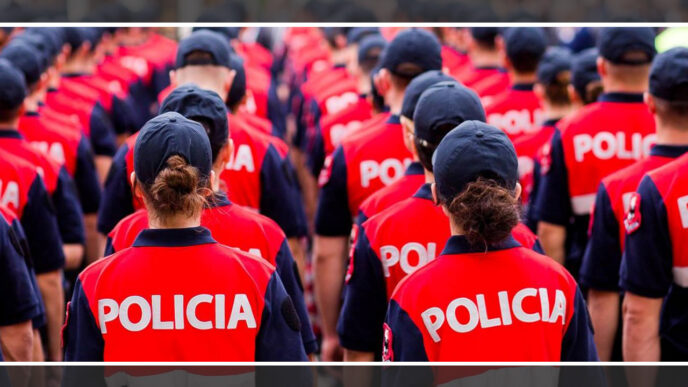
The main source of information about these interventions remains traditional media, but personal accounts are equally widespread, showing that the phenomenon is no longer perceived as abstract, but as a tangible reality. Among institutions, SPAK enjoys the highest trust for its role in preventing electoral interventions, followed by the State Police and the Central Election Commission, while political parties are considered the biggest contributors in this regard.
Compared to recent years, most citizens feel that the presence of organized crime has remained unchanged or has increased. The Decriminalization Law is seen as partially effective, but with obvious limitations in its implementation, especially at local and central levels of government.
"Corruption and organized crime continue to be perceived as the biggest threats. The reasons for the persistence of this perception are the normalization of corruption and its structural spread, the connection between politics and organized crime, the real impact that these have on everyday life, the perception of impunity and the increased public sensitivity after the justice reform and anti-corruption reforms in the context of EU membership," Dyrmishi says.
Meanwhile, expectations for reducing the impact of crime are divided between optimism and skepticism. In addition to SPAK, citizens also recognize the important role of the European Union and the United States in supporting reforms against corruption and organized crime.
A theme that runs through the report is that of low trust in justice and under-reporting of crimes. Many citizens are hesitant to report crimes due to fear of retaliation, distrust of authorities, and lack of legal information. Domestic violence, abuse by officials, and crimes related to power are believed to go most often unreported.
At the same time, the findings show that Albanians strongly believe in the need for regional cooperation in the face of common threats. Over 80% of respondents agree that the lack of cooperation between Balkan countries harms regional stability. However, optimism remains cautious.
A significant portion of citizens are skeptical that the region can improve the security situation in the near future. The main reason cited is the role of politicians, who are perceived as actors who often incite division and use tensions for domestic political gains. Serbia remains identified as the main threat to Albania's security, while other neighboring countries are generally assessed in a neutral manner.
On the global stage, the West is seen as a security guarantor. The United States and the European Union enjoy almost unanimous support as positive and reliable partners. Russia, by contrast, is largely perceived as a negative actor, while China is viewed with ambivalence, neither a direct threat nor a trusted partner.
The majority of respondents believe that in the coming years the US will remain the most influential power in the world, followed by the EU, China and Russia. At the bilateral level, Italy is mentioned as the country with the closest relations and as a partner that should be prioritized in the future, alongside the US.
“The Security Barometer conveys a clear message to institutions that national security cannot be understood as a purely military concept, but as a direct result of good governance, the functioning of justice and the implementation of the rule of law. Citizens link their sense of security to the quality of institutions and their ability to be honest, transparent and effective,” concludes Dyrmishi, adding that the public demands tangible results and independent institutions in the fight against corruption, as trust is built by real actions and not by political rhetoric, while support for European integration is seen as a guarantee for real reforms. /acqj.al