


Ida Ismail
On May 11, Albania holds parliamentary elections and political parties have already launched the offensive to win over voters. If previously television and newspapers were the main means of political communication, today social networks have become the main platforms for promoting candidates' programs, meetings and activities.
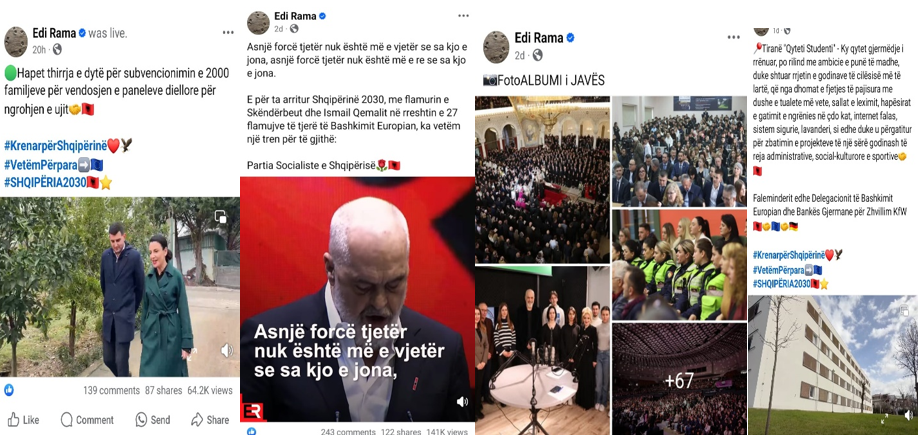
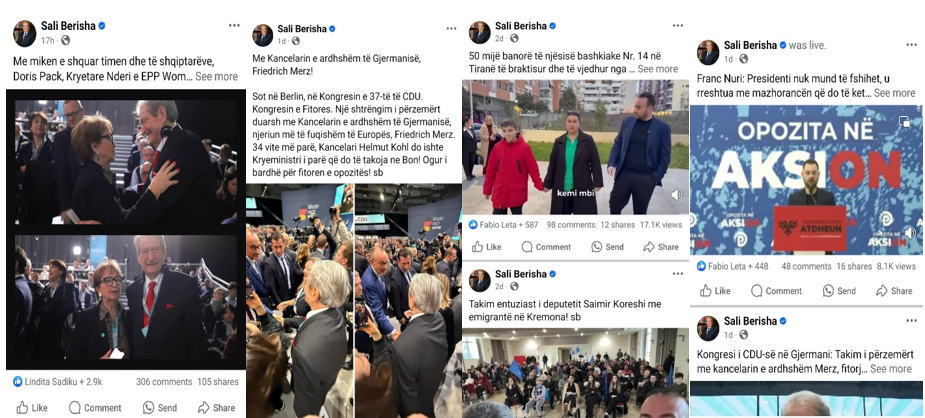
Prime Minister Edi Rama uses Facebook to publish his speeches and electoral promises, while former Prime Minister Sali Berisha, even when he was under house arrest, remained active on the same platform, posting denunciations from citizens and meetings with DP leaders.
CEC at war with legal loopholese
Despite its efforts, the Central Election Commission (CEC) is unable to monitor online propaganda, as the Electoral Code does not provide for rules in this area. Furthermore, candidates' propaganda activity before their official registration cannot be punished, leaving a large space for abuse.
Public administration at the service of the party
The official websites of ministries and state institutions have become tools of electoral propaganda. The Ministry of Agriculture and Rural Development, for example, is used to promote the activities of the majority exponents, while employees face pressure to share the posts of Minister Anila Denaj. A similar situation is observed in public schools, where employees are forced to comment on and share the activities of Minister Ogerta Manastirliu.
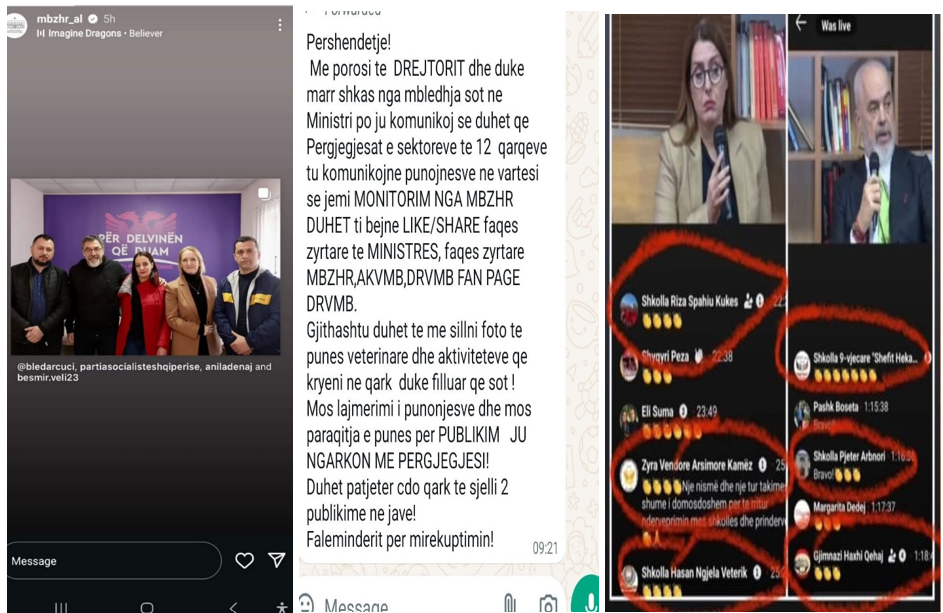
CEC: Administration employees are threatened with dismissal
According to CEC representative Ermira Allushi, social networks have become the main weapon of the campaign, but citizens often do not know where to denounce pressures or abuses. Meanwhile, the CEC has published awareness-raising videos, but their effectiveness remains limited.
Online campaign: How much do parties spend?
According to data from Meta Ad Library , during the May 14 local elections, political parties and candidates spent about $91 on social media advertising.
Socialist Party: $82 in the last four years.
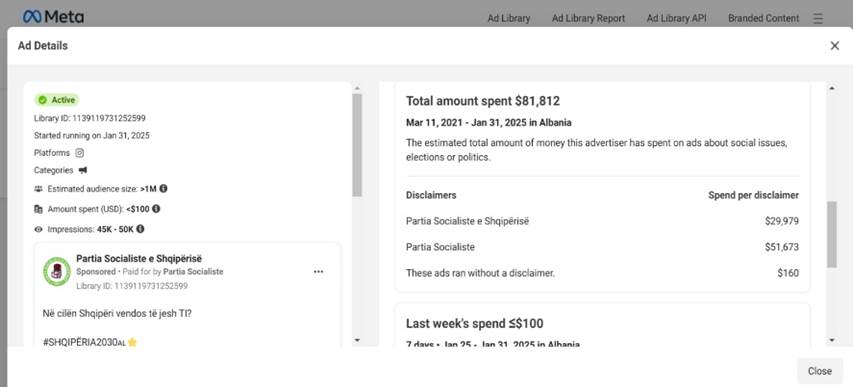
Democratic Party: Exact spending is unknown due to party splits and name changes. In the last four years, the “Euro-Atlantic Democrats” have spent $5,950.
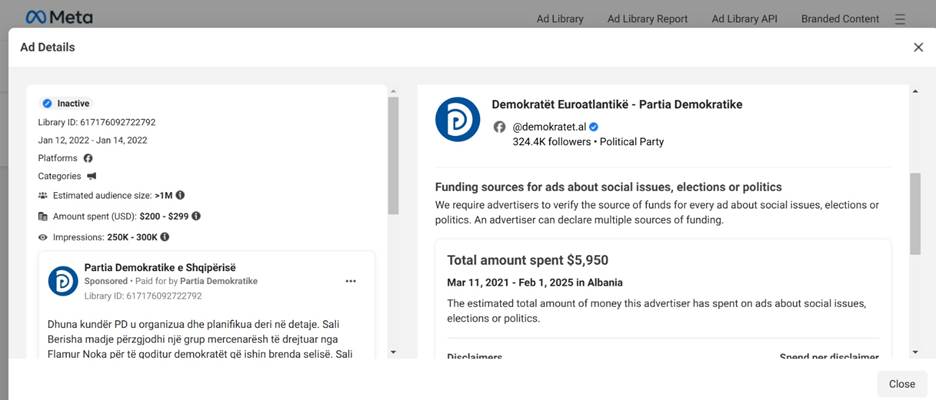
Main concern: Hidden funding and the influence of criminal groups in the campaign.
Sanctions for violations
Lawyer Muharem Çakaj explains that the Electoral Code provides for fines for parties that violate spending limits or receive illegal funding:
Unidentified funds are transferred to the CEC account.
Donations over 50 thousand lek from unknown sources are punishable by a fine equal to the amount donated.
Financing from prohibited sources is punished with double the amount received.
Violating the maximum spending limit is punishable by a fine of 5 million lek.
Misuse of State Resources: A Repeating Pattern
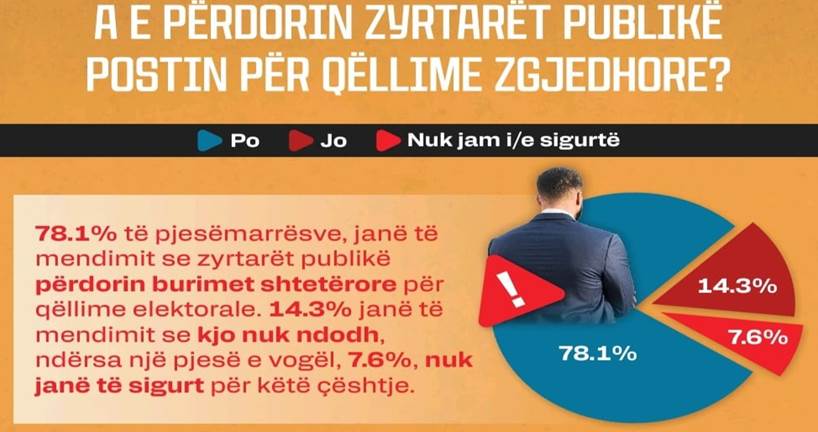
According to a survey by Qëndresa Kyivtare with 720 citizens in 6 municipalities, 78.1% of them claim that public officials use state resources for campaigning. Following QQ's denunciations, the CEC decided to ban the use of official websites of state institutions for political posts.
The OSCE/ODIHR has emphasized in each of its reports that misuse of state resources, pressure on public employees, and allegations of vote buying remain ongoing concerns in elections in Albania.
Use of public assets prohibited 4 months before elections
According to lawyer Çakaj, the Electoral Code prohibits the use of public assets in support of a party four months before the elections. For this reason:
The government should not adopt laws with direct benefits for specific categories (pensioners, fiscal amnesty, social assistance, etc.).
Parties must report every activity to the CEC for approval.
Officials warned about abuse of state resources
Ilirjan Celibashi, the chairman of the CEC, has warned that any public official who uses state resources for campaigning will face sanctions.
Social media rules and disciplinary measures
The CEC Regulatory Commission has decided that:
Public officials cannot use official accounts for propaganda.
Electoral activities are only allowed on personal accounts.
The use of institutional social networks for political purposes is strictly prohibited.
KAS demands disciplinary measures for violators
Ledio Braho, a member of KAS, suggests that in addition to fines, administration employees who engage in political campaigning should also face disciplinary measures that affect their careers.
Fines for drivers fall during the campaign – coincidence?
An interesting phenomenon is the drastic reduction in Traffic and Municipal Police fines during election periods.
In February-April 2023 (local elections), 25,342 fines.
In the same period of 2024: 117,962 fines.
Even Municipal Police fines in Tirana in 2023 were 3.7 times lower than in a non-election period.
Party financial reports, a legal obligation
By law, parties and candidates are required to submit detailed financial reports annually and for each campaign. These reports are published by the CEC for transparency and accountability.
With incomplete laws and institutions powerless to control online campaigning, political parties continue to exploit every space for propaganda, including the administration and state resources.
As the election date approaches, the well-known phenomena of misuse of public resources, pressure on the administration and unclear financing are becoming more visible. OSCE/ODIHR reports have highlighted the lack of separation between party and state for years, while polls show that the majority of citizens perceive this problem as a concern. Despite the CEC’s efforts to limit institutional propaganda and increase financial transparency, legal gaps and lack of enforcement of rules remain major challenges. If these problems are not addressed, the May 11 elections risk becoming another case study in the impact of digital propaganda and misuse of state resources or another OSCE/ODIHR report with recommendations.