


Author: Dashamir Bicaku
Food safety in Albania remains a major concern, despite the actions taken by the National Food Authority against dangerous foods that populate the market. In particular, AKU's actions are focused on striking the still primitive way of slaughtering cattle and selling this meat in the country. The authorities say that the law should be tightened, in order to protect the health of citizens.
The General Director of the National Food Authority, Agim Ismaili, says that the law must be toughened to protect the health of the population from the danger that threatens it.
But he says that the current Penal Code is quite generous with criminals in this field who put people's lives at risk. "It is paradoxical that criminal prosecution for the trade of dangerous foods definitely requires a consequence. So someone must have died"?
The comments come after in the Court of Tirana, a 63-year-old man was sentenced for falsifying documents, although he was caught falsifying the expiration dates of cheese at the premises of the company "Globex" in Kashar in 2015.

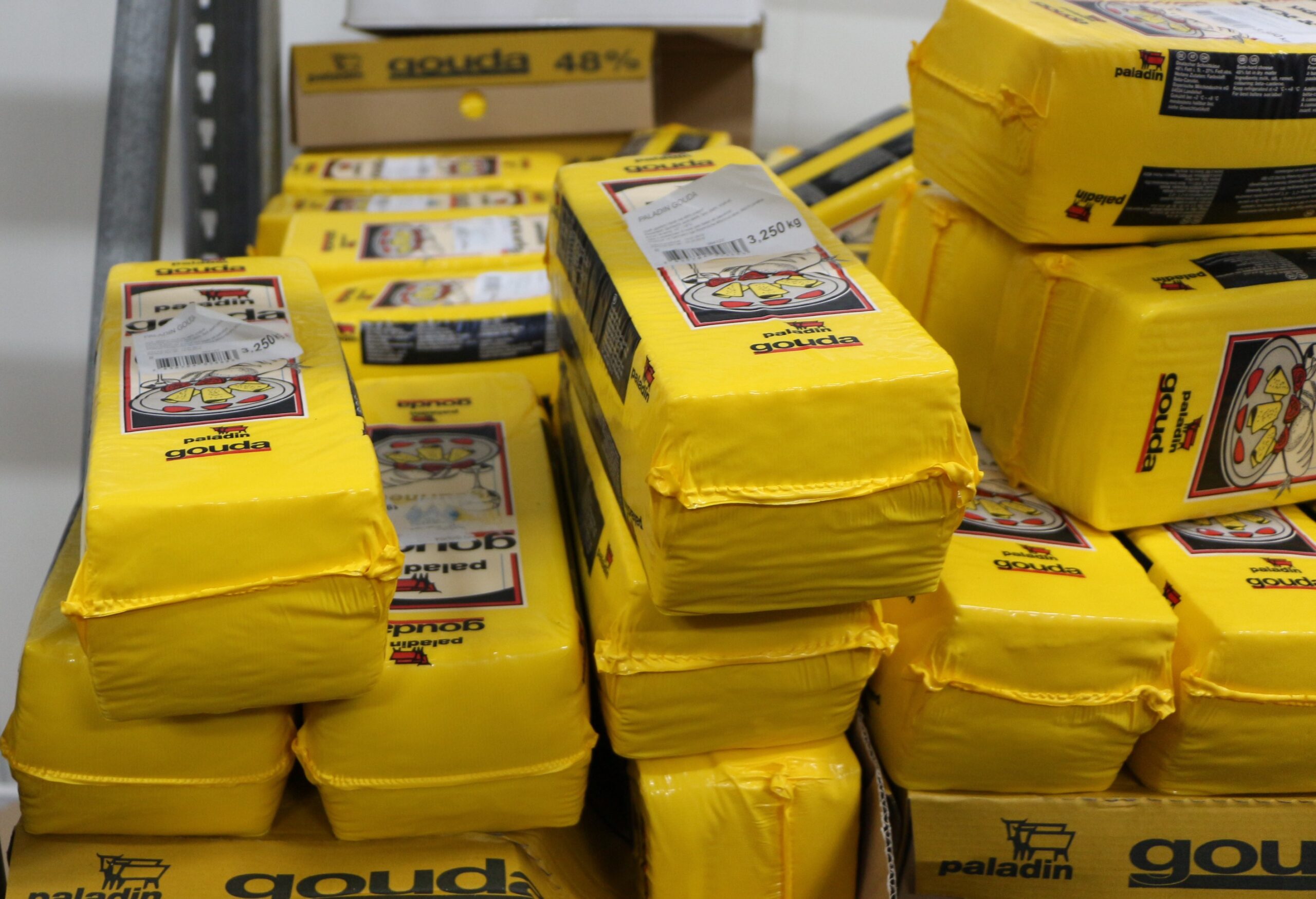
Approximately 8.4 tonnes of cheese products, suspected of being expired, were seized in 2015 following a police operation. A dozen false labels led to the cheese being put back on the market, even though it was already a health hazard.

5 people, of which the owner of the company, the administrator, the sales director, a storekeeper and the worker Lulzim Xhemali, were handcuffed.

The blame fell on 63-year-old Xhemali. He admits that he was convicted, but that he was not guilty.
The real criminals, those who even profited from counterfeiting, managed to escape the punishment of the law without much ado.
Isuf Shehu, former Director General of the National Food Authority, says that the prosecution's investigation should have focused on the real beneficiaries as well as the organizers of this food falsification scheme.
(Interview with Isuf Shehu)
The well-known infectious disease doctor, Pipero Pigeon, has a call: The Food Industry should not play with people's health!
The company "Globex" has returned to the market normally. The only penalty was the destruction of the seized cheese and two fines of 500 Lek each from the National Food Authority.
The prosecutor sent the helpless man to prison
After more than six months of investigations, the prosecutor Petrit Hysi closed the investigations for the bosses, Andrea Laçi, Albina Nushi and the sales director, Floresha Guda. They were accused of forging documents and labels. So the label was considered a document.

But a few months later, the investigation was also stopped for the storekeeper Rigers Koçi. For them, it was claimed that their involvement in the falsification of cheese labels was not proven. Prosecutor Hysi also changed the classification of the criminal offense by changing it from forgery of forms, seals and stamps, according to Article 191/2, to a common forgery, according to Article 186. In this form, he decided not to qualify the label as a document state but simply as a piece of paper that is placed without any purpose on the product. The change, according to this article, reduced the dangerousness of the criminal offense, but also the possible punishment for the accused. Also, not setting the label as a document saved the company and its leaders from prison and punishment.
At the end of December 2015, Prosecutor Hysi sent the file for trial to the Court of Tirana. The defendant was the most helpless, and perhaps the least guilty, the 63-year-old worker, Lulzim Xhemali. In January 2016, he was sentenced to one month in prison for this charge. He has now returned to the same workplace as before, in the same company "Globex". There he also found his bosses, who were arrested with him on February 6, 2015. Unlike him, they had been declared innocent in time.
"I didn't fake anything. I have not been caught forging, - says Lulzim Xhemali, during an interview at his workplace. Judge Altin Abdiu said that he examined the case correctly and sentenced the person who came before him as a defendant. Prokuroi blamed the police officers who, according to him, did not investigate properly. But the police officers who investigated the case, on the condition of anonymity, said that they investigated the file completely and that they carried out the prosecutor's duties meticulously. While the people, who are entrusted with the administration of justice, play ping-pong among themselves, the citizens have eaten the cheese that is dangerous for their health. The real person responsible could not be discovered by the state.
The brother of the former owner: The cheese kept its value even after the expiration date
[Pullquote]
Precedents of dangerous foods
TIRANA- MAY 5, 2017
A man and a woman were arrested by the police for the production of illegal liquor.
DIBAR - JUNE 9, 2017
100 residents of Peshkopia were poisoned by the poisoned cake
SHKODER- SEPTEMBER 26, 2017
Police and AKU hit a base of counterfeiting of alcoholic and non-alcoholic beverages in Shkodër. Several AKU inspectors were also arrested.
SUKTH- OCTOBER 25, 2017
Hundreds of tons of illegally produced canned foods and juices were seized in Sukth by the police.
KORÇA- NOVEMBER 2, 2017
1300 liters of oil produced in the cellars were blocked by the police, the owner was arrested.
[/ pullquote]
Kristaq Laçi is the brother of the former owner of the Globex company, Andrea Laçi. Laçi is a former basketball referee, now retired, but he does not hesitate to give advice on food values.
"Even if the foods are used for a month, after the expiration date, they do not lose their nutritional value", he says. But Kristaq Sini, lecturer at the Agricultural University of Tirana, food safety expert, is worried. "Foods that have passed their use-by date do not have security in the values they convey. They are dangerous to health. The expiration date is related to the enzymatic transformations of the product and the growth of microorganisms that become dangerous". For this reason, foods that are still in the last days of their expiration date should not be used.

"The growth of a population of microorganisms, even from a spore, causes the population to grow under certain conditions and depending on the right time. Based on this fact, the expiration date is also decided. If these microorganisms exceed the standard or the allowed limits, then these products can poison consumers".
Pepper: They are a risk of cancerous diseases, mlest they harm our children in the future
 (Audio of the interview)
On average, 3500 patients appear a year for treatment at the infectious disease hospital, precisely because of food poisoning. This figure is considered alarming by Dr. Pëllumb Piperon, infectious disease doctor at the "Mother Teresa" hospital and former head of service of this hospital. He says that such an alarming level shows the high uncertainty we have in the foods we consume. Pipero adds that expired food before being thrown away is harmful, but there is also a risk of immediate poisoning from them. "The damage they can bring to a person is immediate, such as toxic-infection that causes abdominal pain, vomiting, high temperature, loss of consciousness, shock, etc." The long-term consequences that these foods can bring to health remain a problem according to the doctor, as they are difficult to detect. "These types of expired foods retain the ability to damage the partial genetic system in the long term, causing oncogenic forms that can be inherited in the genetic code of the offspring." For this reason, Pipero calls: The food industry, do not play with health. The bodies that deal with consumer protection should carefully check the documentation of the products that enter our country. No one has a guarantee even from the products that are imported or produced in the country", - concludes the infectious disease doctor.
[Pullquote]
EUROPOL blocked 230 million euros of counterfeit food
On April 25, 2017, Europol said that it had blocked about 230 million euros of various counterfeit and expired food and drinks. They were intended to be thrown on the markets of the European Union and outside it. Although the operation was coordinated by the EU police agency, it spread to 61 countries, of which 21 were other EU countries, European countries. The operation was also extended to countries bordering the European continent. At the end of the operation, 9800 tons of food, 26.4 million liters of drinks and food liquids were blocked. The operation took place over four months, having its greatest impact in Italy, Germany, France, Spain, Denmark, Greece and Ireland. The most common products blocked were canned fish, chocolates, wine but also uncontrolled smuggled alcohol. In one case, the investigators noticed a mixture of meat, alcohol and tobacco in inappropriate storage conditions. According to the announcement of EUROPOL, dated April 25, 2017, a large number of people were put in handcuffs without providing figures.
[/ pullquote]
Justice punishes the helpless "culprits", not the real beneficiaries
Food safety in Albania remains a major concern, despite the actions taken by the National Food Authority against dangerous foods that populate the market. In particular, AKU's actions are focused on striking the still primitive way of slaughtering cattle and selling this meat in the country. The authorities say that the law should be tightened, in order to protect the health of citizens.
The General Director of the National Food Authority, Agim Ismaili, says that the law must be toughened to protect the health of the population from the danger that threatens it.
But he says that the current Penal Code is quite generous with criminals in this area who endanger people's lives. "It is paradoxical that criminal prosecution for the trade of dangerous foods definitely requires a consequence. So in order to prosecute a seller of poisoned food, someone must have died from this food"?
The comments come after a case in the Court of Tirana, where a 63-year-old man was convicted of forging the expiration date labels of a quantity of cheese at the premises of the company "Globex" in Kashar.
Approximately 8,4 tonnes of cheese products, suspected of being expired, were seized in 2015 in a police operation. A dozen fake labels meant that the cheese could be put back on the market, even though it had already expired. Five people, including the owner of the company, the administrator, the sales director, a storekeeper and the worker Lulzim Xhemali, were handcuffed by the officers of the Economic Anticrime.
The blame fell on 63-year-old Xhemali. He admits that he was convicted, but that he was not guilty. The real criminals, those who even profited from counterfeiting, managed to escape the punishment of the law without much ado.
Isuf Shehu, former Director General of the National Food Authority, says that the prosecution's investigation should have focused on the real beneficiaries as well as the organizers of this food falsification scheme.
The well-known infectious disease doctor, Pipero Pigeon, has a call: The Food Industry should not play with people's health! The company "Globex" has returned to the market normally. The only penalty was the destruction of the seized cheese and two fines of 500 Lek each from the National Food Authority.
Agim Ismaili: We are tightening the law and the penal code
The head of the National Food Authority says the law on food safety, and a special section of the Criminal Code, is being reworked to be stricter. Importance is also being given to the issue of labels, expiry and marketing of dangerous foods.
According to him, a complete package is being prepared in terms of food safety. "34 cases have been reported by the AKU to the district prosecutor's offices, for the trading of dangerous foods".
Most of them have been dismissed since there was no lack of consequences, as required by the Criminal Code. So there were no injured or dead people from poisoning.
This section of the Criminal Code seems to have tied the hands of the AKU, the police and the Prosecutor's Office. But the former head of the National Food Authority, Isuf Shehu, says that the penalization of entities that sell dangerous foods should be escalated from the importer, the producer, the warehouse to the seller. In relation to the role and importance of each one, the fines should be heavy and with large amounts.
According to Shehu, such a thing should be accompanied by criminal prosecution for repeaters and the measures of punishment should be such that counterfeiters and traders do not think of deceiving the public and the institutions.
For the latter, he says that they should be more responsible and rigorous in carrying out the duties assigned to them by the law. But until the law is effective, the prosecutor's office looks for the real culprits of the food, the institutions become responsible, the prosecutor Petrit Hysi targets the powerful culprits, the lives of Albanians can be endangered by the food that stinks in the warehouses of the traders. big ones.
How do citizens think?
*Main photo at the beginning of the article, the seized cheese. Photo: State Police