


Denada Jushi
The road from Tirana to Zall i Kirit is 90 km. In the 90-minute journey, it is worth remembering how the dictatorial regime, under repressive violence, murder, disappearances and deportations, more than anywhere else, had one city in focus: Shkodra!
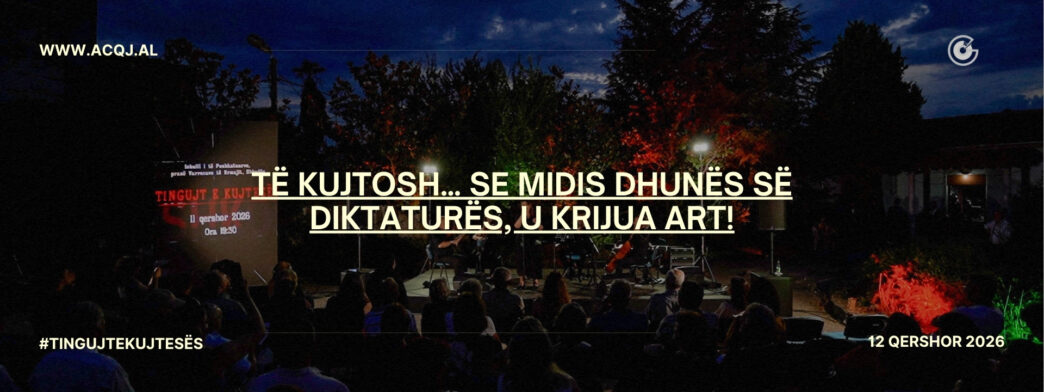
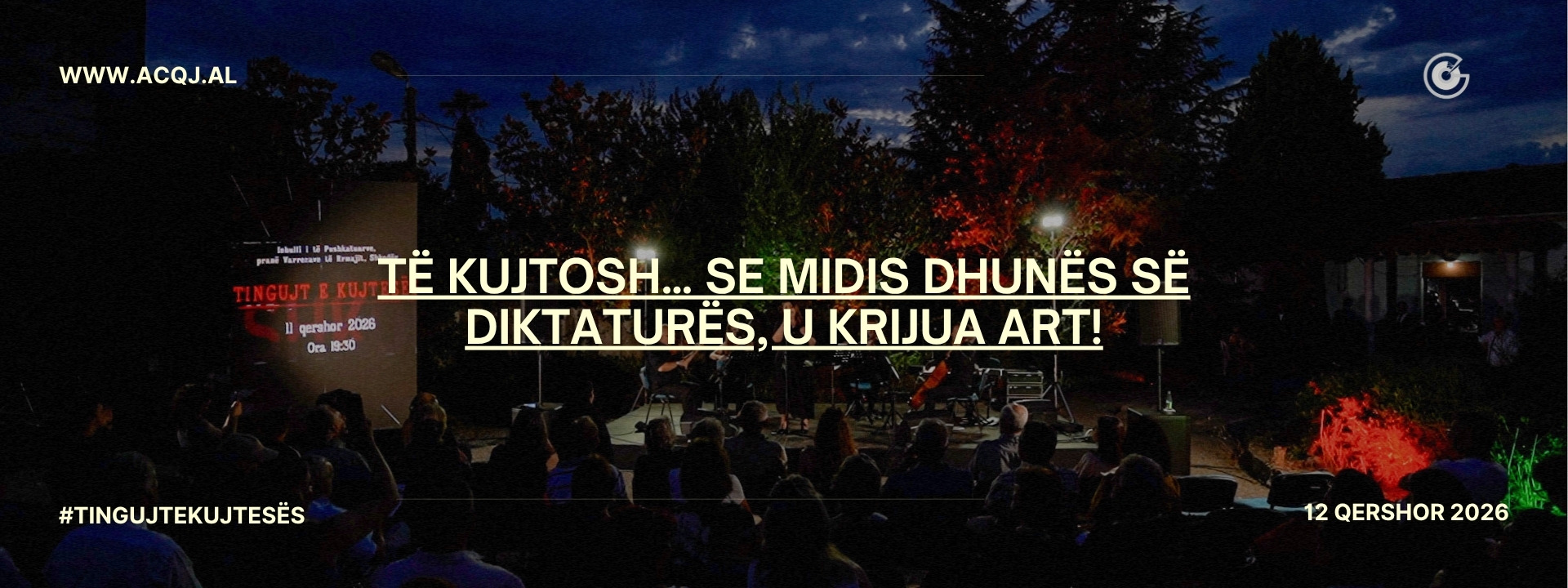
In the memoirs of Father Zef Pllumi, the communists' entry into the city is described in the first pages of "Rrno për me Tergue". That narrative was visualized for me as the road wound its way on the evening of June 11, when the "Sounds of Memory" festival, the fifth edition, was set on the sandbank, where many of the city's learned and beloved people were shot!
As soon as you land, you feel the almost deafening silence that covers one of the darkest chapters of Albanian history.
However, music once again became a testimony, a memory, and a commemoration.
“Sounds of Memory” was conceived from the start as an act of remembrance, an attempt to restore the names, voices, and stories of those that the communist dictatorship tried to erase forever.
The evening began with Mark Shllaku's letter, written a few hours before his execution in October 1949.
"Please take care of my bones and never forget me. Take my bones and put them in a grave. I'll put a tin with my name on it so you can recognize me."
"Halal to all and to you first."
The words addressed to his wife and children, filled with love, bequests, and pain, brought back to the public not only the fate of one man, but the tragedy of thousands of Albanians who disappeared without a grave.
Mark Shllaku's will was never carried out, because his remains were never found!
Their families were denied the most basic human right: to have a place to remember.
In the Albania of the dictatorship, disappearance was not only physical. The regime went so far as to eliminate bones, but above all, memory.
For many, he managed to erase names, creativity, talent, and everything that did not fit his ideological model.
But memory found a way to survive. And through it, this concert brought forth precisely this story of survival.
Poetry, music, and stage performance brought back figures that the dictatorship imprisoned, tortured, or left in oblivion.
Gac Çuni, who breathed his last in Burrel prison, but left behind songs that are still sung today. Zef Zorba, the poet who wrote in secret, because free speech was forbidden.
Tonin Guraziu, the pianist who was denied the stage. Pjerin Ashiku, whose authorship was denied, while his songs lived in the hearts of the people.
Lukë Kaçaj, the artist who conquered the international scene before ending up in the regime's prisons.
Lazër Shantoja, Qemal Draçini, Ramadan Sokoli, Prenk Jakova and dozens of other names who paid the price of freedom with their lives, prison or exile.
“Sounds of Memory” tells the story of the victims. It also tells the story of creativity under dictatorship.
All this creativity, which is still sung and recited today, was born in prison cells, in exile, in hidden manuscripts, in songs that circulated by word of mouth, and in poems that waited to see the light of day only after decades.
Located in Zall i Kirit, in Shkodra, in a city that experienced incessant imprisonment, shootings and persecution, this is more than a memory; it is a way to return to a place that proves to us that art was a form of resistance.
"Sounds of Memory" invites us not to forget the past.
At the end of the concert, the rain began to wet the gravel, as a metaphor for the tears of family members who watched with tears in their eyes the art of their loved ones, whom the dictatorship unjustly took away from them!/ acqj.al