


Author: Dallandyshe Xhaferri
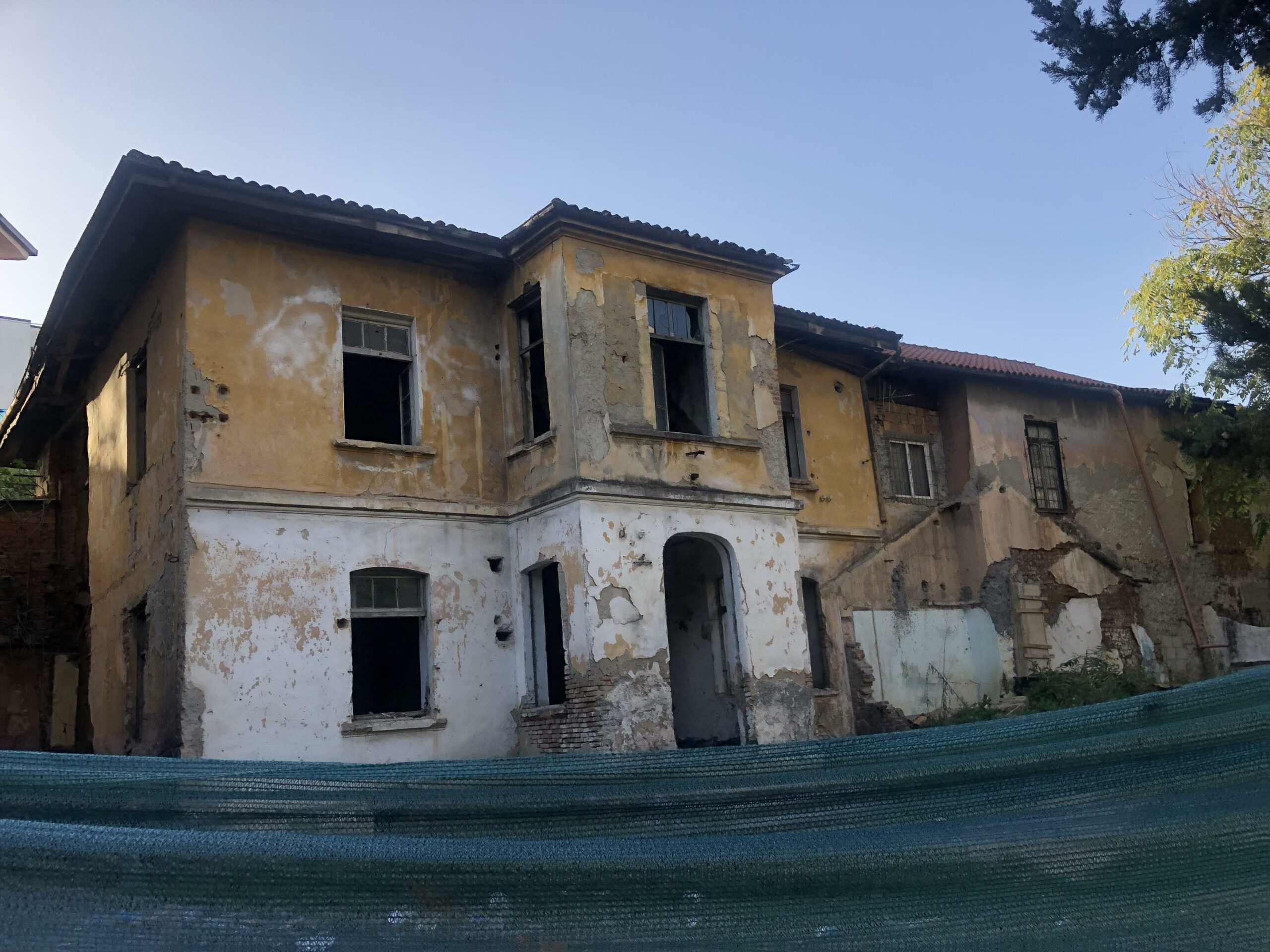
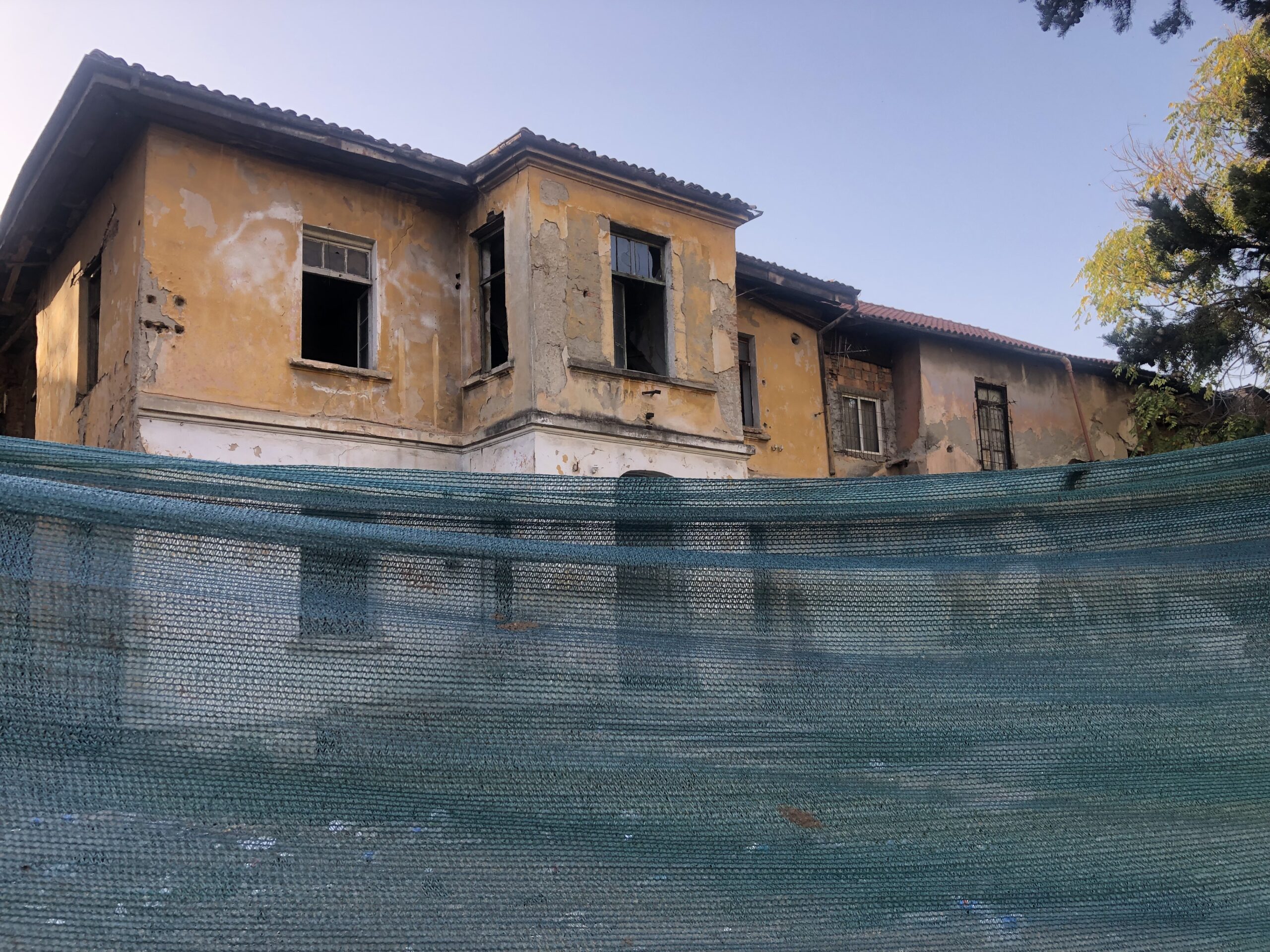
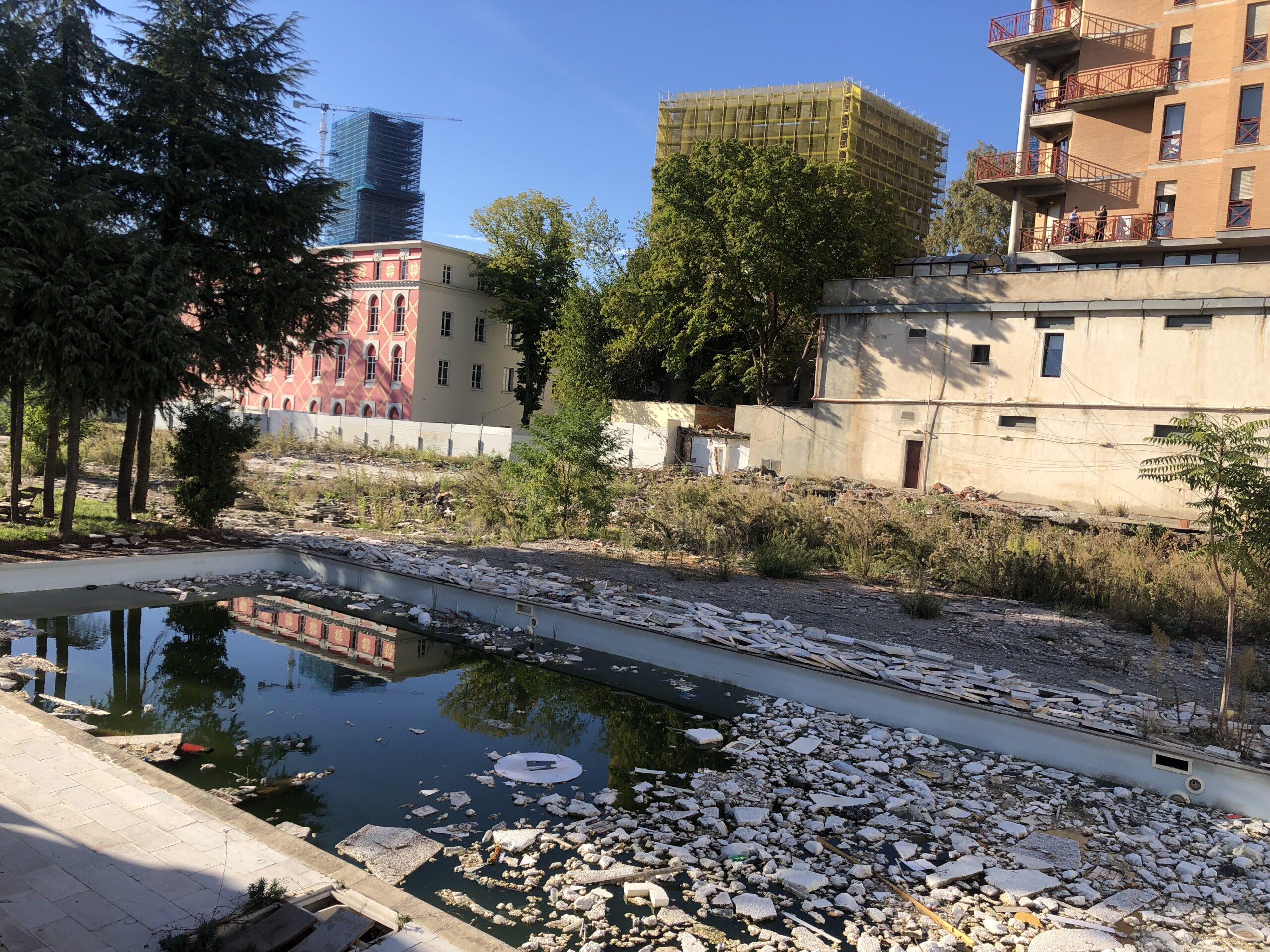
Considered as one of the buildings with the most beautiful architecture built before 1944, nothing of its grandeur remains from the villa "Vila 24". Nor from the classification, Cultural Monument of the Second Category. Abandoned for 20 years, the building located on "Konti Uran" street proves the state's neglect of history.
Dust, the smell of traditional dishes being cooked on the grill, traffic along "Rrugës e Kavajës", the sound of horns giving way to the noise of new constructions and the barking of a group of dogs inside the yard", this is the atmosphere around the historic building. " An Egyptian minority family lives there", - tells "Sinjalizo", a resident of the area, according to which homeless people, but also animals enter and leave the building. "They have a lot of dogs and sometimes you are afraid to approach the building ", - says the woman. A surrounding wall has been replaced with a net and blankets have been placed on the windows of the villa.
Tirana villas, the past that is being replaced by palaces
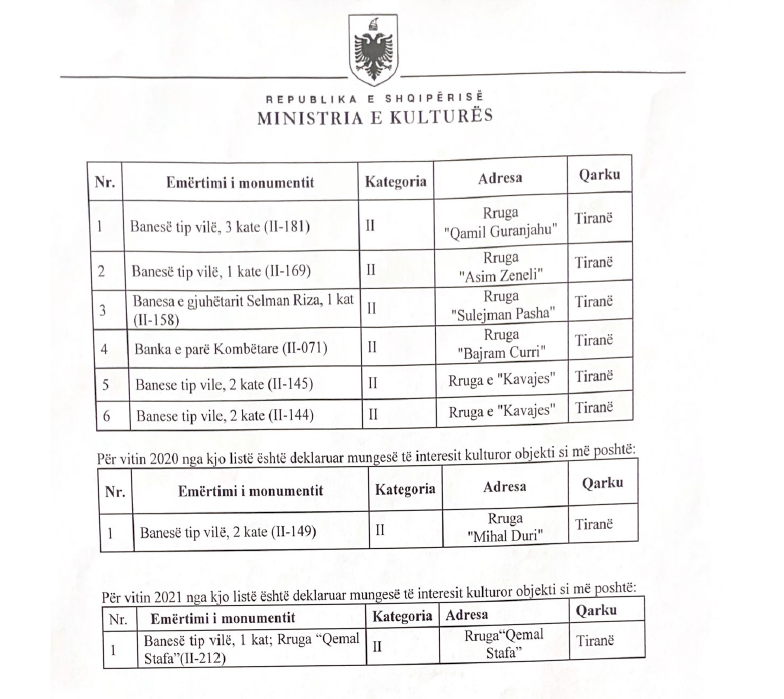
According to the official position of the Ministry of Culture for “Sinjalizo”, it turns out that eight (8) historical-cultural monuments of Tirana have lost this status within a two-year period. From 2019 to 2021, they were removed from the list. Seven of these monuments are villa-type dwellings built mainly after the 1930s, when the influence of Italian culture began to be felt even more in the country. According to Albanian law number 27/2018 “On Cultural Heritage and Museums”, it is “ the owners and possessors of cultural immovable properties who take care to preserve and maintain cultural assets in good condition”.
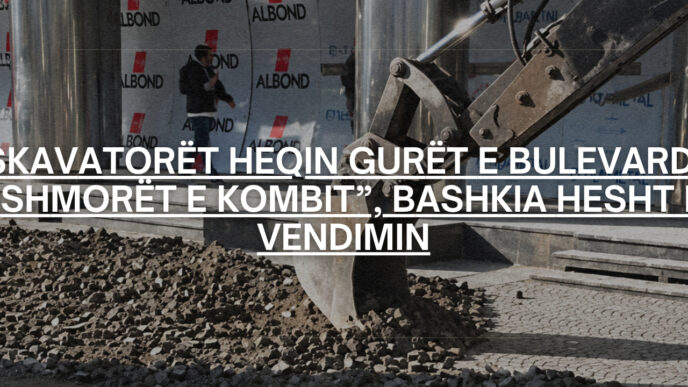
However, according to a 2021 study by Citizens Channel , 36 orders were issued to remove the status of 45 Cultural Monument villas from 2015 to 2020. What followed was the sound of cranes and concrete mixers as the spaces of 17 of these villas were replaced with new buildings.
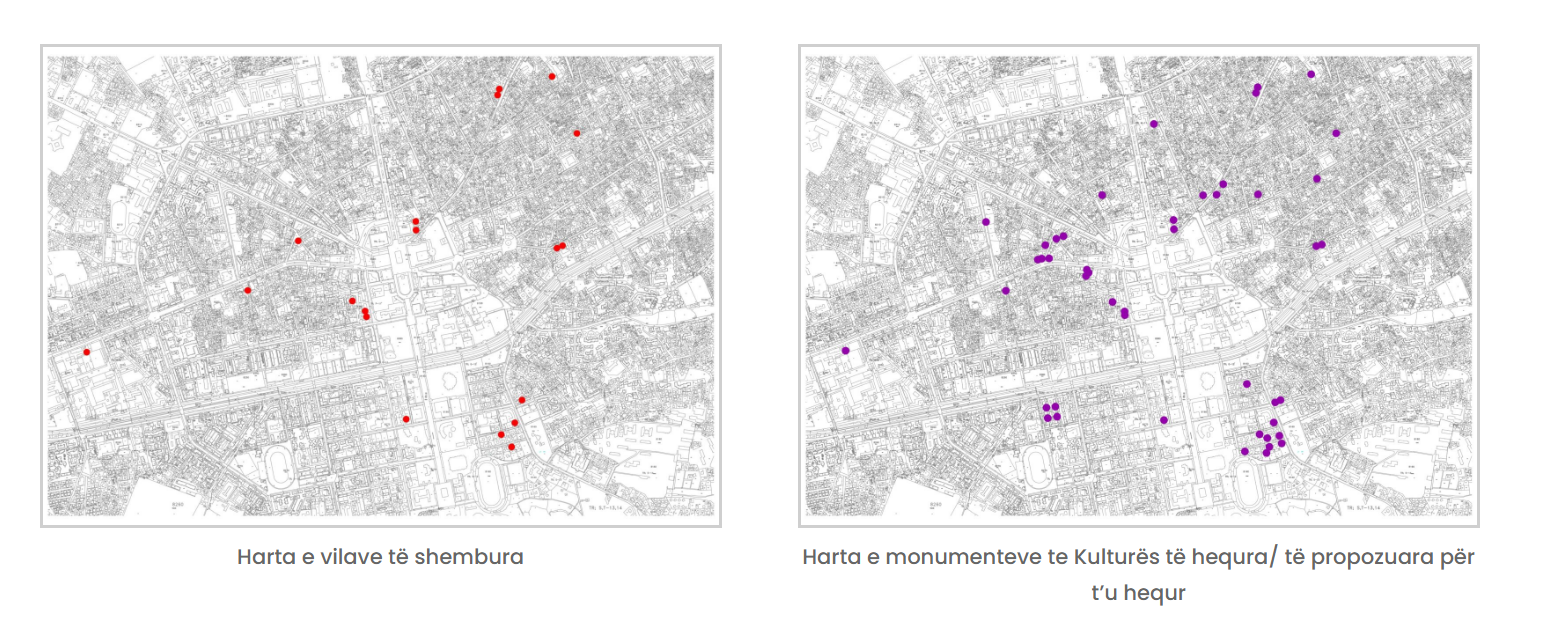
According to reports issued by the IKTK (National Institute of Cultural Heritage) , lack of investment is seen as the main reason for the removal of status, as the villas "have lost their cultural and historical values."
But for architect Doriana Musai, the superimposition of palaces on cultural and historical monuments "is more of an invasion than a development, as the loss of what our grandparents built contributes to the creation of a non-empathetic society."
" The biggest loss is social cohesion, the culture of harmony and coexistence, inherited from centuries ," Musai explains.
The Ministry of Culture declares for "Sinjalizo" that there are 235 cultural monuments and tombstones in the capital. Meanwhile, only 12 of them are classified as cultural monuments of the first category. Also, in her answer, it is known through the language of numbers that in the surroundings of Tirana there are 40 Cultural Monuments, tombstones and 13 Natural Monuments.
" Regarding their age, these structures present different degrees of depreciation and the need for restoration is periodic," the Ministry's response states , "while the fund determined by this institution for the Tirana Regional Directorate of Cultural Heritage (DRTKT) is 2.500.000 lek for 2022. Within the city, the DRTKT has under its supervision "only the Clock Tower and the former building of the Toptan Sarajev ," it states in the response received from this institution.
The Center for the Restoration and Realization of Works of Art is the institution under the Tirana Municipality, which also deals with the maintenance of monuments.
" The budget for 2022 of the Center for the Restoration and Realization of Works of Art is 15,687,172 lekë," the response from the Municipality of Tirana states. Otherwise, this amount accounts for 2% of the Cultural Heritage, Artistic and Cultural Events program.
How are cultural monuments undone?
On December 7, 2016, the Council of Ministers decided to remove the ownership of the Tirana Pyramid from the Ministry of Culture and transfer it to the Municipality of Tirana. This decision paved the way for the start of works to return the building to a "center of technological innovation" and the deletion of its status as a Cultural Monument in 2017.
According to public data on “Open Procurmet”, the investment to return the Pyramid to the center of innovation is being financed by the Municipality of Tirana, the Ministry of Culture and the Albanian-American Fund for Development. Initially, the tender announcement date, which amounted to 1,463,358,358 (1.4 billion) lek with VAT, was opened on August 3, 2020, and the contract with the winning company was signed on December 14, 2020. The duration foreseen in the works contract was 24 months, but the works on the Pyramid have not yet been completed.
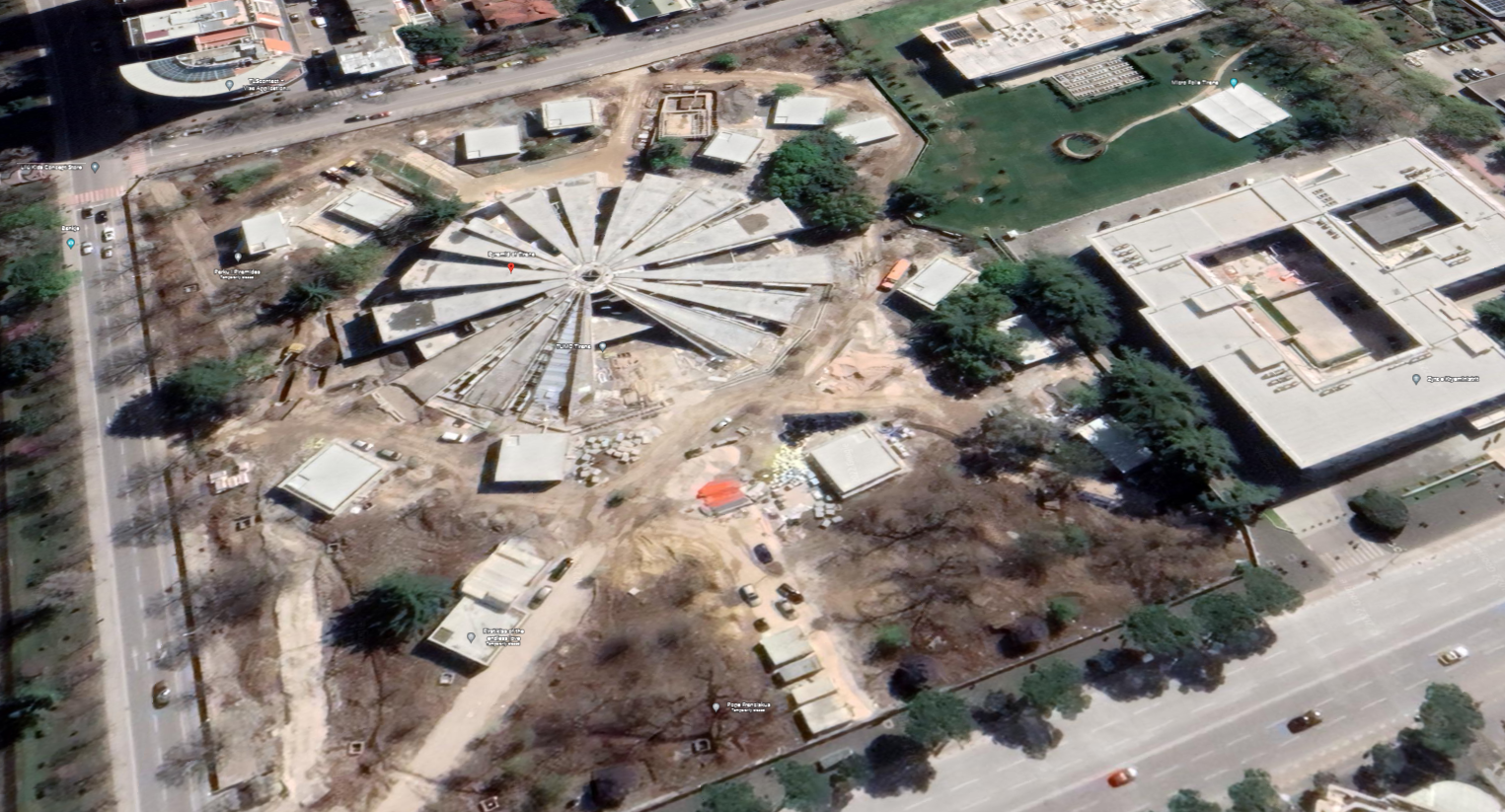
Last month, on October 5, the tender with a winning value of 228,511,306.00 lek excluding VAT was opened without competition, which is reflected with a red flag in Open Procurement. In the absence of competition, the same companies, “Fusha shpk” and “Edil-al-it shpk”, were declared winners, while the additional contract did not publish any date for the expected completion of the works on the Pyramid.
Another cultural monument that has returned to the ownership of the Municipality of Tirana is the former building of Saraje t Toptanë. Through the official written response, the Municipality of Tirana has placed at the disposal of "Sinjalizo" the document of taking this decision, in order to open the way for the project for "Restoration and Revitalization of the Toptans' Apartment".
According to the decision taken on October 22 of last year, the value of about 251 million ALL of the expropriation would be borne by the Municipality of Tirana, while in August of that year, Sarajet was engulfed in flames, the circumstances still remain unclear from the official authorities .
The collapse of the National Theater, the architect Doriana Musai describes as "genius loci", otherwise as the loss of the soul of the city. The decision to demolish the building was implemented around 04:30 in the morning, when the National and Experimental Theater buildings were demolished on May 17, 2020, after almost two years of opposition by activists and part of the actors.
" The loss of the theater foreshadowed the loss of the city. Today, Tirana has an amorphous form and its urban structure does not build a city ," says Musai, who adds that the way Albanian institutions make decisions has not changed from that of the 1950s-1960s. " The methodology and forms of decisions are autocratic and statist ," she concludes.
The tender for the reconstruction of the first phase of the National Theater building is currently open, the winner of which will be announced next week on November 3. The limit fund of the tender is approximately ALL 1.8 billion, while the duration of the works is expected to be 27 months.