


Author: Denis Tahiri
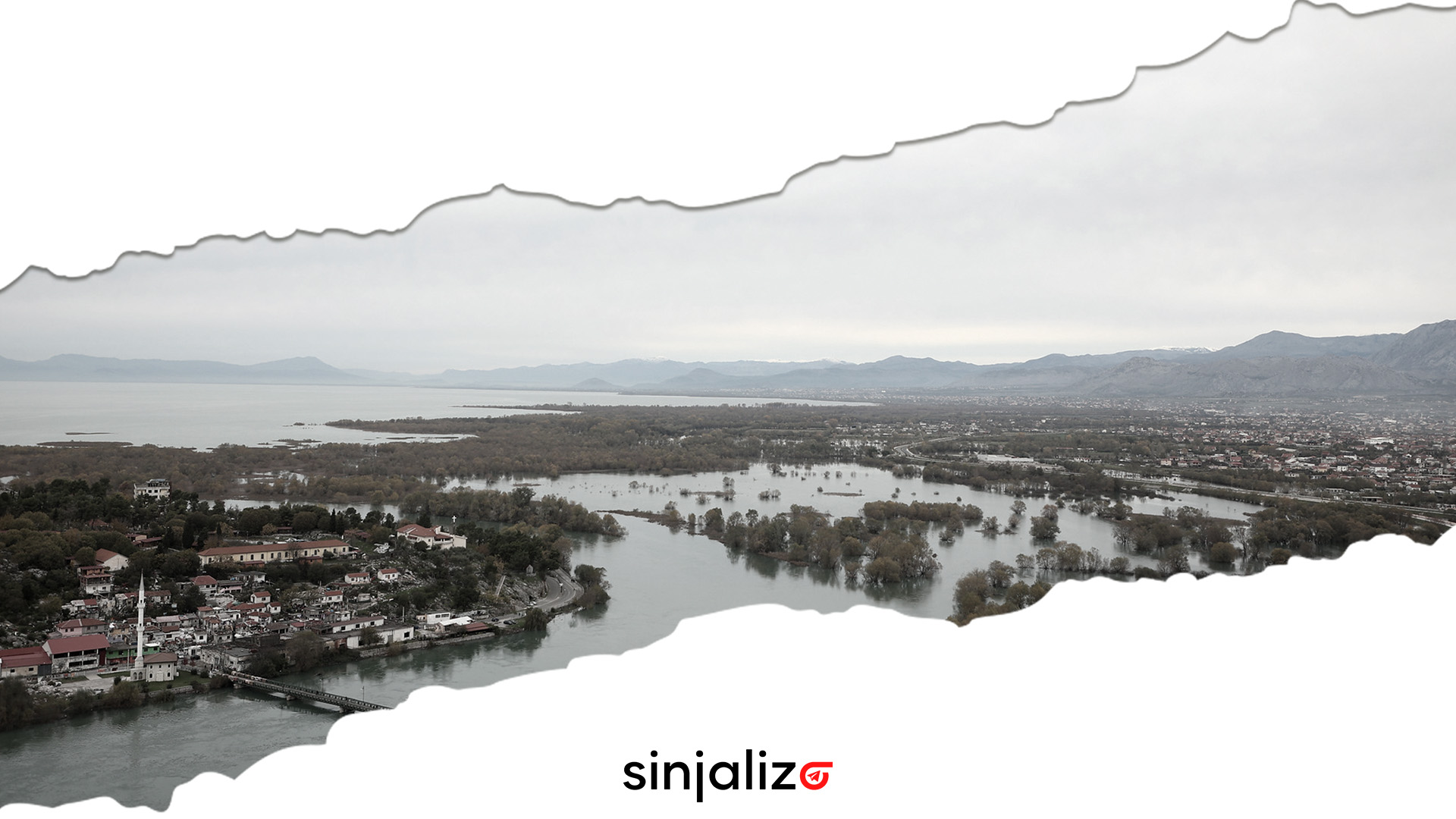
It only took one day of rain for the municipality of Shkodra to return to the unresolved problems caused by the floods. The temporary evacuees left their homes. On November 20, the Minister of Defense, Niko Peleshi, asked for the citizens' understanding for the cases where the power was cut off, since incidents had to be avoided. But he asked for maximum commitment from the hydropower companies. Like his predecessors, Niko Peleshi also blamed the rain. " Here we are at the entrance to Shkodra, at the Harku i Bërdicas. There was very high intensity rainfall yesterday; it was sudden and this has caused the streams and the Vau i Dejës basin to swell. During the night there were also some problems with the electricity supply. We also have the director of OSHEE here, who assures me that all areas are being put under control and that by the afternoon, when the intensity of the rainfall decreases, we will have a full supply of electricity. Citizens must understand us, because in some areas the supply is cut off for security reasons, so it is not that there is a lack of energy, but for security reasons, and to avoid any possible danger, the energy is cut off until the situation calms down", declared Niko Peleshi. Day after day it was reported how the hectares of land under water were being reduced, but the "scenario" that occurred this season is also familiar for residents who, as soon as the rains start, are evacuated to take shelter in hotels or dormitories . Everything continues under the whims of time and the flows of rivers that for decades have flooded hundreds of houses throughout the Oboti area, which this year, along with the villages of Shirq, Mushan and Dajç, had the same danger for residents.
We got blocked!
" The flood came suddenly, I don't know, no one even notified us. The road was blocked for 10 hours, the village was isolated for 5 days. At least 1000 hectares were under water", this is what Arben Ceni, the administrator of the Ana e Malit unit in Shkodër, tells "Sinjalizo". The resident adds that he was lucky, since the lake was at a low level. " The discharges were very large, imagine for yourself, the Baçallëk bridge collapsed", explains Ceni in detail, who counts every damage, the greenhouses most affected.

But according to the administrator, the drains were open and this explains, according to him, the work to minimize the damage. However, the channels did not solve any problems.
" Who would have thought that the hydroelectric plants were full? We thought they were empty and prayed for rain to fill them, but it backfired on us," he adds.
Meanwhile, Fatmir Fishku, a farmer who has his apartment near a stream that divides the border between Montenegro and Albania, is among dozens of residents whose property was damaged. This stream, residents say, brought not only flows that flooded them, but also an agreement between the two countries, which was never implemented.
"We have a stream near our apartment, but it is an unopened stream. This is a problem that has been raised for a long time, it was raised by the former administration of the commune, and by the municipality. But no intervention has been carried out," he says, adding that the stream causes flooding in significant areas planted with alfalfa, pomegranates, olives and fruit crops. Resident Fishku's beehives were flooded.
" We have been looking for the border stream for over 7-8 years and as far as I know, the district council and the prefecture have the funds for it," says Ceni. The agreement with the neighbors, according to the resident, was that the Montenegrins would cut the vegetation, while the Albanians would open the drainage channels.
Dani Pëllumb, the head of civil emergencies in Shkodër, acknowledges the existence of such an agreement. " As far as I know, such a project has been made by the district council. It has been made for years. It has been sent to the central institutions and we are waiting for it to be implemented."
The emergency plan was ready, it was not implemented
" The characteristic of these rainfalls has been mainly the flooding of mountain streams," Pellumb Dani, head of Civil Emergencies in the Prefecture of Shkodra, tells "Sinjalizo". He adds that there have been problems from the rainfall in the municipality of Vau i Dejës, Shkodra and Malesia e Madhe. Meanwhile, for the lower part of Shkodra, Mr. Dani says that this year's flooding has not been on the scale of other years, where the water covered an area no larger than 2500 hectares. Meanwhile, for the part of the canals, whether the first, second and third ones, they continue and remain present.
" Even during the September rains, we had flooding problems in the center of Shkodra due to the non-functioning of the collectors and the failure of the municipality to take measures to clean the manholes and main collectors, which was repeated during this flood," he says, adding that the commitment to cleaning the canals under the responsibility of the municipalities as well as the responsibility of the Directorate of Irrigation and Drainage in some places has left something to be desired.
To anticipate emergency situations, the prefect, according to the law, must convene the commission at the beginning of each season to analyze expected emergency situations. " We convened the commission at the end of October and the focus of the meeting was mainly on measures for managing seasonal emergencies, meaning floods and snowfalls," says Dani, adding that all representatives of member institutions participated and a preparedness plan for floods and winter emergencies was also worked out, and at the same time, an order from the prefect was issued that obliges all structures to manage expected situations.
" This order and this plan mean that the prefecture puts all institutions, both local and central, on alert to anticipate emergency situations," he concludes.
When asked whether measures were taken by the relevant institutions to avoid the flood emergency situation, he replied: " To be honest, they were not taken properly, they were slow in activating the preparedness plans, activating the resources that each unit has," he says.
Not only Shkodra, but all of Albania is at risk from missing dams and sewers
According to the National Strategy for Disaster Risk Reduction, the condition of dams, river and sea embankments are amortized. According to this document, which was published on August 2022, of the 626 dams that are currently in our country, 410 of them, or in other words 65%, show significant technical problems and require urgent intervention. Also in this document it is stated that the water drainage has worsened due to the flooding of drainage canals and the reduction of the drainage capacity of hydrovores.
" The situation is expected to worsen further due to climate change, which is reflected in extreme weather phenomena," the National Strategy for Disaster Risk Reduction document states.
According to the strategy, an assessment of the additional flood protection needed in medium and high risk areas should be made and the capacity building of personnel in the structures responsible for irrigation and drainage should be organized.
" Other key measures include the development of school curricula on flood risk, cooperation with neighboring countries on floods, increasing the number of experts in the field in local administration, programs for dealing with the consequences of flood disasters to minimize risks and related recovery costs, case-by-case review of legislation for each construction permit, and a database for all flood risk-related data," the document states, among other things.
On the other hand, the same document states that out of 850 kilometers of river and sea embankments, about 300 kilometers are in need of repairs, rehabilitation, reconstruction or re-dimensioning due to changes that have occurred in recent decades. “ There is also a need for modernization and rehabilitation of weather stations, regular maintenance of equipment, reliable internet connections, new qualified staff as well as hydrologists and meteorologists and digitalization of data in order to improve the Early Warning System of Albania,” the strategy published after several years of absence reads.
Compensation, something that no one gets
Compensation for the damages is something that the residents hope to receive, but looking at the experience of previous years, the hopes are few.
" For the compensation, Ms. Spiropali was delegated, together with Haki Çako, with Minister Peleshi. The Minister of Agriculture, Frida Krifca, did not come, they said she came somewhere, gave an interview, but she did not go to the scene. We want to ask her for compensation," Arben Ceni testifies for "Sinjalizo", not forgetting to add that the last time they received compensation was in 2010.
According to the ICOLD National Register, Albania is in the 20 countries with the largest number of large dams in the world and ranks first in Europe for the number of large dams per 1000 km2 as well as for the number of large dams per 1 million residents.
Meanwhile, in a 2020 report, in addition to the problems highlighted above, it is also noted that "over 95% of the irrigation dams used by the Ministry of Rural Development and Municipalities do not have monitoring systems on the dams and have not installed alarm systems. They have not prepared any flood maps according to the requirements of the legislation in force, with the current conditions of the area below the dams."
According to the same document, in our country there are currently 343 large dams that are used for irrigation and for urban attractions, of which 8 are used by the Ministry of Education and Culture and 335 by the local government, to which they passed with VKM in 2015. In the year 2009, with funding from the World Bank, a study was conducted on the condition of 195 large dams used for irrigation, where 15 of them were rehabilitated, but in no case were dam monitoring systems or alarm systems installed. theirs.