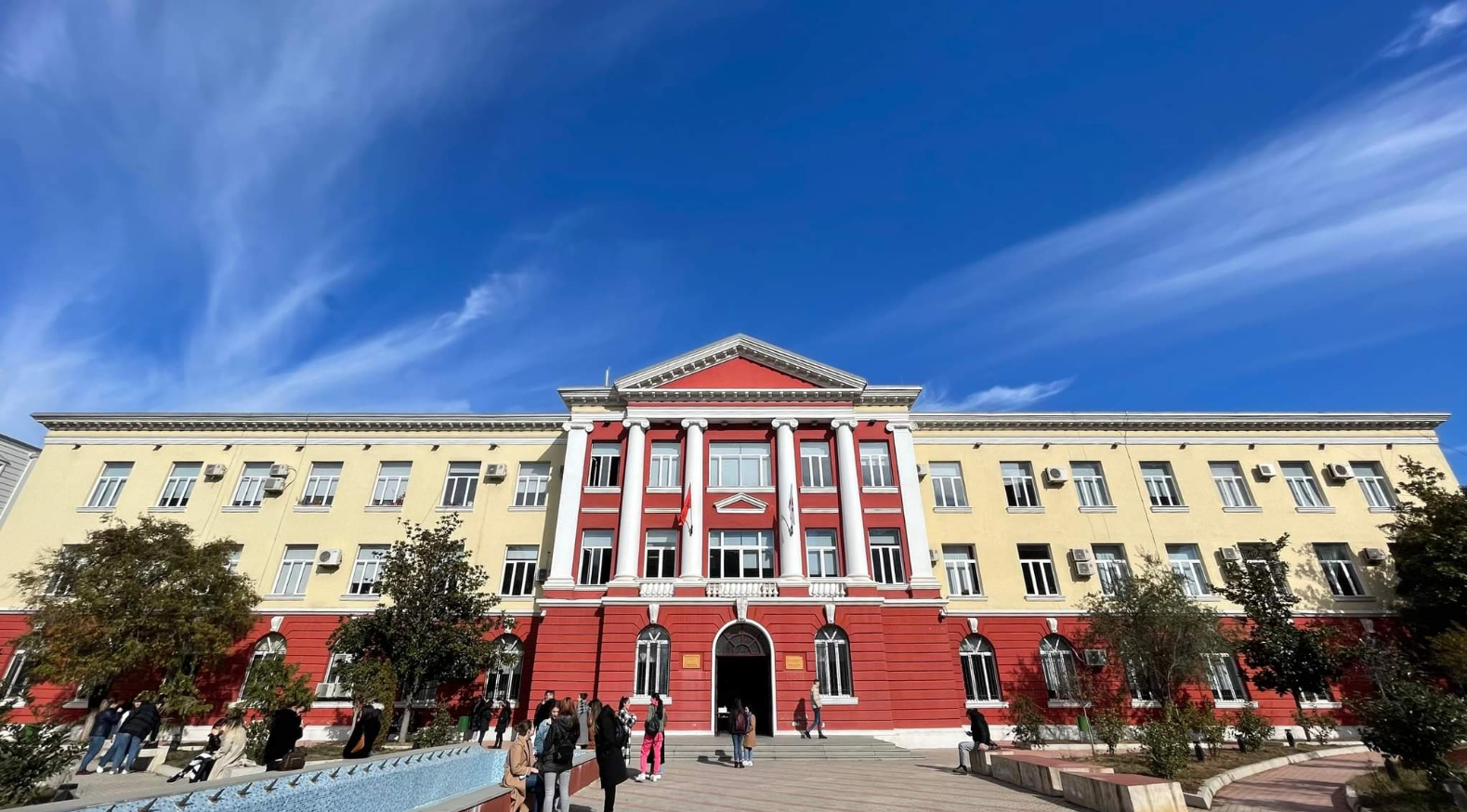



Author: Klevis Paloka
On the day that the students of the 9-year-old school "Çajupi" fought, the attention was shifted to the two teachers who were considered the apple of the quarrel. While the four injured claimed that they had collided after the other party provoked a fight, the security officer of this school was nowhere to be seen. Although for 2 years, the Ministry of Education and Sports has launched a pilot project for attaching 150 officers to all public high schools in the country, these numbers have not yet been filled. But the biggest problem lies in the dysfunction of the link between the employees at the school and the security officer.
This fact was confirmed by the Minister of Education, Evis Kushi, at a meeting of the Commission for Education and Public Information Media.
"An agreement has been reached with the Ministry of Interior and there is close cooperation with the staff at the school. Often, problematic cases are referred to the security officer by the psycho-social worker. So we have very close cooperation and cases of students who may be problematic are referred to the psycho-social worker to prevent further disturbing events at the school," said Minister Kushi at a meeting in October.
But even though minister Khushi described the cooperation between the two ministries as successful, high school students, witnesses and experts confirm the opposite.
Students not only fight and bully, but also drink hashish
One of these is the high school graduate Sara L., from the "Petro Nini Luarasi" gymnasium, who has memorized a fight since she was in the 10th grade.
" I remember when I was in the 10th grade, there was a fight with knives between two students. All the students were terrified by the incident, as one of them was even sent to the hospital, but that event was not made public in the media, they kept it a secret. In addition to the fights in our high school, the phenomenon of bullying is also very widespread, usually happening between 12th grade students and younger 10th grade students ," Sara L, begins her story for "Sinjalizo".
The "Petro Nini Luarasi" gymnasium with about 1300 students is the third gymnasium with the most students in Tirana, after the "Ismail Qemali" and "Sami Frashëri" gymnasiums.

The 17-year-old emphasizes that there has never been a case of bullying, but she had friends who were bullied, while the security officer says that no one told her when she started working there.
" I personally have not had any cases of bullying or any other problems, but I know friends who have been bullied for different things. Even though she is the security officer, hashish and tobacco are still consumed in our high school. Almost every week, fights happen, but being a girl, the determined officer does not intervene, she only notifies the police. When she first came, no one introduced her to us, neither the teachers nor the school principal. The students discovered it themselves by asking ," says the high school graduate, adding that now during the end-of-year holidays, they must also be careful of the capsules that students throw in the yard, but also in the school's interior.
Problems like these are also expressed by the high school student "Eqerem Çabej", in Tirana. Unlike the "Petro Nini Luarasi" gymnasium, the 15-year-old IS, who is in the 10th grade this year, emphasizes that hashish is not consumed in this gymnasium, but only tobacco and there is a lot of bullying towards those who come for the first time.
" In our high school, we don't smoke hashish, but we only smoke in the classrooms, in the toilets and in the yard. What I have noticed, during these first 3 months, is the bullying that occurs towards students who come to school for the first time. Those who are now in the 12th grade, have an arrogant and bullying behavior towards the 10th grade students ," the 15-year-old tells "Sinjalizo".
Problems not only in the city, but also in rural areas
Leaving the capital, in the rural areas, the problems are the same, bullying and fights between students. A major problem seen in these rural areas is the consumption of hashish.
At the "At Shtjefën Gjeçovi" gymnasium, in the city of Laçi, the most numerous problems are the consumption of hashish, the smell of which you can detect as soon as you enter the school yard. Even here there are no shortage of fights between students. Unlike Tirana, students who come from the villages of Laç encounter the biggest bullying in this high school. This is where the fights start.

" Since we are from the villages, there is more bullying towards us, and it is not like anything is done in this regard to prevent it. There are many fights both in the classroom and in the schoolyard. Hashish is consumed in the school toilets, but also in the yard or corners of the school, so much so that sometimes it is difficult to pass there due to the strong wind. Another problem is the current end-of-year time, where students set off pyrotechnics, both in the yard and in the school corridors ," says 16-year-old PL, who is now in the 11th grade.
The same problems as the consumption of hashish in the school toilets, fights and bullying are also listed by the students of the "Arif Halil Sulaj" gymnasium in Mamurras and the Milot gymnasium in Kurbin.
What is officially said?
In the report published by the Pre-University Education Quality Assurance Agency for the 2020-2021 school year, 365 incidents were recorded. The Regional Pre-University Educational Directorate of Durrës tops the list with the most incidents. According to the report, 124 incidents have occurred in DRAP Durrës, followed by DRAP Korçë with 109 incidents, DRAP Lezha with 87 incidents and closes DRAP Fieri with 45 incidents.

In the DRAP of Durres, the Tirana Local Education Office has the highest number of incidents, with 68 incidents. In the DRAP of Korça, the highest number of incidents has the ZVA Elbasan with 36 incidents. In the DRAP of Lezha, the ZVA Kukës leads with the highest number of incidents with 28 incidents and for the DRAP of Fier, the ZVA of Fier has the highest number of incidents with 14 incidents.
According to this report, the most incidents occurred in the month of October, 87 of them or 23.8% of the total incidents. As for the incidents that occurred, it leads the incidents with physical violence with 38.1%, followed by psychological violence with 13,7%, violation of school regulations with 13.2% and ends with bullying with 7.7%.

Experts: Not only violence, but there are abuses
According to the INSTAT report, for the 2020-2021 school year, 107.989 students are enrolled in secondary education.
According to the education expert Dr. Ndriçim Mehmeti, sexual abuse by teachers towards students has recently increased. According to Mehmet, the promise that the security officer would change the situation is nothing but a show.
" I have said before, it seems to me that the position of the security officer is simply to secure a salary somewhere and certainly also within the framework of the spectacle, with supposedly new initiatives for the school that are unfairly called reforms. I do not know if there is a similar model around us and beyond, especially when school management should be a task of the teaching staff, school leaders, the parent community, etc. Reports from schools inform us of sexual abuse by teachers against students, guards, and students among themselves, but surprisingly the security officer does not know anything and we find out about it through the press ," says education expert Mehmeti.

The expert emphasizes the problems within the walls of the school, which according to him are dominated by two phenomena: bullying and the use of hashish.
" In our schools, bullying is the law, smoking is allowed from the sixth grade onwards, the yard, toilets and the area around the school stink of hashish and again the security officer does not know anything. We have serious problems of behavior, discipline, and communication that are becoming increasingly serious. This shows that the security officer, as I mentioned, is a link, which does not provide any solution and moreover, it seems that he is extremely distant from the problems of the school. It is clear that there is no coordination between him and other school structures, such as: the Parents' Board, the Parents' Council, the Teachers' Council and the heads of educational institutions ", emphasizes Mehmeti.
In the end, he adds that he does not see the placement of security officers in high schools as a real solution and that the school itself should solve its problems.
" They are not the real solution to the problems that Albanian high schools have. Educational institutions of all levels must be trained and prepared to solve their own problems. For this purpose, the community of parents, teachers, school leaders and local government, students must be in complete harmony, to respect the maximum importance of the institution, to work together for a safe, clean environment, away from violence, alcohol, drugs, etc. We boast of the "community center" school project. Where are we with this project, what has changed for the better in our schools, how many schools has it been extended to, etc. Again, we lack this data and those who trumpeted it to us as a success, continue to be in the highest positions of the state and do not bear any responsibility for the spectacular failures that have come as a result of the failed policies they have adopted ", concludes Dr. Mehmeti.
Sociologists: We need cooperation from everyone
Entela Binjaku, a well-known sociologist, maintains that students' problems should be under everyone's attention.
" For the problems that young high school students have, such as: the use of prohibited substances, violence in relationships between them, conflict with teachers, breaking discipline at school, failure to respect student obligations and responsibilities, etc., in my opinion, everyone needs help. What needs to be done is cooperation and interaction of everyone: from the parent board, the parent community, the directorate, subject teachers and tutors, the psychologist, the security officers where they are, to the law enforcement officer who stands near the school ," says Binjaku, a sociologist, to "Sinjalizo".
Meanwhile, violence in school environments is also confirmed by a UNESCO report . In Albania, the prevalence of students who reported being raped was 19.9%, around 22.6% among boys and 17.3% among girls. The figures are higher among 11-year-olds, where according to the report around 23.8% admitted to having experienced bullying or violence at school in one of its forms, while among 13-year-olds this ratio is 20%.