




Denada Jushi
Children who are malnourished, gaining weight, create health problems as they come and go. Obesity is now considered one of the most important problems facing public health worldwide.
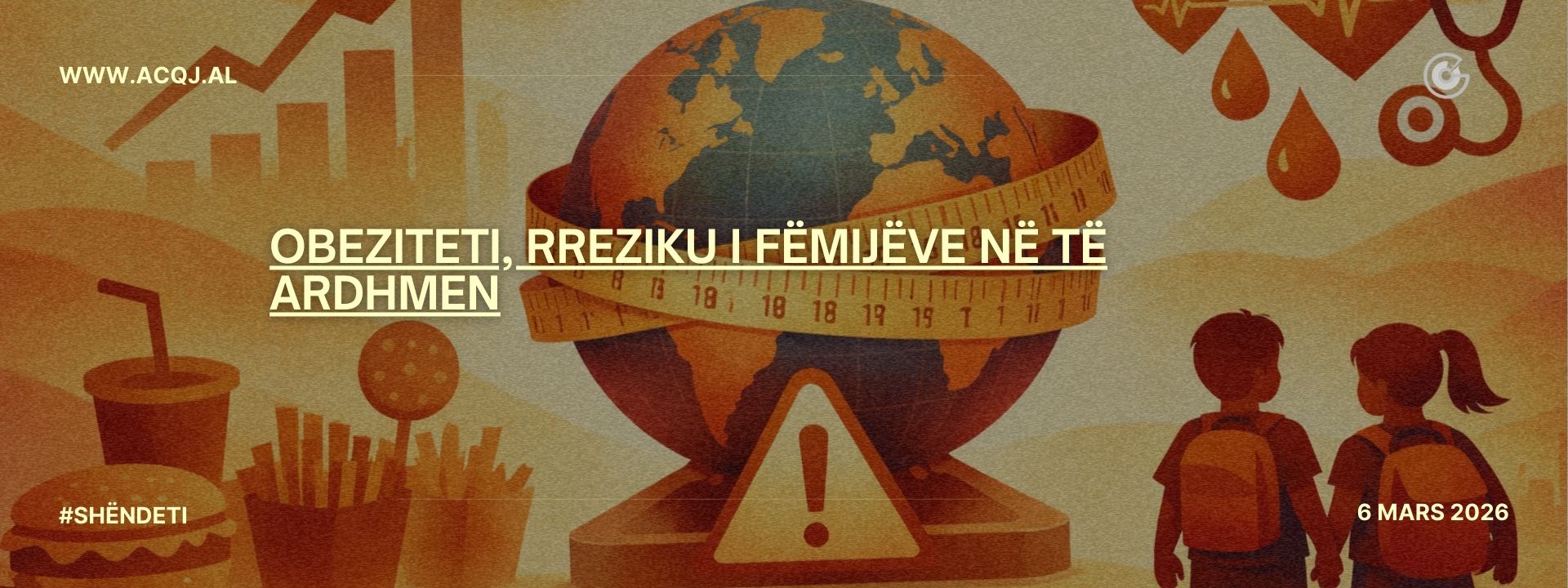
The World Obesity Federation has published a report proving that the rising trend of obesity continues in almost every region of the world and increasingly affects children and young people.
The report warns that childhood obesity is no longer a problem limited to rich countries, but a global phenomenon that is spreading rapidly even in low- and middle-income countries, where most of the world's population lives.
One of the key findings for 2025 is that around 20.7% of children and adolescents (5–19 years old) worldwide are overweight or obese. Around 180 million children worldwide are currently obese.
According to the report, the global prevalence of overweight and obesity in children has increased significantly over the past decades. In 2010, this figure was around 14.6%, while in 2025 it has reached over 20%. This increase indicates a major change in the way of eating and in the lifestyle of the younger generations.
According to estimates, if this trend continues, by 2040 the number of obese children is expected to reach around 227 million. A figure that has alarmed doctors when faced with the consequences of obesity.
At the same time, experts warn that the number of children with a high body mass index could exceed half a billion worldwide, making obesity one of the biggest public health challenges in the coming decades.
During the same period, more than 507 million children and adolescents may be overweight or obese. The report warns that the rise in obesity among young people is occurring most rapidly in low- and middle-income countries, with the regions with the highest prevalence being the Americas and the Western Pacific.
This is due to various reasons, but one of the main reasons is the consumption of fast and canned foods. According to this report, this increase reflects changes in lifestyle, processed foods and reduced physical activity.
Urbanization and changes in lifestyle have led many children to spend more time in front of screens and less time in physical activity, a factor that directly contributes to weight gain.
But what does the increase in obesity bring, what are the health consequences and risks?
Data warns that obesity in childhood and adolescence is directly linked to the increase in chronic diseases at an early age.
Up to 120 million children may show early signs of chronic diseases due to high body mass index (BMI).
These early signs can appear much earlier than previously thought and often go unnoticed for years. These diseases most often associated with obesity are:
• hypertension
• cardiovascular diseases
• diabetes
• metabolic disorders
The report also mentions other health problems associated with obesity, such as liver damage, increased triglycerides in the blood, and glucose metabolism disorders, which are early indicators of diabetes.
According to global data, by 2040, about 124 million children are expected to have early signs of obesity-related liver damage, while millions more may develop hypertension or metabolic problems as early as adolescence.
What is also noted is that in many countries, the increase in obesity among young people is also linked to social and environmental factors, such as: marketing of unhealthy foods to children, lack of physical activity, urbanization, and changes in lifestyle.
In many countries around the world, public policies are trying to limit the marketing of unhealthy foods to children, as studies show that exposure to these advertisements directly influences eating behavior.
Even for Albania, the World Obesity Federation reports and studies related to the World Obesity Atlas 2026 have shown that there are risks, with about 21.3% of adults in Albania being obese.
If the trend continues, by 2035 about 37% of the Albanian population could suffer from obesity.
Currently, about 65% of adults have a high body mass index. While data related to children show that 31.4% of children around 8 years old are overweight, while 14.5% are obese. About one in three children in Albania is facing body weight problems from a very early age.
Alarmingly, this report raises concern and warns that many countries are not prepared to cope with the rise in obesity.
In many countries, including Albania, there is a lack of proper programs for regular weight monitoring in children and specialized Services for treating obesity in young people, making early intervention even more difficult.
Experts highlight several urgent measures that need to be taken, such as: imposing taxes on sugary drinks, limiting advertising of unhealthy foods to children, improving school nutrition, and promoting physical activity among young people.
According to data from the World Obesity Atlas report, Albania is facing a significant increase in obesity: over 20% of adults are obese, while about a third of children are overweight.
Clearly showing that the future will bring problems to our country as well, problems that in countries like America are already the center of attention due to the alarm and danger they pose./ acqj.al