


Ida Ismail
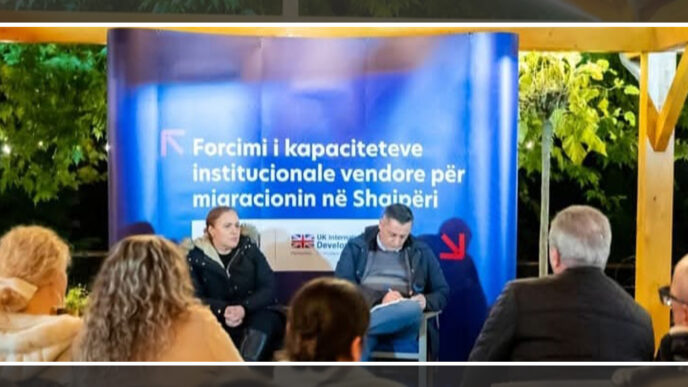
In Albania, the crisis of media freedom is no longer a warning, but a reality. In a common table of the Albanian Center for Civil Society Development (SCiDEV) and Faktoje.al, representatives of civil society, state institutions, journalists and diplomats raised deep concerns about the situation of the media, which according to them is heading towards a noticeable regression, despite the fact that the European Commission's Progress Report for 2025 describes the situation as "limited progress".
Klodiana Kapo, director of Faktoje.al, spoke about a climate where the media is losing its basic function: "Citizens' trust in the media has declined significantly in recent years. We are faced with sensational headlines, unverified news, and reports that often pursue political or economic interests."
For Blerjana Binon, director of the Center for Science and Innovation for Development, we are dealing with a captive system, where journalists face pressure, threats and a lack of protection from institutions: "Without protected journalists, there is no quality journalism. In 2024, the Network for Safe Journalists raised the alarm for 45 cases of violations of journalists' safety. By November 2025, we had over 30 more cases. They are reported to the police, but there are no appropriate punishments."
Systematic Hiding of Events: The Narrative Controlled from Above
Koloreto Cukali from the Albanian Media Council called on the EU to set red lines that should not be crossed in relation to the media: "How can we talk about progress when the most important events of the decade, such as the '5D' case or the accusations against the deputy prime minister by SPAK, are not broadcast at all?"
Journalists at the table warned that the relationship between media owners and the government has turned into a political and economic mechanism, which strips the media of its public function.
Isa Myzyraj from the Journalists Association said: “There is no longer a free media, we have media owners who have become strategic investors of the government.”
While Dhurata Çupi added: Only one television station, News24, was not funded by the Socialist Party during the election campaigns.
"Birn" journalist Aleksandra Bogdani criticized the management of funds and the digitalization process: "Taxpayers paid for the big televisions, the others only got crumbs. Today, we pay again for frequencies and in return we get ready-made tapes, propaganda from breakfast to dinner."
Along the same lines, MP Jorida Tabaku accused MIA (Media Information Agency) of having turned into the central office of government PR: “MIA has monopolized information and distributes it according to the interests of the government.”
Erjon Tase emphasized that transparency for public funds is one of the most serious shortcomings: "Every year we are ranked at the top of the list for lack of information, no one is held accountable."
The Ambassador of the Netherlands, Reinout Vos, brought a clear message from international partners: “If the media is not free, democracy does not work. Journalists must be protected physically, legally and publicly.”
Freedom of the media, versus freedom of media owners
One of the findings that was introduced 1 month ago, from the Organization for Security and Cooperation in Europe is how political, economic influence, editorial lines are closely linked to media ownership and the interests of these owners in other areas. The safety of journalists, the impact of the media and above all transparency for media owners in Albania continue to remain some of the recommendations of every report coming from the European Union.
The table made it clear: Albania has a captive system, where politics, business and institutions interact to control the public narrative. Journalists are unprotected, information is filtered, public funds are manipulated and public trust is in free fall. In this terrain, democracy remains a facade, while media freedom is a written but unimplemented principle./acqj.al