


Denada Jushi
In October last year, a monitoring by the H2H Foundation found that in 14 water bodies in Albania, microbiological and chemical pollution was widespread throughout almost the entire water system, from drinking water reservoirs to recreational lakes and the coast, as a result of untreated water, agricultural runoff and ongoing failures in institutional management.
Almost a year later, new monitoring shows that the situation has not improved. On the contrary, five of the country's most important basins, the Artificial Lake of Tirana, Bovilla, Farka, Belshi and Hidrovori i Hamallaj, are experiencing the same problems: bacteriological pollution, pressure from urban and agricultural activity, and protective measures that have not kept pace with environmental degradation.
The report recommends the same measures almost everywhere: more frequent monitoring, wastewater treatment, agricultural pollution control, and specific management plans. The very repetition of these recommendations shows that the problem is not local, but systemic.
Tirana's Artificial Lake polluted with feces
Nowhere is this picture more evident than at Tirana's Artificial Lake, one of the most frequented public spaces in the country.
Every day, thousands of citizens walk, run, or spend time near water. But laboratory analyses reveal a reality that is not visible to the naked eye.
At the two monitoring points, the level of E. coli bacteria, one of the main indicators of faecal pollution, reaches 1.200 and 3.400 units per 100 milliliters of water, several times above the averages accepted by EU Directives. Turbidity ranges from 60.7 to 106 NTU, while nitrates reach up to 240 mg/l, indicators related to the impact of human activity.
According to him, the high presence of E. coli does not mean that the lake should be closed, but it is a signal that requires more frequent monitoring and better public information.
"The goal is not to create panic, but for citizens to know what the risk may be and how to protect themselves. When E. coli levels are high, they can signal the presence of other microorganisms that pose a risk, especially for children and the most sensitive people," says H2H Foundation expert Erjon Kalaja.
The report warns that exposure to water with high bacterial loads is much greater than its appearance suggests. For a space where families and children spend time every day, this means that the perception of safety does not necessarily match the actual quality of the water.
Bovilla, the capital's drinking water source under pressure
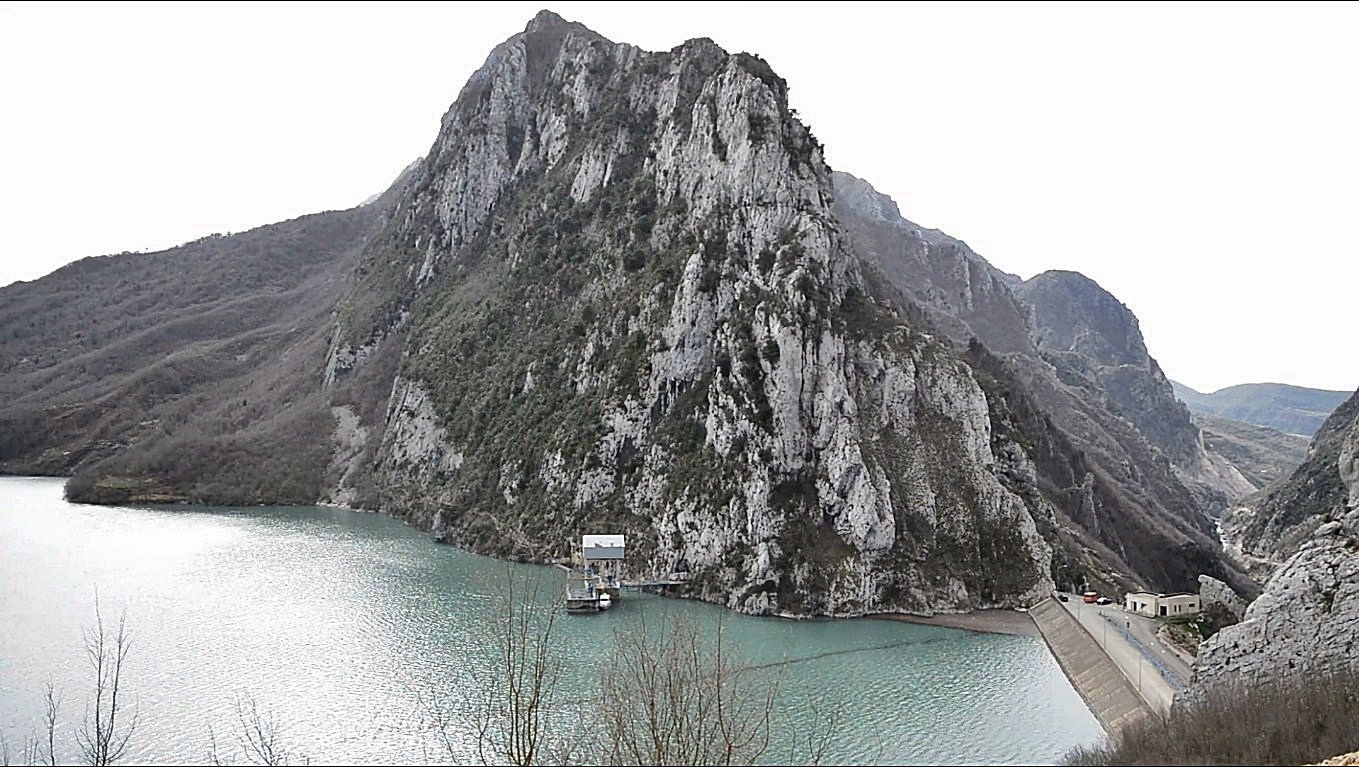
The Bovilla Reservoir supplies most of Tirana with drinking water and is not considered a crisis area. However, monitoring identifies signs that indicate increasing problems in the watershed.
At one of the two monitoring points, E. coli, coliform bacteria and higher levels of turbidity, nitrates and calcium were found compared to the other point, adding that water quality is not the same throughout the reservoir and that some areas are more exposed to sources of pollution.
Currently, the treatment plant continues to make the water safe for consumption. However, the report warns that the increase in microbiological load makes the treatment process more complex and increases the pressure on the system.
Kalaja emphasizes that the findings are not a cause for concern about the water coming out of taps, but a signal that the reservoir itself needs to be better protected.
“The main message is not that drinking water is unsafe. The greater the contamination at the source, the higher the load on the plant and the higher the treatment costs. Monitoring should be seen as a preventive tool.”
In recent years, recreational activity around Bovilla has also increased. Visitors, off-road vehicles, a lack of protective belts, and limited control of the territory are putting pressure on a reservoir of vital importance to the capital.
For this reason, experts recommend the creation of protective zones, more frequent monitoring of water quality, and the identification of concrete sources of pollution before the situation worsens.
Farka and Belshi are in trouble again
Monitoring of Lake Farka shows that pollution can vary significantly even within the same lake. E. coli increases from 200 to 1.400 units per 100 ml, while total coliforms from 1.500 to 7.000. For farmers using the water for irrigation, this means that the quality can vary significantly within a few hundred meters. For visitors, meanwhile, a lake that appears clean can hide a high bacterial load.
Belshi presents a different, but no less worrying, situation. Most of the physico-chemical parameters result within acceptable limits, but analyses identify high calcium, potassium above the norm, and total coliforms up to 700 units per 100 ml, although E. coli was not detected.
Lake Tafanëve, where almost every indicator raises alarm
If one body of water summarizes most of the problems identified by monitoring in different areas of Albania, it is Lake Tafanëve.
The analyses identify a broad combination of problematic indicators: alkaline pH, high turbidity, lower dissolved oxygen at one monitoring point, as well as high concentrations of calcium, nitrates and potassium. The microbiological load is also significant. The samples identified E. coli at levels of 2.900 and 1.000 units per 100 milliliters, total coliforms up to 15.000 units, and enterococci at 300 and 600 units.
Experts identify multiple sources of pollution operating in parallel and recommend an integrated approach that simultaneously addresses sanitation, agricultural activity, and land management.
According to Kalaja, the large differences between monitoring points indicate that the pollution is not uniformly distributed.
"The main pressure comes from rapid development near the coast, while sewerage and wastewater treatment have not kept pace."
Hamallaj, where pollution ends up in the sea
The story doesn't end at the lakes. At the Hamallaj Dam, where the drainage waters flow into the Adriatic, monitoring shows that the pollution accumulated inland continues its path towards the coast.
The monitoring identified a point where urban, agricultural and, in some cases, industrial pressures converge. Analyses reveal bacteriological contamination, the presence of oils and fats, as well as other indicators that signal the impact of discharges reaching this area through the drainage canal network.
However, Kalaja emphasizes that the monitoring does not justify alarm about the quality of the beach.
"From the available data, the situation is not considered critical and the beach is categorized as good quality according to European standards. The findings are a signal for more careful monitoring of discharges, not for panic."
Although the monitoring included water bodies with different characteristics, the conclusion is the same: pollution is not related to a single lake or canal, but to the way water resources are managed in Albania.
In almost every case, the report identifies the same factors: untreated wastewater, runoff from agricultural activity, urbanization without the necessary infrastructure, and insufficient monitoring. For this reason, the recommendations are almost identical for each monitored basin: expanded monitoring, treatment of wastewater before discharge, stricter control of pollution from agriculture, and specific management plans.
The very repetition of these recommendations from one report to another suggests that the problems have long been recognized, but implementation of measures remains limited.
Many institutions, few responsibilities
Experts do not attribute responsibility to a single institution. They emphasize that protecting water resources requires the cooperation of municipalities, the Water Resources Management Agency (WRMA), the National Environment Agency (NEA), the Institute of Public Health (IPH), drainage structures, and local communities.
But this long list of institutions highlights another problem: responsibilities are dispersed, while coordination remains weak.
Pollution is often identified, but its sources are not systematically addressed. It is also highlighted that some of the monitored water bodies have not been part of the national monitoring program until recently, which raises questions about other areas that may not be monitored regularly./ acqj.al