Author: Denis Tahiri
" It is necessary that agriculture be included in the insurance scheme. To ensure farmers, to ensure producers their production and not to find themselves facing weather surprises, completely destroyed and then take to the streets and return to the government 'we want the money '", declared Prime Minister Rama during the presentation of the agricultural program for 2022. But despite measures such as the establishment of the advisory service, farmers are exposed and unprotected not only from weather surprises but also others such as war, taxes and price changes.
As producers of 1.295.726 tons of vegetables and 684.023 tons of grain, the farmers, whether those of fruit trees, citrus or field plants, are maintaining the culture of agriculture in sacrificial conditions.
Work and loss
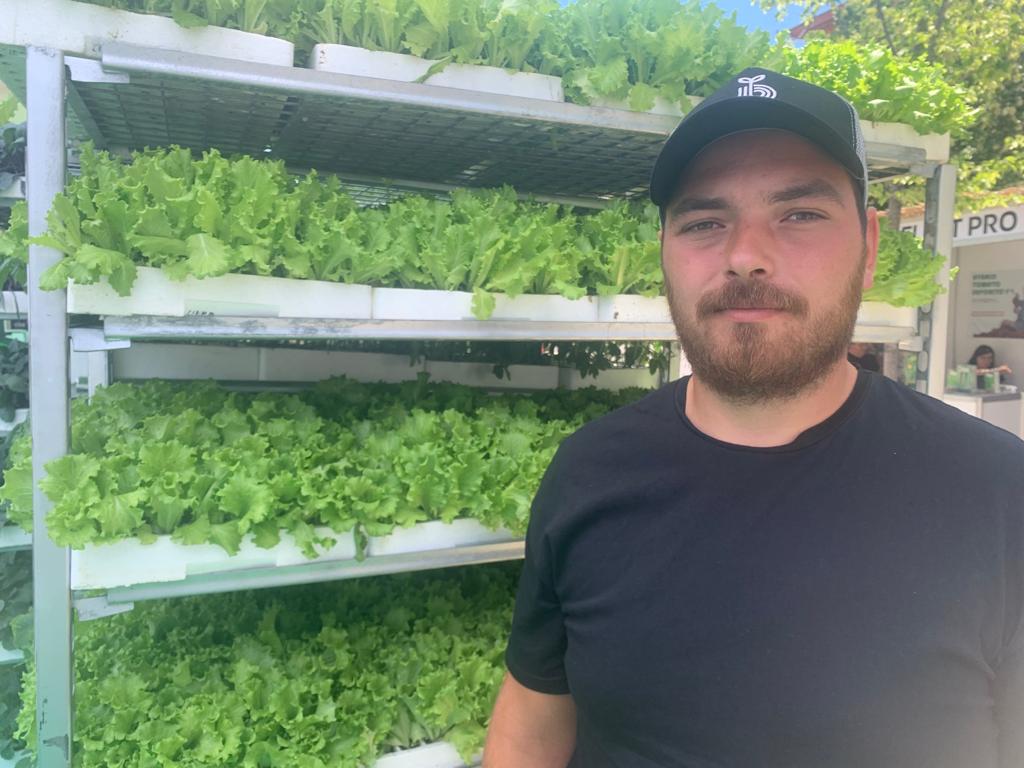
24-year-old Dhimitër Kuli has been dedicated to the agricultural sector since a young age. The young man also graduated from the high school for "Plant Protection", investing in his future in the agricultural sector.
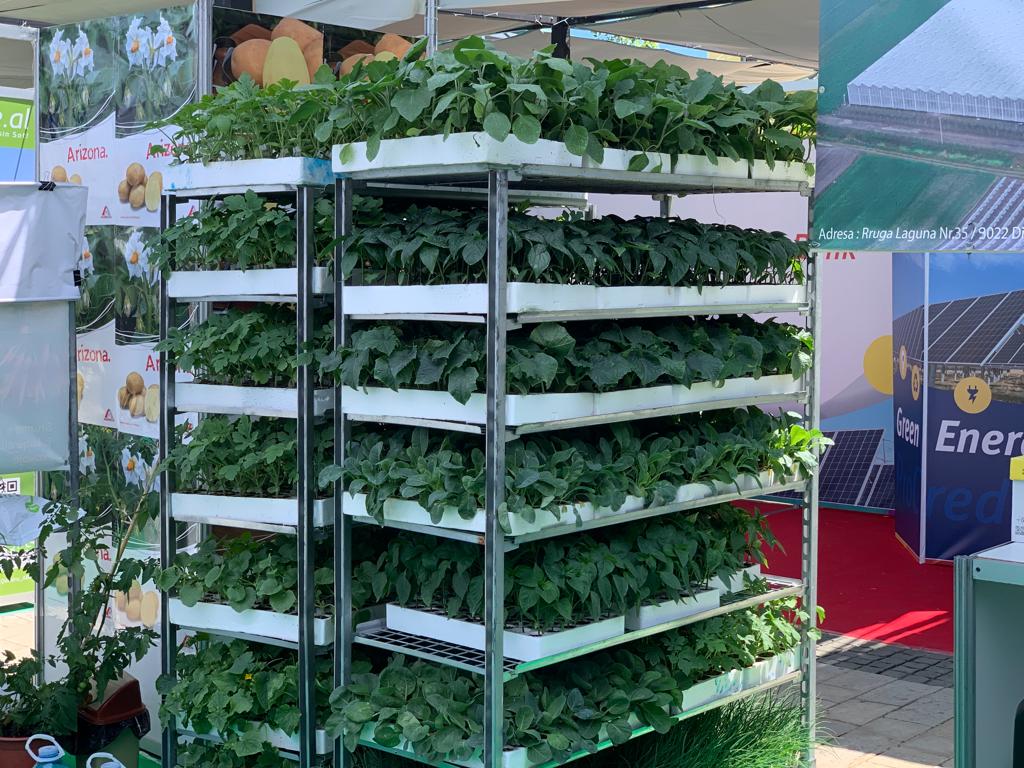
"I currently work in agriculture in Divjaka, the main crops we produce are watermelons, carrots, potatoes, onions and cabbages of all kinds," says the 24-year-old, who adds that last year the agricultural production of crops cultivated in his greenhouses was sufficient. " This year it is a bit of a problem due to bad weather conditions, but also due to a tax that the state has imposed on us of 10% on inputs. It has burdened us a bit. Recently, prices have risen a lot, a quintal of dap used to cost somewhere around 80 thousand old lek, today we buy it for 130 thousand old lek, in addition to the increase in prices due to the pandemic, this tax has also been imposed on us due to the wars," says the young farmer, who adds that this tax affects the increase in costs and its effect is a chain, burdening the pockets of consumers.
But this tax has been newly imposed, after several years it was reduced from 20% to zero. The imposition of this tax, the high prices of agricultural inputs, the lack of subsidies from the state, have caused the number of cultivated areas to be smaller.
" Last year I cultivated about 8 hectares of land, while this year about 6-7 hectares. Next year we will see the situation because we don't know," he concludes, saying that they do not receive subsidies at the moment. " We received some oil last year, we have applied again this year and let's hope we will receive it because it makes things easier for us."
Crops are shrinking
The fields of Lushnja have not without right been described for years in a row during these 30 years as the "barn of Albania". For decades, the cultivated crops in this area have had a wide spectrum. Meanwhile, the years of the pandemic as well as the war in Ukraine have dealt a big blow to this sector, which is also one of the sectors with the largest employment in the country, but the difficulty is also increased by the lack of financial support from the state.
64-year-old Pajtim Malaj, due to his profession, can be one of the best connoisseurs of cultivated lands in Albania. He has been working with irrigation systems and computerized fertilization systems for 26 years.
" Change comes day by day, with both farmers and us perfecting our work by following the most developed industries," says Pajtimi, adding: " During the two years of the pandemic, there has been a contraction in agriculture as farmers have not gone to work, but we have also been a little strained due to the virus."

But after so many years in this sector, the 64-year-old says that there are also farmers who have left this profession. " Over the last two years there are farmers who are growing but there are also farmers who are leaving their lands and leaving. Farmers are disconnected, their plots are small, the investment is large, these are the reasons," he says, without forgetting to add a big and current problem for farmers, especially at a time when the crisis has made the price of fuel very expensive.
" The problem that farmers have today is oil, which does not have a set price for farmers, because with this oil price, farmers have left their lands fallow, and raw material prices have increased due to the pandemic and the war in Ukraine," he concludes.
Dilaver Kamberi, manager of a company active in agriculture, also says that the price of fuel, which has the same taxes for both citizens and farmers, increases the cost of the latter. " It is impossible today for a milling machine or tractor to work with the cost of fuel. It has nothing to do with the road tax, the government is not daring, it is trying to take something away from the farmer," he says.
Agriculture, the weak point of the economy
The Albanian government has imposed a tax of 10% on agricultural inputs, even though this sector was hit the hardest due to the increase in raw material prices due to the pandemic and shortages in international markets.
"There is a significant increase in the prices of imports that have a polyethylene composition, such as plastic for greenhouses, irrigation pipes, which have had a heavy cost in the payment of imports made in the customs departments in our country for three years. These are also accompanied by the effects of the global crisis, the war in Ukraine, which have directly affected the prices of fertilizers," says Dilaver Kamberi, adding that this has made it difficult today for farmers to think twice before working the land or not.


Alban Lila, who is active in the import of agricultural inputs, says that they have nothing to do with the increase in the prices of agricultural inputs. " The companies that are abroad are so big that you don't have the opportunity to ask them for a price. Prices have increased everywhere in the world. Here is this German fertilizer company (points to the company logo) I received two price lists in an email, up to this date this is the price list, from this date to this date this is the price list because there has been a shortage of raw materials", he says, adding that the increase in prices has affected the fertilizer sector the most, where there has been a 200% increase in one year. " It started, for example, in February 2021 and so far it is 200%. It has reached the point where you accept a price 200% higher and you have no product", he concludes.
The socialist deputy accused the government
And while the Albanian economy has grown compared to the years of the pandemic, it seems that the agricultural sector continues to be in crisis. Socialist MP Erion Braçe, who has become an opposition voice within the socialist majority regarding agricultural issues, says in a published video : "This is a difficult year and a crisis for the agricultural and livestock economy due to the threefold increase in the price of agricultural inputs. Everyone needs agricultural support in a fair and equal manner. Does the decision of the Ministry of Agriculture for this year's budget support meet these principles? For me, it does not. This is precisely why I have called the Minister of Agriculture for an interpellation again . "
And what Mr. Braçe says, is also accepted by the farmers who are disappointed by the support that the state has given them not only during this difficult time, but also earlier.
" The steps to support farmers are known, they are clear, the problem is that there is no desire from the government to directly support farmers. The few packages that exist are very difficult for farmers to benefit from, the criteria are impossible for most farmers. Investors can benefit from them, but not the farmer. The farmer, in our view, is almost not supported," says a farmer we met at an agricultural fair in Lushnje.
Farmers' association: The government reduced funds
Eduart Sharka, who is the head of the farmers' association, says that what is most painful is the abandonment of greenhouses in Albanian agriculture.
" There are farmers who came from emigration and have spent their remittances or have received microloans from microloan institutions with high interest rates and are now forced to abandon them," he says, adding that this has happened because in the last three years agriculture has faced severe market crises, with a breakdown in the supply-demand ratio.
" This has caused farmers to fail one season, to fail the second season as well, and the farmers' economy is a fragile one, they have left their investments and returned to emigration. This has been one of the reasons," he says, noting that it is necessary for farmers to be guided by the Ministry of Agriculture on the necessary crops and the time when they should be cultivated so that the market has demand.
Sharka emphasizes that what puts farmers in great difficulty is the lack of subsidies. " We are in conditions where agriculture gives 20% of GDP, while the state budget gives the Ministry of Agriculture 1.5% in total, where 0.05% goes for subsidies. We are very far from the region, while with Europe, we do not even discuss it at all. Agriculture gives Europe 1-2% of GDP and takes 5% of expenses, we are very far away", he says. Sharka also highlights the removal of the 6% that was previously money for agriculture, that is, public money that was injected into agriculture, a figure which for the farmers' association amounted to 50-60 million euros.
"It was removed by being allocated to the AZHBR where it is given through the oil scheme. The government claims that this year through support schemes it is giving 27 million and added another 4 million, bringing it to 31 million, but it forgot that last year it was 60 million and has halved it," he says, emphasizing once again that farmers are leaving in large numbers for seasonal work and the abandonment of investment in agriculture is becoming a major problem.
Regarding the 10% tax on agricultural inputs, the head of the farmers' association calls it absurd. " We have asked the government, together with the exporters' association, to stop the 10% increase at the moment because we are in a time of crisis, but no one reacted," he says, highlighting once again how neglected the agricultural sector is in Albania, especially at a time when autumn is expected to find us with shortages and other price increases due to the Ukraine crisis.