


Author: Jona Kaso
It took 10 years to build the hydroelectric plant on the Devoll River, the permit for which was obtained in 2008 (although the contract was for one year); hydropower plant that has managed to produce energy for only one month.
Muso HC Qytezë is the name of the hydropower plant, which took a full 10 years to build, after receiving the 30-year concession permit.
Although permission was obtained in 2008, the works started five years late and were completed only in 2019.
The reasons why the works for this hydropower plant have been extended for so long were reasonable, according to the answer given to us by AKBN (National Agency of Natural Resources), the institution charged by law to monitor the activity of HPPs.
The works have been suspended three times, twice due to "weather conditions" and once due to "financial difficulties."
This hydropower plant has worked only one month during these last 10 years since the date of the conclusion of the concession contract. While AKBN's task is to monitor the City's hydro plant every three months.
The HPP has not even produced a quarter of the energy it was supposed to produce in a year
Article 7 obliges the concessionaire company to finish the works within the time limit of 12 months after the conclusion of the contract.

Whereas in article 18 of the contract it is stated that the hydropower plant must produce 1.340.000 Kwh for a year and, if this value is not reached, the concessionaire may be fined 0.05% of the energy production value for the reported period.

From the monitoring carried out, referring to the ERE report for 2019, the Qyteze hydropower plant entered production in August 2019.
" The production for 2019 (Kwh), for the month of August alone is 499,200 Kwh, converted into monetary value, the total value reaches 4,222,333.44 lek. While for 2020 we do not have information on energy production, as the concessionaire company has not reported and we are awaiting a response from OSHEE regarding the production of HPPs for 2020 ", - it is written in the AKBN response.
But, according to the Electricity Market Data report, published on the official website of ERE, the hydropower plant for 2020 has produced a total of 2110 Kwh, according to the first four months and the second eight months.


So, the hydropower plant did not even produce a quarter of the energy it was supposed to produce in a year.
HEC was sold for the value of an apartment
This HPP was built for the production of electricity with a capital value of 27 ALL, of which 700 ALL would be invested in machinery and equipment. The project envisioned the construction of dams, which would occupy the course of the Devoll River, which passes through several villages of the Devoll Municipality, such as Miras, Sinicë, Qyteze and Arrëz.
It was 2008, when Pëllumb Muso and Rakip Muso, founding partners of the Muso company , signed a Public Private Partnership concession contract for the construction of a HPP in the Miras Administrative Unit in the village of Qytezë i Devoll.
The project initially started with concessionaires Rakip Muson and Pëllumb Muson with 50% of the shares each. Then Rakip Muso transferred 50% of his shares to Pëllumb Muso, thus leaving the company. On 14. 12. 2017 Pëllumb Muso sells 100% of the shares to Mira Andoni for the value of 155 thousand euros. Mira Andoni is also the administrator of the company Autovision Al sh.pk ., which owns 100% of the capital quotas of this company, referring to the data of the Central Bank until 14. 11.2019.

Land occupied without damagesërewards
The construction of this HPP has caused a series of damages. In addition to natural resources, residents have suffered great damage, as agricultural lands have been damaged, the flow of the river has been diverted, hundreds of residents have been left without drinking water, and the connecting road between villages has been severely damaged.
Some of the residents complain that their lands have been seized to build this HPP and to date they have not received any compensation.
A resident of the village of Sinicë, who did not want to be identified, told the Albanian Center for Quality Journalism that he has opposed this project from the beginning, and has even filed a criminal complaint.
"I was against the construction of this hydropower plant. One of the reasons is because they took me through a land and didn't ask me at all. I filed a criminal report and the prosecutor dismissed me, closing the case and telling me: "Go to court, because this is a civil case, not a criminal case." I left it at that, I didn't continue the report further, because I knew I wouldn't win anything", he says.
He adds that he is not the only resident who has not received compensation, there are other residents whose lands have been taken and who have not received compensation.
" If the residents had raised their voices, maybe this hydroelectric power plant would never have been built, and the residents could not have gone to court ," said another resident with the initials LL.Xh.

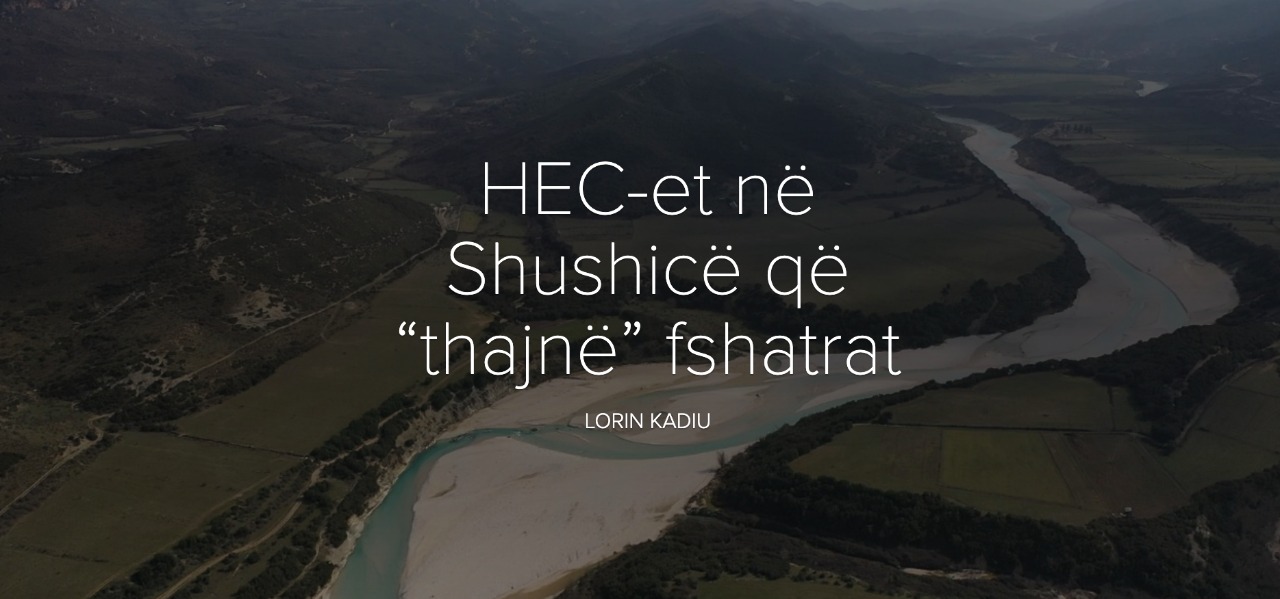
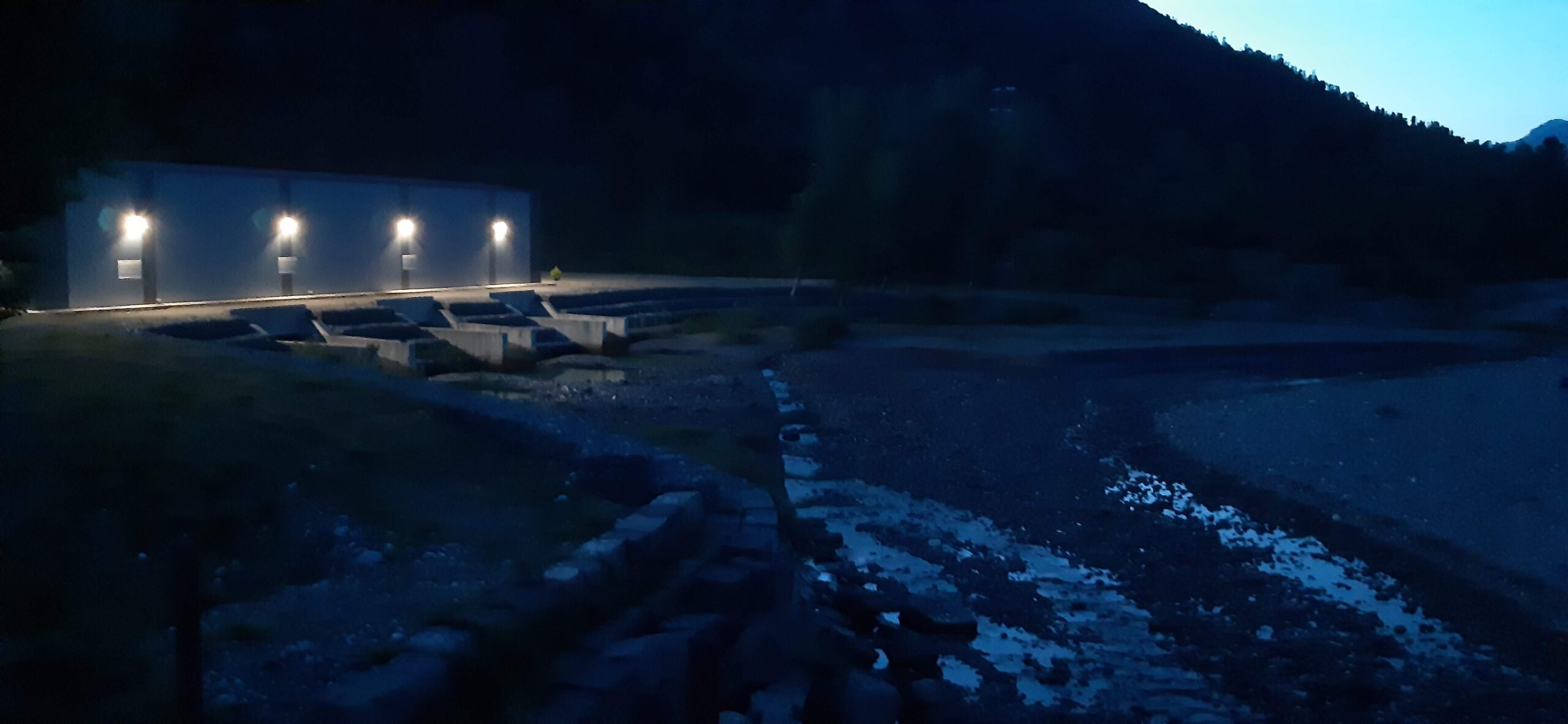
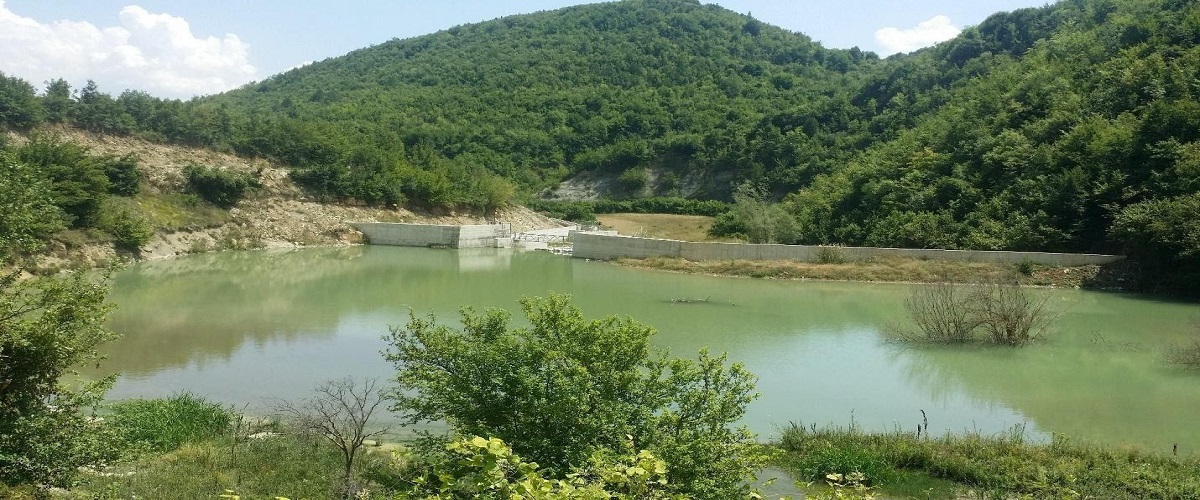
According to the map, it is clearly shown the route that was followed to divert the flow of the river, introducing a good part of the amount of river water into the pipes and thus drying up almost 3 km of the Devoll river flow. If we head towards the place where the dam was built, our eyes will see large iron pipes, where the water of the Devoll river was introduced, the road which has been dug up in places, as well as large pits that have remained unfilled due to the erosion of the scrap. Although it was promised that this road would be fixed by the HEC concessionaires, it has been more damaged than fixed.

The concessionaire company did not respond to the request for information regarding the damages caused by the construction of this hydropower plant.

Table tennis between the Ministry of Infrastructure and AKBN for monitoring responsibility
The Albanian Center for Quality Journalism for the second time through an official request asked AKBN to make available the monitoring reports for this HPP. According to the response received from this institution, the HPP is periodically monitored by AKBN and all information collected from these monitoring is submitted to the Ministry of Infrastructure and Energy through quarterly and six-monthly reports. According to the response received from the National Agency of Natural Resources, during the monitoring of the last two years the hydropower plant has not been in the operating phase. “ Referring to the monitoring during the last two years, the Qytezë HPP was monitored with the aim of scanning the concession contract in February 2019. During the monitoring, it was found that during that period of time the hydropower plant was not in the operating phase ”, – it is written in the response of AKBN.
While for the monitoring carried out in the field, this HPP was not put into operation due to the insufficient flows brought by the Devoll river.
" From field monitoring in October 2019, AKBN has determined that the HPP was ready for the final test, but was not put into operation due to insufficient flows ," the response states, while according to the first response, also from AKBN, it was stated that the HPP was put into operation in August 2019.
Based on the monitoring reports and the reports that must be submitted to the Ministry of Infrastructure and Energy, we officially requested from this institution the periodic reports of the in-kind monitoring of the implementation of the work in terms of its construction, as well as the reports on the contractual forecasts for energy production and actual production in the City HPP during the years that this HPP has been in operation.
The Ministry passes the responsibility of returning the answer to AKBN.
What about the environmental permit?
The Center for Quality Journalism requested information about the environmental permit from the National Environmental Agency, but the Agency says that it was created after the company had signed the concession contract and that this information should have been requested from the Ministry of Environment. The latter has not responded to the request for information.
Mirasi, the village that has been left without drinking water
With the construction of the hydropower plant, the residents began to encounter problems: in addition to the Devoll river, which has dried up, the road, which has been damaged by the opening of canals and the introduction of water into the pipes, the biggest problem is that just below the hydropower dam there is and the spring that supplies the village of Miras with drinking water. This village has about 1000 inhabitants, who are left without drinking water.
"We cannot drink water from the tap; we go out and fill the bins at the taps in the village, it's all garbage", said a resident of Miras.
As a result of the increase in the water level of the dam, all the waste that is in the dam is collected in that source and as a result the inhabitants cannot use the water. After the construction of the City HPP, a second project was launched for implementation by the Municipality of Devolli, the construction of the Regional Waterworks of Miras.
The solution for drinking water for the residents of the village of Miras was this water supply, which would supply several villages, such as Miras, Çeta, Qyteza, Vidohova and Sinica, but this project under implementation includes the protected natural area, the Vala Waterfall in the village of Sinica. The tender for this project was opened on 24. 09. 2020 and 2 months after the tender opening, on 10. 11. 2020, the winning company was announced to implement the project. The competing operators were: Ed Konstruksion sh.pk ., Arkonstudio sh.pk ., and Niem sh.pk ., Iliriada sh.pk ., Rafin Company sh.pk ., and Viante Konstruksion sh.pk.
The winning operator of this tender was Ed Konstruksion sh.pk ., with a bid of 147,992,038 lek excluding VAT. The contract with the winning company was signed on 16. 10. 2020 and this contract will last 12 months.


Residents of Sinica against the construction of the water supply
According to the residents of the village of Sinicë, the place where this aqueduct will be built and the water that will be taken will destroy a protected natural area.
“ The water in Valë is outside the drinking water standard,” says Marijon Pano, a resident of the village of Sinicë. “We have done water analyses and they have shown a high lime content, so that water cannot be used as drinking water ,” he explains.
But, can the Municipality of Devoll begin the procedures for a project such as the external and internal water supply of the villages of Sinicë, Çetë, Miras, Qytezë without first obtaining the environmental permit? In a telephone conversation, the Mayor of Devoll, Mr. Eduard Duro, says that "an environmental permit has been obtained only for part of the implementation of this project."
Can this project be built in a protected natural area and is this in violation of the law?
"Changes have been made in this project and the location of the source from which the water will be taken will not be at the Vala Waterfall, its water will not be affected, but this water will be taken from three other sources in the same area, also the works for this water supply have begun ", - says the Mayor of Devoll.
The inhabitants of the village of Sinicë say that they have not seen the machines working for the construction of this water supply since the first two weeks of January.