



Author: Benard Neza, Klaudja Karabolli
Licensed entities extract chrome without miners, while local residents risk their lives to provide income for their families.
AH, 62 years old, wakes up every morning, takes the pickaxe, wheelbarrow, shovel, gloves, some food and heads to the workplace. After walking about 15 minutes from the house, the hills begin to appear ahead.
It takes a few minutes to select the gallery, enters one of them and spends about 4-5 hours to extract chrome from there. He carts it home and considers the workday closed.
He is not a miner, and neither are dozens of his fellow villagers from the villages of Kepenek, Lejthizë, Kam and Zogaj in the chrome-bearing area of Tropoja, who extract chrome to provide food for their families.
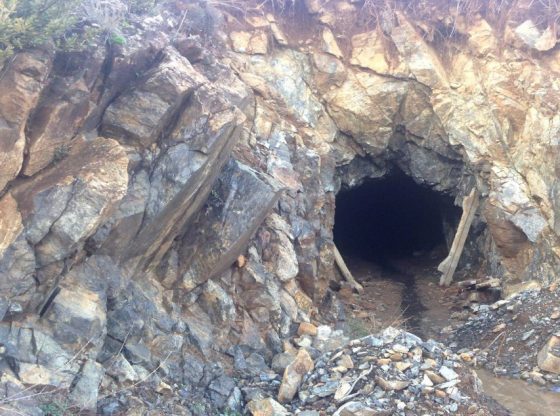
They do not want to be identified for the media, but they confess to PSE that, despite it being considered illegal, they collect chrome from old, abandoned galleries of companies operating in this field or by opening other, small galleries, where they think that there may be chromium. It is then sold to mining entities, licensed in Tropoja.
S. Xh., 65 years old, tells PSE that chrome extraction is a difficult process.
"I go out to collect chrome with old tools, I can't dig much, as it is impossible with manual labor. I usually go into old galleries and take the chrome that the subjects have left as support pillars for the galleries", he emphasizes.
The belt of chrome-bearing villages in Tropoja is bordered to the east by Gjakova, to the north by Bajram Curri, to the south by Kruma and to the west by the villages of Shkodra.
This area is considered the second largest chrome mining area in the country, after the Bulqiza area, and before the 90s the small, mining town of Kam was an important industrial center of the country, providing a satisfactory livelihood for the residents of the area.
After the 90s, when the industry started to be abandoned, they started leaving to secure a better future in big cities like Durrës and Tirana.
Despite the natural resources, this area is among the poorest in the country, at a time when the mining industry has failed to offer them a better life.
PSE found that in the village of Zogaj, most of the families in the area secured their income through the illegal collection of chrome.
The authorities, without power in a fragmented area
The unlicensed extraction of natural resources and their sale is an illegal activity, although in Tirana no one is surprised when asked about the villagers of Tropoja who illegally do the work of miners.
Kujtim Gjoka, head of the Mining Sector in the Ministry of Energy and Industry, told PSE that they are aware of the use of chrome by the residents of Tropoja areas.
"After the 90s, the inhabitants of the village of Zogaj, etc., use chrome in the lands around them, even in the old galleries, declared dangerous areas. This phenomenon is a problem that we cannot stop, as it is impossible for the institutions to protect every mining gallery", he emphasized.
According to representatives of the ministry, this is not an issue that does not belong to the ministry, but must be administered by a number of agencies and local governments, at a time when the latter also say that they have no way to stop illegal mining of mineral assets. .
Asked by PSE, the mayor of Tropoja Municipality, Besnik Dushaj, stated that they also did not have the opportunity to monitor the territory at all times.
"Realistically, we do not have the capacity to control them. They dig where they claim to be their lands and this makes the situation even more difficult to monitor", he said.
But mining experts in the country emphasize that it is the policies followed by the governments that have brought about this absurd situation with the natural resources in Tropoja, where everyone seems to "dig in the land they find free".
Col. Nikolaj, the head of the Confederation of Trade Unions of Albania, told PSE that the problem starts from 1994, the year when the mining law was approved, which creates chaos by giving the right to many subjects to use the same chrome-bearing area.
"Fragmentation of licenses is the fundamental problem. The mining law of 94 allows some entities that meet the conditions to use the same chrome-bearing area, such as Tropoja. In this way, it is not possible to control all the mining entities, the working conditions, as well as the use of those who work there", said Nikolaj.

Currently, according to the Ministry of Energy, 30 companies have been licensed in Tropoja for the exploitation of the rich mining subsoil of four villages.
The fragmentation of licenses is, according to the former vice-minister of Energy and Industry, Pajtim Bello, the essential problem that leaves the area undeveloped and leads to the exploitation of residents to collect chrome at a lower cost in favor of companies.
"There are entities that work with 3-4 miners and collect most of the chrome from the residents of the area, who collect chrome on their lands, even in the old galleries, which are dangerous areas. In this way, the mining entities save on insurance, create working conditions and get chromium at no cost", he emphasizes.
According to experts, the fragmentation of the area does not allow the development of large companies in this mining area, which would make it possible to employ a significant number of residents and would allow the further development of the area by increasing extraction capacities through technological modernization in search for exploitation.
Despite these arguments, representatives of the Ministry of Energy believe that the current mining law, inherited from 1994, is suitable for the country's needs and brings healthy competition between companies interested in mining exploitation.
Fatos Manastirliu, the head of the Mining Policy Sector at the Ministry of Energy, told PSE that he considers the fragmentation of licensing as a driving factor for competition in a free economy.
"The mining law of 1994 helps in economic growth, it is the best law to increase exploitation capacities. If there are many companies, it means that there is more amount of chrome to be exported", he emphasized.
Experts also think that the current mining law creates other problems. The well-known mining specialist, Martin Cukalla, believes that one of the main problems in this law is the fact that projects for the development of areas are left to companies and not administered by the state.
"The projects must be compiled by the state. Many of them do not even pass into the hands of mining engineers. Entities applying for permits offer more money than good projects. The area needs a general project to avoid abuses", he emphasizes.
Danger to life and damage to the environment
Extracting chrome without a license and selling it is not only a practice that is considered illegal, but it also endangers the lives of residents who do not have the proper specialization to extract chrome.
Col. Nikolaj says that residents, mainly in the villages of Tropoja, are often endangered by entering the old galleries.
"In Tropoja, there have been many accidents in the old mines and it is no one's fault. Residents illegally enter the dangerous mines themselves, where there are gas explosions and rock falls," he says.
The expert on mining issues, Martin Cukalla, shows that the residents are innocent, because they have no other way to secure the income.
"The wealth is located on the land of the poorest residents of the country, the system has left these residents in this condition. They must find a way to survive. They don't have the capacity to earn much, but they risk a lot", he emphasized.
To extract chromium, the inhabitants work in difficult conditions, without safety in the areas where they enter, exposed and without protection in case of health problems.
A normal gallery has certain parameters for air, humidity, lighting, equipment. For the miners there are also rules about how to eat so that they can cope with the hard work underground.
The mining entities in Tropoja are the main beneficiaries in this situation.

They do not employ local residents, because this means more costs for insurance, equipment for miners and investment in technology for the exploitation of underground resources, but they use their labor without taking on obligations.
The environment and other organisms living in the area are also at risk from leaving chromium residues. Water passing through old, abandoned galleries and chromium waste have poisonous properties for living things.
Former deputy minister and expert, Pajtim Bello, tells PSE that the case of the Fan River proves the irreparable damage that occurs in the environment as a result of the misuse of natural resources.
"One such example is the Fan River, which no longer has fish due to the poisoning of the water by chromium residues. Chromium bearing areas have poor vegetation. Chromium residues seriously damage the ecosystem", he explains.
Meanwhile, as a result of uncontrolled mining for chrome in the area, the terrain of the villages has been destroyed and the pits that function as galleries look like wounds that have spread to the hills.

The mining law obliges every entity that is licensed to prepay a fund for the rehabilitation of the land surface that will be used. Rehabilitation envisages the closing of the galleries and the planting of trees at the end of the use of an area. When the galleries are opened by the residents themselves, the chrome exploitation companies do not feel responsible to fulfill this obligation.
The representative of the ministry, Fatos Manastirliu, says that this fund is a guarantee for the state, if the subject does not implement the rehabilitation plan.
"Each subject rehabilitates the land, the mouths of the galleries are closed, but the local residents, who collect chrome, open them again. Such cases cannot be stopped. The relevant agencies of the ministries carry out checks and we prevent as much as we can", he emphasizes.
But expert Martin Cukalla says that most of the entities do not complete the rehabilitation, much less the planting of trees. He believes that the relevant authorities do not have the situation under control, not even for exploiting companies and even less for those galleries opened by individuals.
The situation in Tropoja resembles a "Wild West", where the residents of the area are at the mercy of fate and licensed chrome firms.