


Ida Ismail
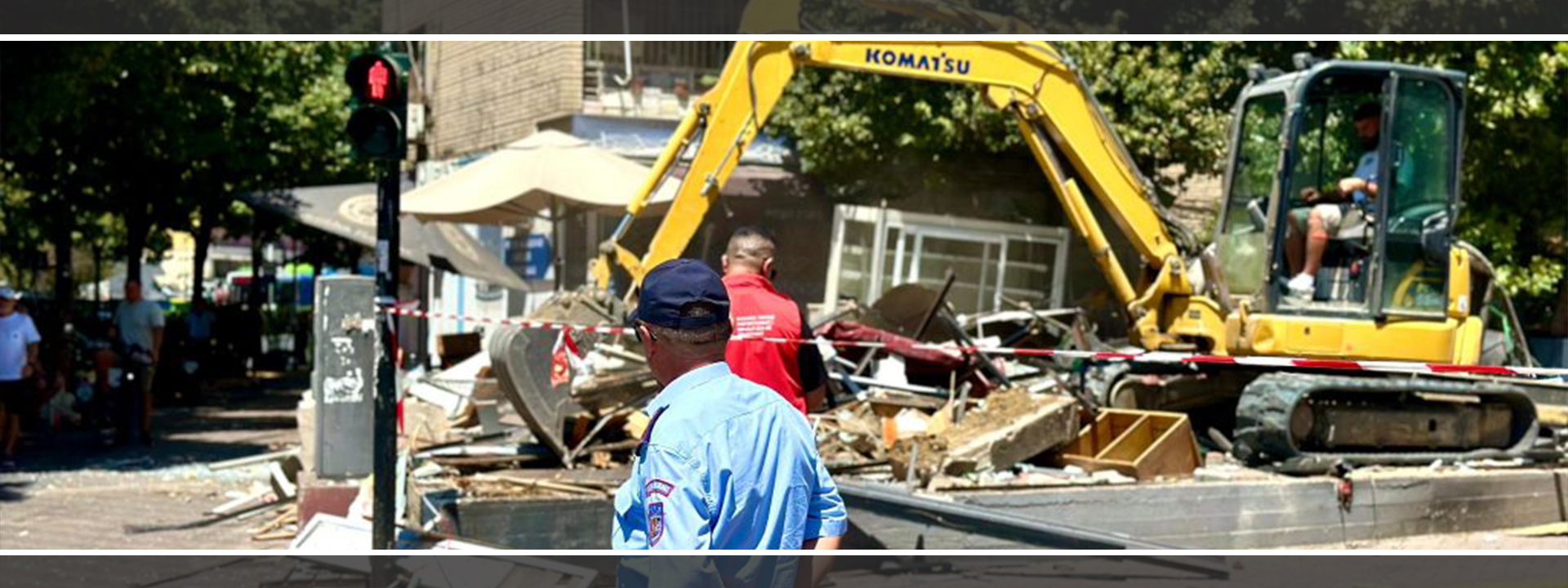
The national campaign to free up public spaces, launched in July 2025, has become one of the most aggressive urban interventions of the decade. This campaign, personally led by Prime Minister Edi Rama, changed daily life in major cities such as Tirana, Durrës, Vlorë and Shkodër, etc.
On the portal made available by the government, around 16 thousand complaints were reported by November 2025, a high number of which were for the occupation of public spaces. But, behind the facade of the action, we see a panorama of inequalities, tensions and abusive practices that are accompanying the intervention.
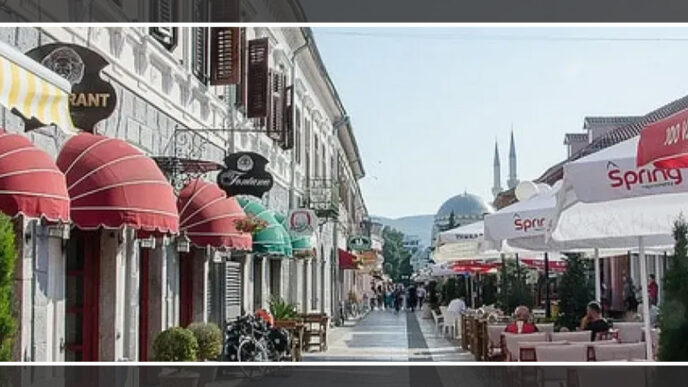
In the capital, many businesses removed their tents and fences to avoid fines and seizures. Some openly admitted that they acted out of fear of penalties. “In 2012, we paid 10 thousand euros for the municipal permit to fence the premises. Now they issue a VKM and it turns out to be invalid. They are bankrupting us,” says a bar owner in the “Brryl” area.
The closure of many bars in Tirana and beyond has increased the number of unemployed workers. The action also highlighted cases of corruption within the control structures themselves. A bar owner in Kombinat denounced four IMT inspectors who asked him for 1 thousand euros to not tear down his tent without permission. This case sparked the debate that in the field, in addition to law enforcement, there is also a "hidden market" of bribery that has been operating for years.
Actions in protected areas: Thethi and Valbona at the center of the conflict
In Theth and Valbona, the interventions took the harshest and most controversial form. The demolitions of buildings that residents consider a source of livelihood were carried out under the massive presence of police forces.
The interventions in the Alps were harshly criticized by activists, who argued that the government was targeting “the most visible collapses for the cameras,” leaving large buildings on the coast untouched. According to local government expert Agron Haxhimali, the intervention came without a strategy and at the worst possible moment. “In 40 degrees, with fog at the peak of the tourist season. 6 months have passed, the debris continues to block free spaces. It is an environmental, health and social problem.”
He also criticizes the prime minister's intervention on the ground: "There is no prime minister in Europe who deals with tents, pots or deputy mayors. This harms local democracy."
Pressure on justice: The accusations that ignited the debate
For the first time, Prime Minister Edi Rama publicly accused judges of obstructing the action. Judge Klarent Demiri's decision to suspend the demolition of an illegal building caused Rama to explode on social media. "What must this judge have eaten when he blocks the liberation of a 'land of the Xanun'?"
He also mentioned other cases, such as prosecutor Elsa Gjeli and judge Hazni Balliu, demanding an investigation by the Supreme Court of Justice. The statements sparked strong controversy over the boundaries between executive and judicial power, with criticism for political pressure and protection of judicial independence.
On the ground, liberated spaces or a return of chaos?
The State Police reports that so far 11 people have been arrested and 141 others have been prosecuted. In November, Prime Minister Rama declared that 100 thousand m² of public space have been freed up in Tirana. However, the reality is more complex:
- Many businesses have removed the tents but added chairs, bringing back the chaos.
- Others have closed, leaving workers unemployed.
- In some neighborhoods, debris from the action is still there after 6 months.
- Citizens report inequality: "Some people's fences are broken, others' are not."
“This creates social inequality and is not good behavior,” emphasizes Haxhimali.
The Prime Minister's actions, from the "emergency" on the coast to the seizures in Tirana
The 2025 release of public spaces is not the Rama government's first massive action against squatting and illegal construction. In fact, the "big action" approach is a recurring element of his governance style.
In August 2013, shortly after he was elected prime minister, Rama declared a “national emergency” to clear the coast of illegal construction. The action led to numerous collapses, especially in tourist areas, but was criticized for the lack of punishment for the institutions that had tolerated the construction for years.
After winning the 2021 elections, the government launched another operation, called “Our Coast.” Once again, demolitions of illegal constructions, massive inspections, and bringing those responsible to justice were promised. This action also received media attention, but the concrete results faded within a few months.
In the fall of 2022, the government passed a regulatory act to confiscate unauthorized additions to Tirana’s tower blocks, the most aggressive intervention against urban violations in the capital. But the action became a national debate when, a year and a half later, the government returned the buildings to the owners who had violated the law, at prices 10 times lower than the market value./acqj.al