


Author: Elsa Cerpja, JD capelouto, Lorin Kadiu
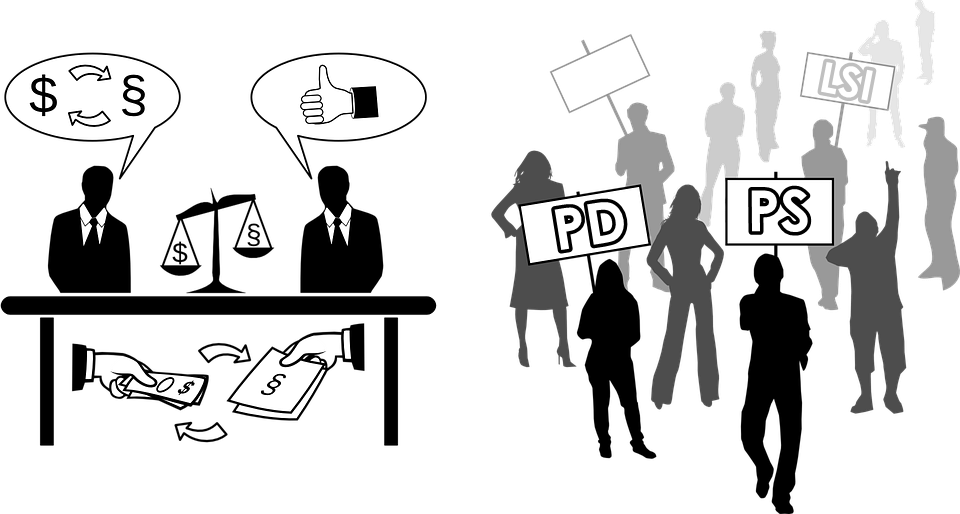
Last year, Albanian political parties paid nearly 30 million lek ($277,800) to lobbying firms in the United States to gain influence and access to American politicians.
But, if an Albanian citizen takes a look at these financial reports of the campaigns, he doesn't get to know about it.
Lobbying expenses in the financial reports - which were published by the parties after the 2017 parliamentary elections - are listed simply as payments for "consulting", accompanied by a square where parties can add a few words of explanation if they choose to do so. .
In Albania, there is no detailed information on exactly how the parties' money was spent or what the parties received in return.
An investigation by the Albanian Center for Quality Journalism and the New England Center for Investigative Reporting in the United States found that the lack of information on foreign lobbying is just one of the loopholes in the law that allows Albanian political parties to hide important information from voters.
"We don't have special laws in Albania to regulate lobbying," said Aranita Brahaj, executive director of the Albanian Institute of Science, which advocates for government transparency. She added that lobbying activities are technically legal. "Since many of the contracts were signed with American companies, they were subject to American laws."

While specific information about lobbying is hidden from Albanian voters, the US Department of Justice (DOJ) requires lobbyists to declare documents listing the foreign clients they work for and what they do for each of them – but most of these documents were published a few months after the elections in Albania.
An analysis of the documents portrays Albanian politicians taking advantage of the positive relations between the two countries for their own political gain. Much of the lobbying work, the documents show, is done in closed-door meetings, through confidential emails or photo opportunities.
"Our political parties spend a lot on lobbying, but what they get in return is ridiculous, unimaginable and intangible for the citizens," said Afrim Krasniqi, political analyst and executive director of the Institute for Political Studies in Albania, who added that often lobbying activities result in formal meetings or photographs with US officials.
"The question," he said, "is if the political parties knew this when they gave money to the lobbying firms and if we knew this when we paid so much."

The documents show that lobbyists employed by the Socialist Party of Albania acted as the country's de facto diplomats , for example, meeting and contacting American officials on foreign relations with Albania.
Meanwhile, minority party lobbyists mostly requested meetings to discuss the election or sought photo opportunities of party leaders with US officials, including President Donald Trump.
The real goal, according to Krasniqi, is "just to take a picture and show that the biggest country in the world is close to me. It's simple, he said. "It has nothing to do with the country and the public interest."
The Central Election Commission, which regulates and oversees Albanian elections, does not require parties to report the activities of their lobbyists, and contracts with lobbyists are not publicly available to voters on any of the Albanian government's online websites.
"In most cases, I believe that these types of financing, related to lobbying, are wrong and an abusive concept, - said Krasniqi, - but in accordance with the Albanian law, most of the financial resources provided for these lobbying activities are legitimate".
A series of fat payments
Lobbying contracts constitute a significant percentage of the election budget for the three largest parties in Albania.
The Socialist Party, the majority party, paid the firm Ballard Partners more than 14,250,000 lek through September, the equivalent of $20 per month.
These costs accounted for nearly 16 percent of the party's election expenses—roughly what it paid for media and more than double what it paid for administrative costs.
The Democratic Party of Albania spent about a fifth of its 2017 expenditures on lobbying, totaling 12,585,000 lek ($116,000), according to the party's financial report.
It included contracts with two lobbying groups: Barnes & Thornburg and Muzin Capitol Partners , the latter of which was paid by another firm and not by the party itself.
The Socialist Movement for Integration had only a one-month contract with McKeon Group , totaling 1,942,500 lek, a relatively small percentage of its expenses.
The "true" purpose of the Albanian influence
Before the election, lobbyists for the Socialist Party in the United States contacted officials, including members of Congress, a deputy assistant to President Donald Trump and State Department officials, for the purpose of official U.S.-Albania relations, according to DOJ documents.
"Improvements in relations between Albania and the United States are important for the success of the party," said Robert Wexler, a former United States congressman and one of the Socialist Party's lobbyists. "These two are intertwined in a very direct way."
Wexler said that during the elections it was very important for the political party to shape "the perception of Albanians on how politicians are managing their relations with the United States".
The records show that in the weeks and months after the election, Ballard Partners lobbyists , including Wexler, continued to contact American officials and lawmakers.
The official purpose, according to documents filed by the DOJ, was "American-Albanian relations."
In an email to more than 60 staff members of representatives in the Senate and House of Representatives in November 2017, Wexler sent updates on “recent developments regarding Albania,” according to DOJ documents.
He wrote that the information was distributed on behalf of the Socialist Party of Albania, but attached articles that were mostly about general news about Albania and not specifically related to the party itself.
In a document on their work for the Democratic Party, Muzin Capitol Partners said they “promoted conservative leadership in Albania to political leaders and business leaders in the United States.”
The firm, run by former Donald Trump campaign aide Nick Muzin, arranged meetings with the congressman.
It also reported on the assistance he provided to party leader Lulzim Basha to take a photo with President Trump and facilitated a pro-Democratic Party of Albania article in Breitbart News.
The LSI paid the MCKeon Group $15,000 for Services that included facilitating meetings in Washington and ensuring the participation of the party's chairman, currently Albanian President Ilir Meta, at Trump's inauguration, according to documents.
Lobbyists also introduced party leaders to five members of Congress.
Krasniqi said that, at a time when all major political parties are lobbying in America, the influence on voter opinions is small.
Brahaj agreed, saying that the result of the lobbying was "not very qualitative".
Brahajt's organization has asked political parties to be more transparent in terms of lobbying and to make these documents accessible to the public.
There is no "clear line"
Although Albanian campaign finance laws do not prohibit the use of campaign funds for lobbying in the United States, some question whether it is appropriate to use donor and taxpayer money primarily to buy photos with American officials or to delegate typical, diplomatic functions of government.
"We think it's much better to have a clear line," Wilmot said, "that the public pays for public goods."
An analysis of the work of foreign lobbyists in the United States suggests that it is more typical for a government official — not a political party — to pay lobbyists in Washington.
The firms that worked for the Albanian parties in 2017 also represented the government of the Dominican Republic, the Republic of Turkey, the Republic of Kosovo, the Republic of Saudi Arabia and the Republic of Guatemala.
Many other Balkan countries, including Kosovo, Montenegro and more recently Greece, have hired lobbyists to work for them in Washington; in these cases they are registered as government officials and not as a political party.
All USD-ALL conversions are based on June 2018 exchange rates.
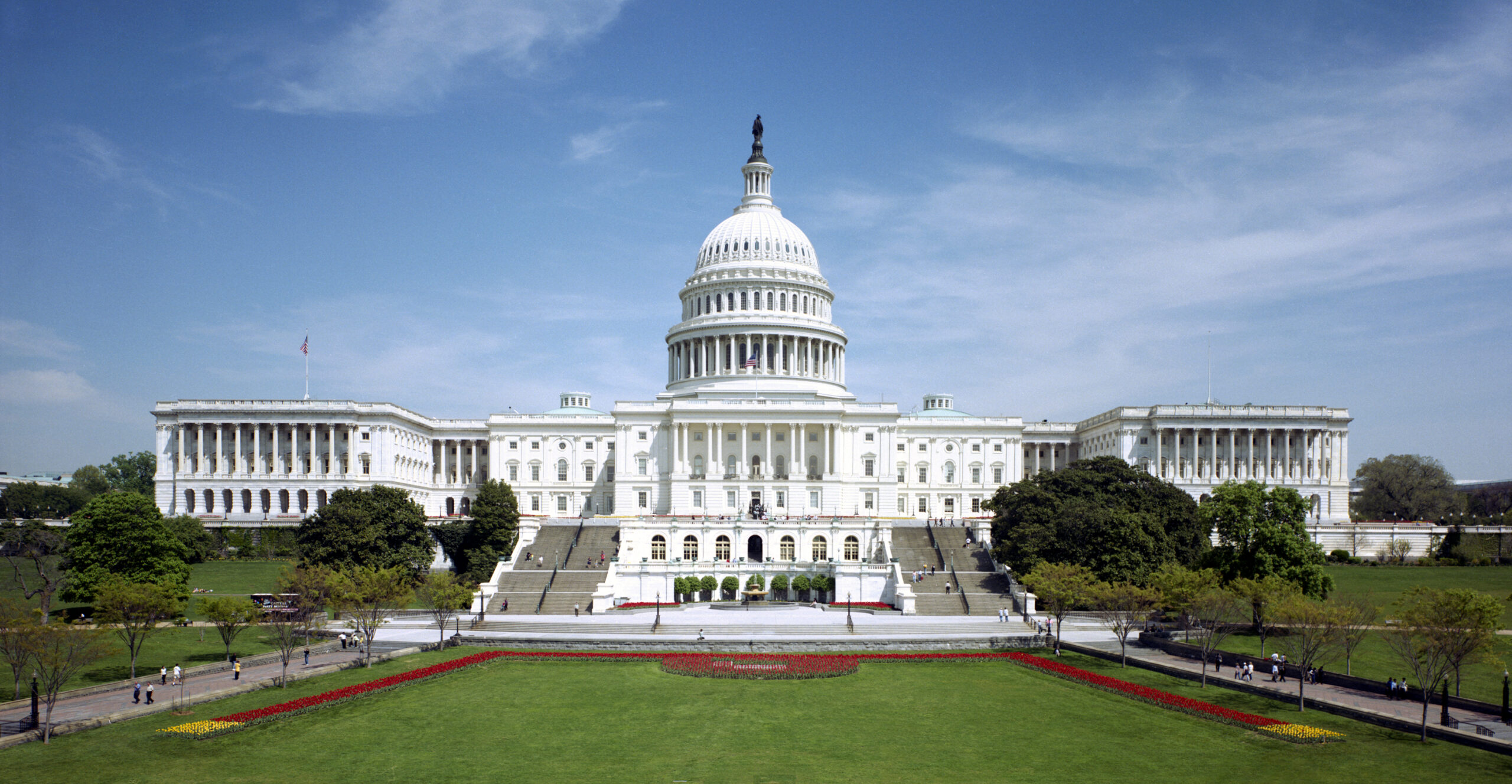
*Main photo at the beginning of the article, American Congress. Photo: Pixabay