

The National Education Strategy 2021-2026, drawn up with the support of UNICEF Albania for the Ministry of Education, Sports and Youth, cites that in 2018 and 2019 MASR's capital expenditures have reached the amount of 6.52 billion lek (~ EUR 53 million) , but capital funds for school libraries are limited.
In November last year, the Minister of Education, Mr. Evis Kushi, announced the opening of a call for experts to be members of the boards of recommendation of artistic and scientific literature for school libraries in pre-university education. In her speech, Ms. Kushi emphasized that “the purpose of this call is to enrich school libraries with new books, as well as to encourage reading among our students”.
However, despite significant capital investments by the Ministry of Education in the education sector and initiatives to improve the situation of libraries in pre-university education, the situation still remained grim. Especially in cities far from Tirana and the main centers of the Western Lowlands.
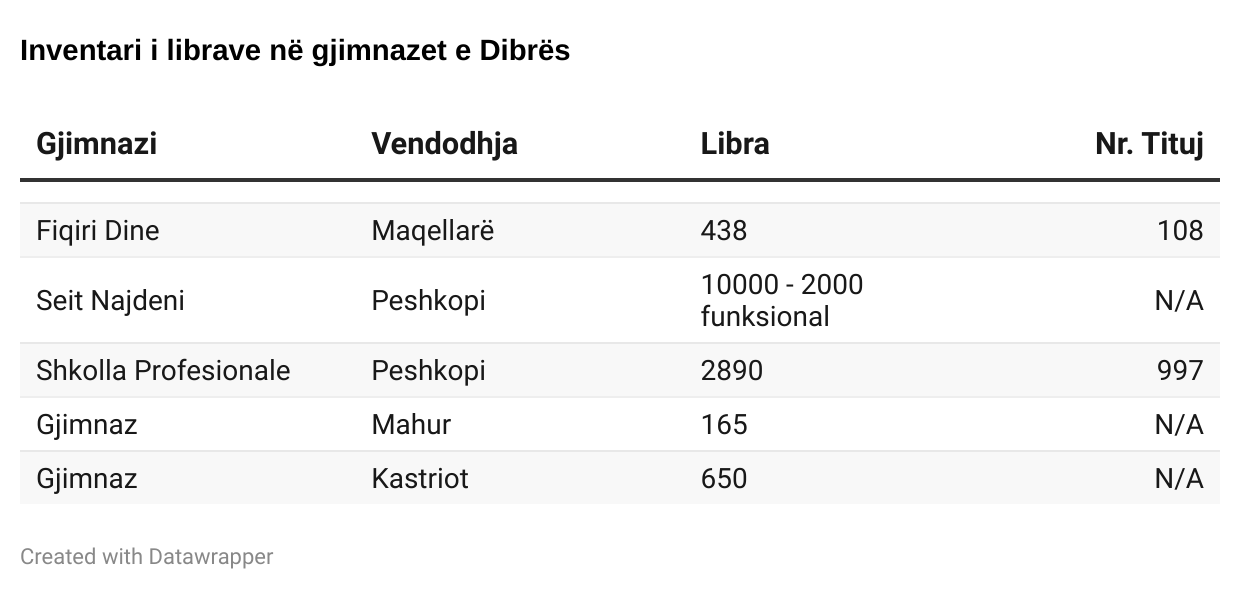
Every high school in Dibar has a library, but they lack books and funds.
In the gymnasiums of Dibra (the gymnasium of Muhurri, the two gymnasiums of Peshkopia Said Najdeni, Nazmi Rushiti, Slovo, Maqellara and Kastriot), the libraries are not only not supplied with new books, but also the books that are in the reading curriculum are missing mandatory.

In the Muhurri high school, the students take the books and distribute them among each other. Even if they are damaged, there is no punitive measure. Damaged or lost books are not replaced due to lack of funds.
" Because the library is not heated, I am forced to trust the students by giving them the key to get the books they need ," says Bashkim Ciku, Albanian language and literature teacher and also head of the school library.

In Said Najdeni high school, the question of how students get their books outside of school does not make sense. The high school has never had a library.
The literature teacher at the Muhurri high school says that "old" books... are not suitable for today's age group. The teachers themselves, in cooperation with associations or individuals, select some of the books that the students can read.
" We have obtained a good portion of the books from associations and individuals and not from the Ministry of Education."
From the list of compulsory reading books, according to the library managers of Dibra high schools, no school has all the compulsory reading books.

According to them, this ranking is for all students of Dibra high schools, despite the fact that the lists are not the same as each other. So, if one high school has a list of three books for compulsory reading, the other has 4 or 5, books thus deciding for themselves what books to read.
In the high school of Kastriot, according to the students, the list of books is obligatory, but there is no orientation or obligation from the teaching staff.
The lack of reading facilities is a problem in all high school libraries, but the answer is ready: "students take them home to read . "

According to the person in charge of the public library, the high schools of Dibra are equipped with libraries, but there is a lack of books, even those that are not required by young readers.
City library like school libraries
Florinda Sela, director of the Peshkopia Library, says that the book fund is enriched only by donors, "mainly writers" who offer the books they publish.
In the city library, the interested party can only take one book, because "they are damaged by careless readers".
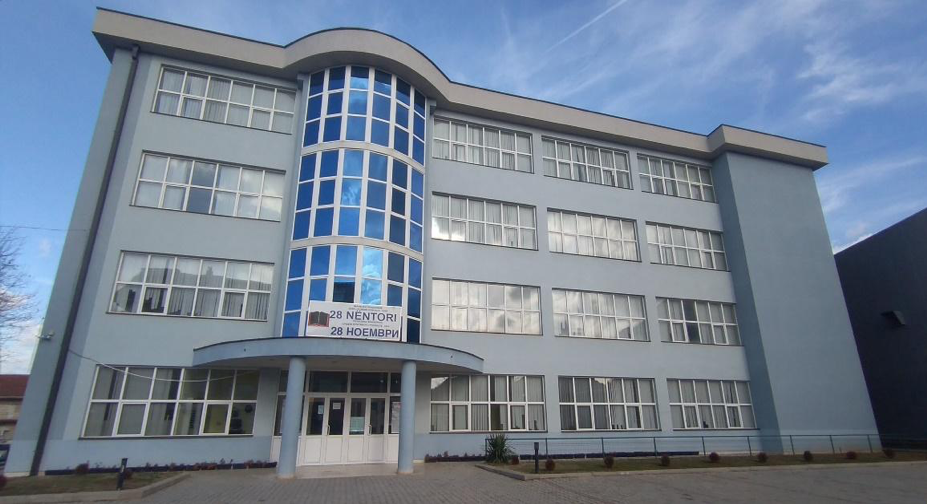
Although reading facilities are not missing, they are not in the function of readers. The lack of heating in winter and the fear that the books will be "misused by the readers", has made the reading rooms to be used only for literary meetings. But these meetings are extremely rare.
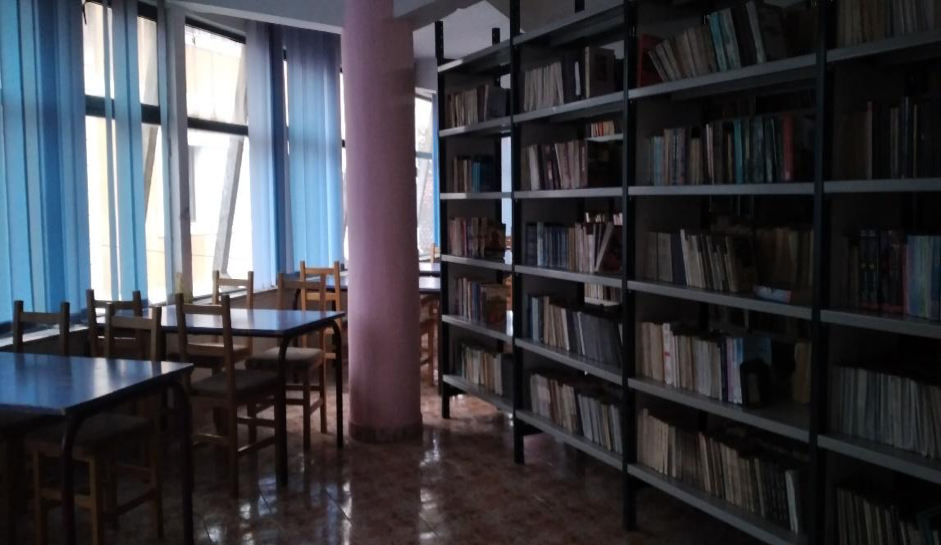
In Dibër Municipality, in the last 5 years, the fund for high school libraries was only 500.000 ALL. The General Directorate of Pre-University Education (DPAP), in response to a request for information, says that for the year 2021 an amount of 86.000 ALL was foreseen for books for secondary education.