


Ida Ismail
The State Health Inspectorate (ISHS) has highlighted a worrying picture of the situation in hospitals and primary healthcare institutions in Albania. From lack of hygiene and dilapidated infrastructure, to dangerous management of hospital waste and lack of legal documentation, the ISHS report raises the alarm over a system that in many cases operates outside basic safety and quality standards.
In total, during 2025, according to the State Health Inspectorate, 24.513 inspections, re-inspections and monitoring were carried out across the country. 3.577 inspections and re-inspections were carried out in the primary healthcare sector alone, while another 83 inspections directly targeted hospital healthcare.
The report highlights a series of problems that affect almost every link in the public health system: hospital emergencies, wards, pharmaceutical warehouses, laboratories, biological waste management, and basic hygiene and sanitation conditions.
One of the most serious problems is related to hospital emergency Services. According to inspections, the separation and classification of patients according to emergency codes in some cases is non-functional, jeopardizing the efficient management of critical cases. The report also highlights infrastructural deficiencies in emergency management, while reception and triage facilities only partially meet hygiene and sanitation standards.
In some wards, patients are treated in rooms where the minimum bed area according to the established criteria is not respected. Inspectors have also found humidity, dirt and deterioration of hospital facilities, including hydrosanitary joints and electrical networks.
The report highlights serious shortcomings in the internal documentation of hospitals. In many cases, functional regulations, service protocols and standard procedures for the administration of health institutions are missing. According to the ISHSH, the problems also extend to the lack of conditions for the development of professional practices and technical education of staff on the protocols and regulations of the functioning of hospitals.
This situation raises serious questions about how clinical cases are managed and how prepared personnel are to handle emergencies or complex medical procedures.
Problems were also identified in the hospitals' support Services. The report cites deficiencies in the functioning of laundries, kitchens, catering Services and storage facilities, which, according to inspectors, were not operating in accordance with established protocols and standards.
Hospital waste: Danger in corridors and toilets
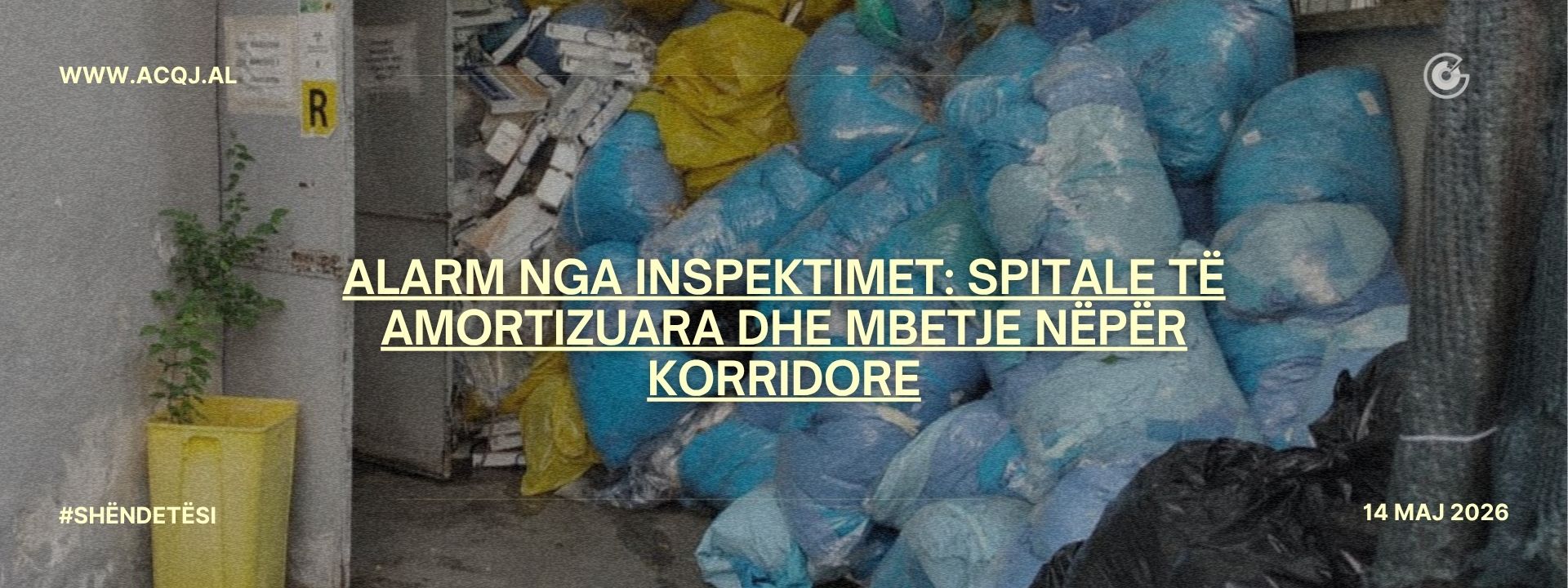
One of the most alarming findings of the inspections relates to the management of hazardous hospital waste.
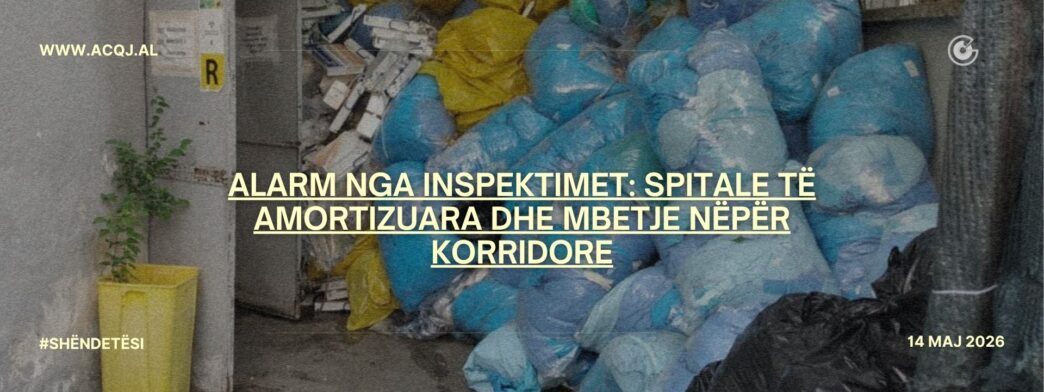
According to the report, hospital waste was sometimes collected in corridors and toilets, in the same environment where urban waste and cleaning equipment were also deposited. Procedures for source separation, labeling and registration of waste were not properly followed.
The inspectors also identified a lack of appropriate infrastructure for transporting waste from temporary points to central storage, while the temporary storage of biological waste was carried out "beyond any standards", in inappropriate conditions and in violation of legal criteria.
The report highlights that personnel engaged in the treatment of hospital waste were not sufficiently trained and in some cases were not provided with specific protective clothing and measures for this process.
According to the ISHSH, incorrect management of biological waste can become a source of infections and a serious risk for medical personnel, patients and the community.
Problems were also found in pharmaceutical warehouses, where deficiencies were identified in the administration of expired medications and in infrastructure storage standards. In some cases, procedures for identifying and removing equipment or furniture that was no longer in use were not carried out, creating a risk to the technical safety and administration of hospital facilities.
Health centers without water, equipment and basic conditions
Inspections have identified a lack of adequate facilities for the provision of health Services, a lack of basic medical equipment and, in some cases, a lack of running water.
In many institutions, depreciation of the electrical network, dampness on the walls, lack of maintenance and dirt were found. The report highlights that some centers operated without contracts for the treatment of hospital waste and without dedicated facilities for its storage.
The inspections revealed that some entities were operating without a Hygiene and Sanitary Approval Act, while in many cases the disinfection, disinfestation and deratization (DDD) service was not performed.
Inspectors have also found medical personnel not equipped with the mandatory health documentation, an element that undermines epidemiological safety in health institutions. In some private clinics and laboratories, a lack of professional licenses or unsuitable facilities for basic procedures such as blood sampling have also been identified.
The report shows that the problems are not limited to hospitals. Inspections of drinking water supply have identified a lack of bacteriological and physico-chemical analyses, depreciated tanks, damp warehouses, and cases of positive microbiological analyses for drinking water contamination.
As a result of violations found during 2025, the ISS has imposed 1.299 administrative measures in total:
• 51 fines,
• 23 interim decisions on urgent measures,
• 1.225 warnings.
For primary healthcare alone, 273 warnings, 7 fines, and 5 emergency measures have been imposed.
The findings show that many public health institutions continue to operate with serious infrastructural, hygiene-sanitary, and administrative deficiencies.
While the report often uses the term "infrastructural deficiencies" or "non-compliance with standards", the inspections describe in practice a reality where biological waste is stored in corridors, health centers operate without running water, and patients are treated in dilapidated facilities that do not meet minimum safety requirements.
At a time when citizens expect safe and dignified service, inspection reports show that the Albanian healthcare system still faces basic problems that directly affect the lives and health of patients./ acqj.al